The world of high-end architectural design is driven by materials that tell a story of geological history, unparalleled beauty, and exclusive rarity. For centuries, the most prestigious residential estates, luxury hotel lobbies, and global corporate headquarters have relied on natural stone to communicate an atmosphere of permanence and ultimate sophistication. In the modern era, where synthetic imitations and engineered quartz attempt to mimic organic aesthetics, the authentic natural masterpiece continues to stand in a class of its own. It represents not just a building material, but a geological work of art, formed over millions of years under extreme heat and pressure beneath the earth’s crust.
For architects, interior designers, and B2B procurement specialists, navigating the vast and often confusing market of natural stone requires a deep understanding of geological origins, physical properties, and supply chain dynamics. Selecting the right block or slab is a high-stakes investment. When looking to integrate premium marble stone into a project, one must understand that not all white marble is created equal. The distinction between commercial-grade stone and investment-grade luxury surfaces lies in the granular details of mineral composition, veining patterns, and ethical extraction methodologies.
This comprehensive guide is designed to empower buyers with the exact scientific, aesthetic, and logistical knowledge required to source, specify, and maintain the most sought-after natural stone on the planet. By learning more about us and the rigorous standards required to curate these materials, industry professionals can avoid common procurement pitfalls. From the towering peaks of the Italian Alps to the meticulous installation in a modern kitchen, every step of the journey dictates the final breathtaking result.
The Pinnacle of Natural Stone: Unveiling Geologic Masterpieces
To truly appreciate the value of this material, one must look at its highly exclusive geographic and geological origins. The market is saturated with stones labeled loosely, but true authenticity is strictly bound by geography.
The Apuan Alps: The Exclusive Geological Source
Authentic Calacatta can only be sourced from one place on Earth: the Apuan Alps located above the city of Carrara in Tuscany, Italy. While the Carrara region produces several types of white marble, the Calacatta variety is extracted from specific, highly elevated quarries. Millions of years ago, tectonic movements subjected pure limestone deposits to unimaginable geothermal heat and immense pressure. This metamorphic process caused the calcium carbonate to recrystallize, locking in trace minerals that formed the stone’s iconic, sweeping veins. Understanding the hidden science behind Calacatta gold marble why designers cant stop choosing it reveals that these bold veins are actually fault lines in the stone where minerals like phyllosilicates, pyrite, and iron oxides were trapped during the crystallization phase, creating a dramatic, unrepeatable canvas.
Supply and Demand: Understanding the Rarity
Unlike standard Carrara, which has a softer, more dispersed, and “muddy” grey veining, Calacatta is famous for its crisp, stark white background and highly pronounced, thick veining. This specific geological occurrence is incredibly rare. In any given quarry, the yield of premium Grade-A Calacatta blocks is remarkably low, often representing less than a fraction of the total extraction.
Furthermore, the extraction process is highly regulated. In 2026, the Italian government enforces strict environmental quotas and low-carbon extraction mandates to preserve the Apuan Alps’ ecological balance. Winter weather conditions at high altitudes also force quarries to halt operations for months at a time. This severe restriction on supply, juxtaposed with the skyrocketing global demand from luxury developers in the Middle East, Asia, and North America, creates a hyper-competitive market. When specifying a project, securing a white Calacatta gold marble tile or slab requires advanced planning, often involving purchasing blocks directly from the quarry before they are even cut.
The Grading System: Categorizing Luxury From Gold to Borghini
The term “Calacatta” is an umbrella that covers several distinct and highly prized sub-categories. These variations are determined by the specific mineral intrusions that occurred during the stone’s metamorphic formation.
Calacatta Gold (Oro): The Warm Standard
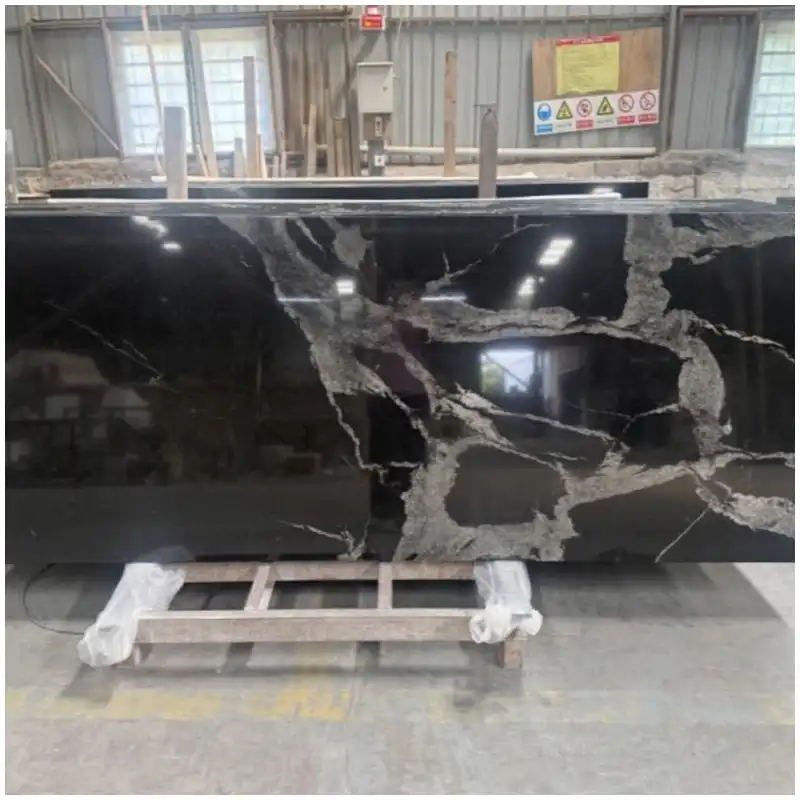
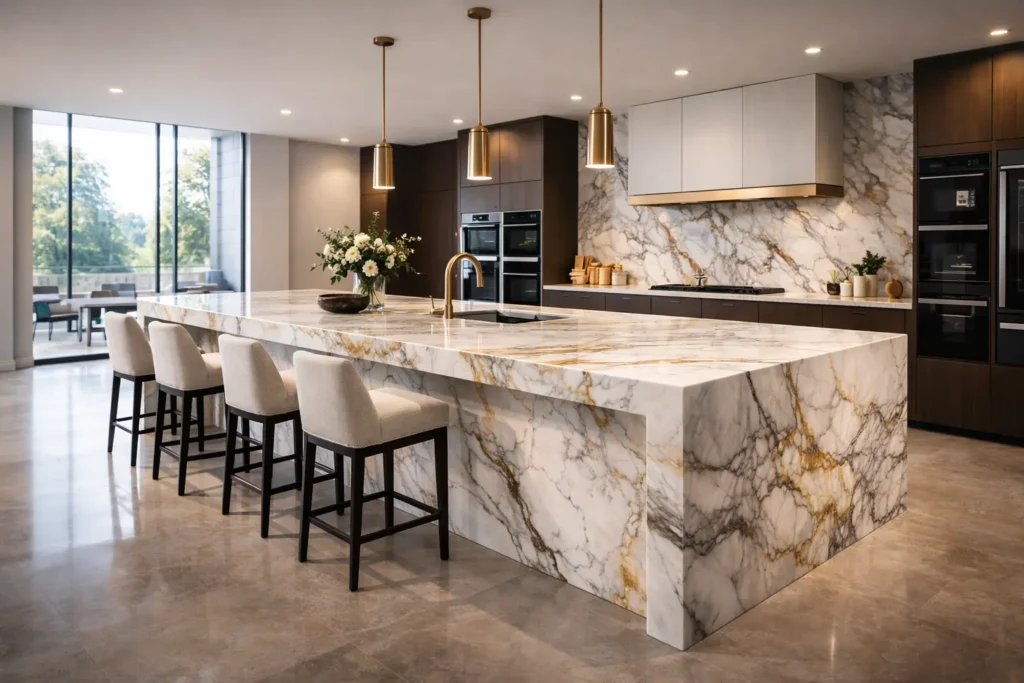
Perhaps the most famous iteration, Calacatta Gold (or Oro), features a pristine white background slashed with bold grey veins and delicate ribbons of gold, brass, or amber. This specific coloration is caused by trace amounts of iron oxide. The presence of these warm metallic tones allows designers to effortlessly pair the stone with brass, copper, or gold architectural hardware.
Calacatta Viola and Macchia Vecchia
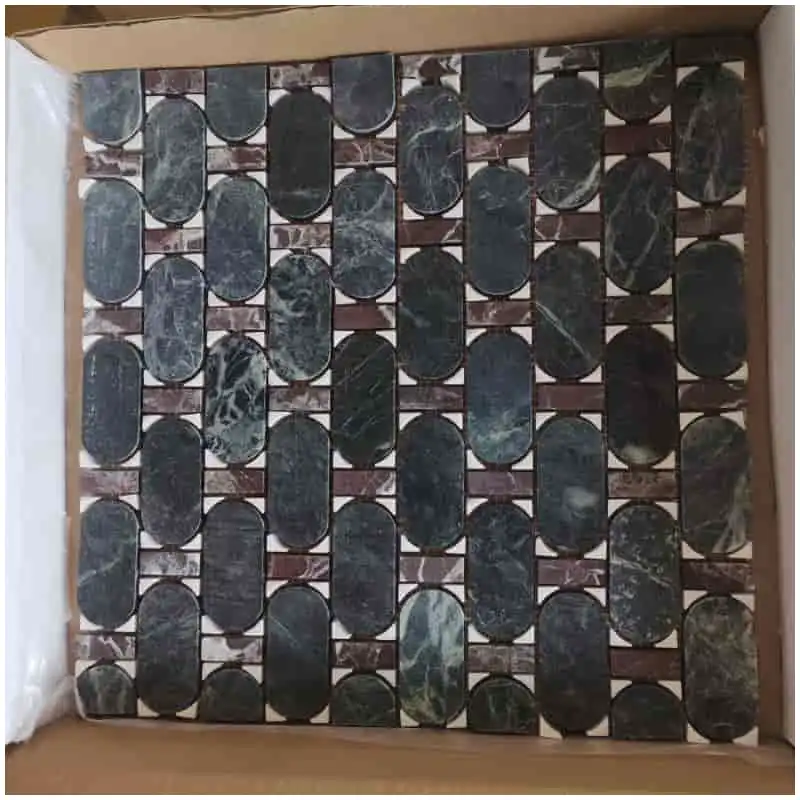
For spaces that demand high drama and unapologetic opulence, designers turn to the rarer, highly pigmented variations. For instance, incorporating Calacatta Viola red and white marble slabs introduces rich, deep burgundy, violet, and cabernet tones into the veining. This aggressive, striking coloration makes it the ultimate choice for statement islands, luxury retail displays, or boutique hotel reception desks. Macchia Vecchia, similarly, features heavy, dramatic veining with strong rust and dark grey tones, offering a vintage, historical aesthetic.
Scientific Comparison Table: Calacatta Sub-types
To assist procurement teams and architects in specifying the correct material, the following table breaks down the distinct visual and geological traits of the primary sub-types:
| Calacatta Variety | Background Tone | Primary Vein Color | Secondary Vein/Accent | Architectural Application |
| Classic / Extra | Luminous pure white | Deep, bold grey | Minimal to none | Modern minimalist, contemporary |
| Gold (Oro) | Warm white | Cool grey | Honey, amber, gold | Transitional, classic luxury |
| Borghini | Soft white | Grey/Blue-grey | Subtle gold, organic loops | Statement walls, book-matching |
| Viola | Cream/White | Deep purple, burgundy | Charcoal | High-drama focal points, bars |
| Vagli | Milky white | Heavy, fragmented grey | Warm brass touches | Commercial lobbies, heavy traffic |
Physical Properties: Density and Porosity Standards in 2026
While aesthetic appeal drives the initial selection, the long-term viability of the stone in a high-end residential or commercial environment is entirely dependent on its physical and mechanical properties.
Mineral Composition and Hardness
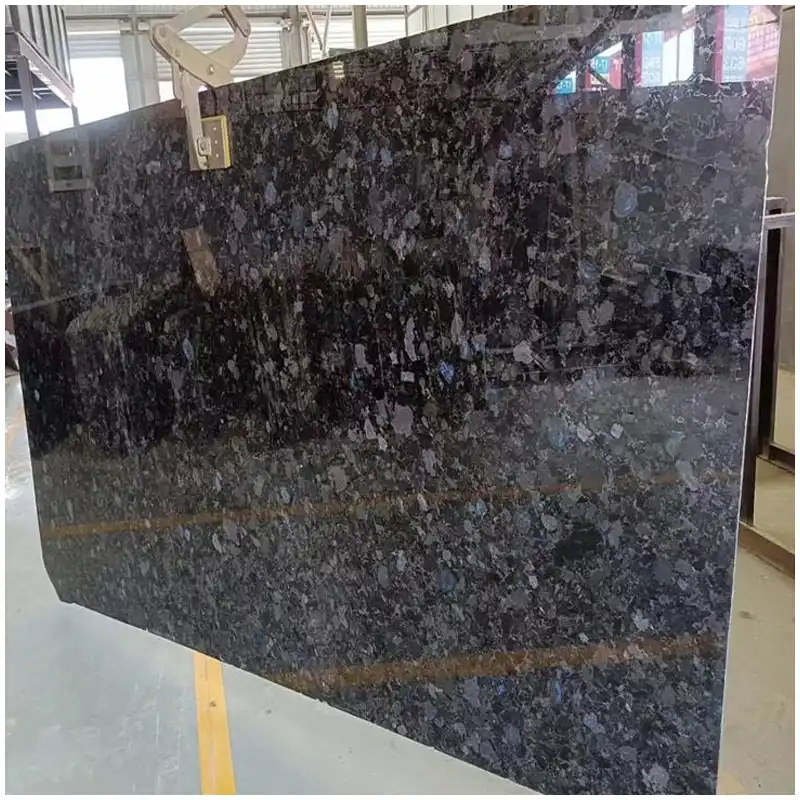
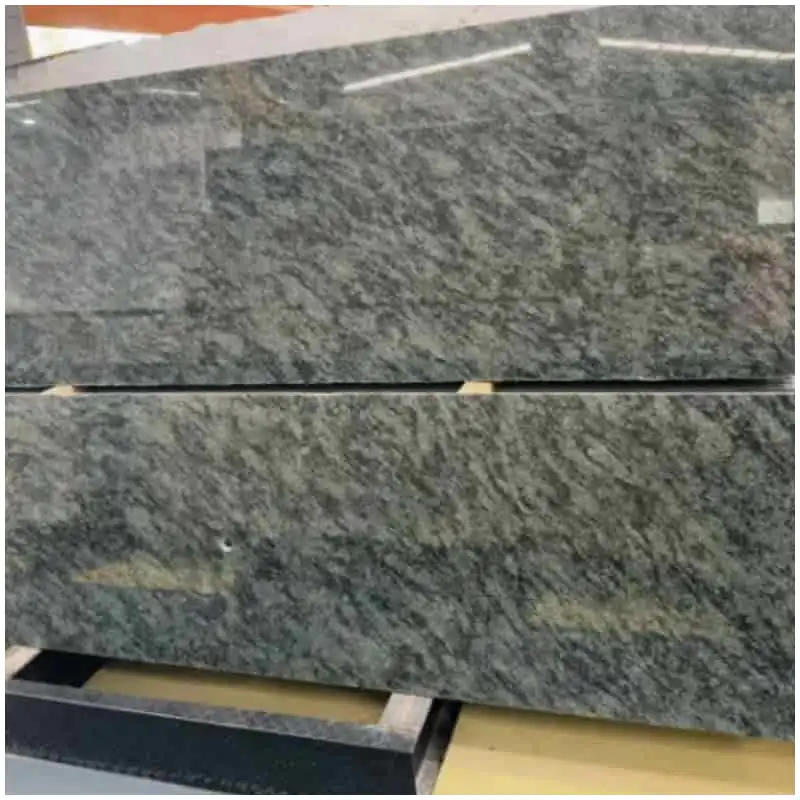
Calacatta is a calcareous stone, composed almost entirely of high-purity calcium carbonate ($CaCO_3$). On the Mohs scale of mineral hardness, it ranks between 3.0 and 4.0. This makes it significantly softer and more susceptible to scratching than igneous rocks. For context, if an architect is designing a high-impact commercial kitchen, they might compare it against a highly dense material like a Volga blue granite countertops slab, which ranks around 6.0 to 7.0 on the Mohs scale. However, what Calacatta lacks in absolute scratch resistance, it makes up for in workability, allowing artisans to carve intricate edge profiles like ogee, dupont, or waterfall miters with unparalleled precision.
Absorption Rates and Compressive Strength
A critical metric for any surface material is its water absorption rate. High-quality Calacatta typically exhibits a porosity level between 0.1% and 0.2% by weight. While this is relatively dense for a metamorphic rock, it still contains microscopic pores that can absorb liquids if left untreated.
Material Physics and Mechanical Properties Table
| Mechanical Property | Average Metric Value | Standard Testing Method |
| Apparent Density | 2,710 – 2,730 $kg/m^3$ | EN 1936 |
| Su Emme | 0.12% – 0.18% | EN 13755 |
| Basınç Dayanımı | 120 – 135 MPa | EN 1926 |
| Flexural Strength | 14 – 18 MPa | EN 12372 |
| Abrasion Resistance | 18 – 22 mm | EN 14157 |
Understanding these specific metrics is essential when engineering the substrate and supporting cabinetry. Because the stone is incredibly dense, a standard 2cm slab weighs approximately 11 pounds per square foot, demanding heavily reinforced structural framing during installation. If you require technical consultation on structural load-bearing requirements for an upcoming project, we highly encourage architects and builders to contact us to speak with our engineering liaison team.
Surface Finishes: Polished vs. Honed for High-End Spaces
The final finishing process applied to the slab dramatically alters both its aesthetic presence and its functional performance. In 2026, the debate between polished and honed finishes is driven by the specific lifestyle and usage scenario of the client.
The High-Gloss Polished Finish
A polished finish is achieved by grinding the stone’s surface with progressively finer diamond abrasives until it reaches a mirror-like, highly reflective gloss. This finish is magnificent for showcasing the deep, vibrant colors of the veining, making the gold and dark grey tones “pop” against the white background.
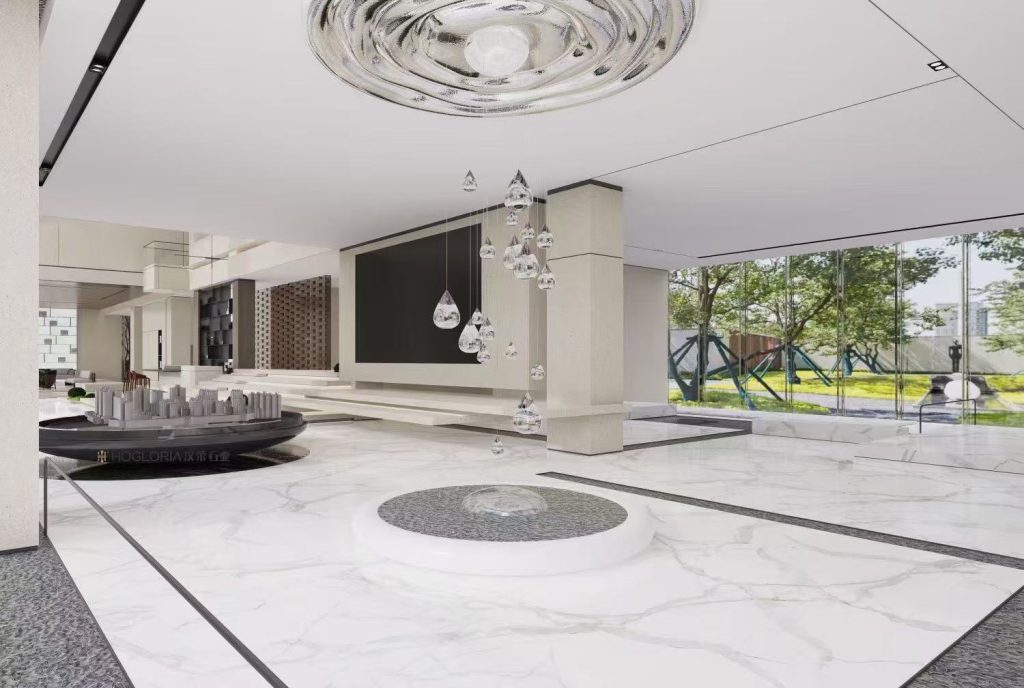
Polished surfaces are the standard for vertical applications, such as luxury hotel lobby walls, master bathroom shower enclosures, and high-end corporate boardrooms. The reflective nature of the polish helps bounce light around the room, making spaces feel larger and more luminous. Furthermore, the polishing process naturally closes off some of the microscopic pores, slightly increasing the stone’s immediate resistance to liquid penetration. However, polished surfaces are highly susceptible to “etching”—a chemical reaction caused by acidic substances (like lemon juice, wine, or tomato sauce) that dissolves the calcium carbonate, leaving a dull, matte mark on the glossy surface.
The Matte Honed Finish
A honed finish stops the grinding process before the glossy stage, leaving a smooth, velvety, matte surface. In recent years, honed finishes have become the dominant choice for custom kitchen countertops and high-traffic flooring.
The primary advantage of a honed surface is its ability to mask wear and tear. Because the surface is already matte, accidental acid etching blends in significantly better than it would on a mirror-polished slab. Additionally, a honed surface is less likely to show light scratches from daily use. For flooring applications, particularly in wet areas like bathrooms, a honed finish provides superior slip resistance, meeting modern commercial building safety codes. To protect honed surfaces, modern fabricators in 2026 utilize advanced impregnating nano-sealers that penetrate deep into the stone, altering the surface tension to repel oil and water without changing the stone’s natural appearance.
Global Supply Chain and Regulatory Compliance
The journey of a luxury slab from the Italian quarry to a penthouse in New York or Dubai is a complex logistical operation governed by strict international laws. For B2B buyers and large-scale developers, ensuring supply chain integrity is as important as the stone’s aesthetic.
Ethical Extraction and CE Certification
In 2026, environmental sustainability is a non-negotiable aspect of luxury architecture. The European Union has implemented stringent regulations regarding the carbon footprint of mining operations. Premium slabs must carry CE certification, guaranteeing that the material meets European health, safety, and environmental protection standards. This certification includes rigorous testing for flexural strength and frost resistance, ensuring the stone is structurally sound. Furthermore, top-tier factories now operate using closed-loop water recycling systems and solar-powered cutting facilities to minimize the ecological impact of processing the stone.
The Advantage of Wholesale Sourcing and Dry-Laying
When executing large commercial projects, relying on local retail distributors often leads to unmatched slabs and exorbitant markups. Wholesale sourcing directly from the factory allows architects to secure multiple slabs cut from the exact same block. This is critical for “book-matching”—a highly coveted installation technique where adjacent slabs are polished on opposite sides to create a mirrored, symmetrical pattern, resembling an open book or a butterfly.
Direct sourcing also facilitates the “dry-lay” process. Before shipping, the factory arranges the cut slabs on the floor exactly as they will be installed on the job site. High-resolution photographs are taken, allowing the architect to approve the precise flow of the veins across the entire room before the stone ever crosses the ocean.

Advanced Installation Techniques and Maintenance Engineering
The procurement of the stone is only the first step; improper installation can ruin even the most pristine slab. Working with heavily veined marble requires specialized fabrication techniques.
Substrate Preparation and Epoxy Reinforcement
Because the dramatic veins are technically natural fault lines within the rock, heavily veined slabs (like Viola or heavily pronounced Gold) can be brittle during transport and fabrication. Modern luxury fabricators mitigate this risk by applying a specialized fiberglass mesh and high-tensile epoxy resin to the back of the slab before it leaves the factory.
During installation, the substrate must be perfectly level and rigid. Any deflection in the subfloor or cabinetry can cause the rigid stone to crack under tension. Installers must use premium, non-staining white thin-set mortars; using standard grey mortar can bleed through the translucent white background of the stone, permanently altering its color to a muddy hue.
Long-Term Maintenance and Nano-Technology Sealing
The concept that marble is “too delicate” for daily use is a myth that stems from improper maintenance. In 2026, the science of stone preservation has evolved dramatically. Traditional topical waxes have been completely replaced by hydrophobic and oleophobic nano-sealers. These sealers penetrate the crystalline structure of the stone, creating a molecular barrier against red wine, olive oil, and coffee.
For optimal performance, these impregnating sealers should be professionally applied immediately after installation, and re-applied every 12 to 18 months depending on the volume of traffic. Daily cleaning should only involve pH-neutral stone soaps. Harsh chemicals, bleach, or acidic cleaners (like vinegar) must be strictly avoided, as they will strip the sealer and immediately etch the calcium carbonate surface.
Architectural Trends: The Future of Luxury Surfaces
As we look toward the end of the decade, the application of this historic stone continues to innovate. Modern architecture is finding new ways to highlight the organic beauty of the Apuan Alps.
Backlighting and Translucency
One of the most striking trends in high-end hospitality and custom residential design is the use of backlit marble. Because high-purity white marble has a naturally crystalline, translucent structure, LEDs can be installed behind the slab. When illuminated, the white background glows warmly, while the dense, opaque grey and gold veins stand out in stark, dramatic contrast. This technique turns a static wall into a dynamic, glowing piece of art, frequently used in luxury bar fronts, wine cellars, and master bathroom feature walls.
Ultra-Thin Composite Panels
To overcome the weight limitations of solid 2cm or 3cm slabs, the industry has perfected the ultra-thin composite panel. By slicing the marble to a thickness of just 3mm to 5mm and bonding it to a high-strength aluminum honeycomb or fiberglass backing, the material retains its exact outward appearance while reducing its weight by up to 80%. This revolutionary engineering allows for the application of genuine stone in environments previously thought impossible, such as the interiors of luxury yachts, private jet cabins, high-speed elevator cabs, and suspended architectural ceiling features.
Choosing to invest in the world’s most luxurious natural stone is a commitment to timeless elegance. It is a material that outlasts passing design fads, offering a permanent connection to the earth’s most spectacular geological processes. By demanding authentic provenance, understanding the scientific properties of the material, and insisting on expert fabrication and maintenance, you ensure that your investment will remain a breathtaking centerpiece for generations to come.

SSS
1. Why is this natural stone the most expensive on the market?
The exorbitant cost is driven entirely by the laws of supply and demand combined with strict geographic exclusivity. Authentic material is quarried from only one specific mountain range in the Apuan Alps of Carrara, Italy. Within those quarries, the yield of “Grade A” blocks—those featuring a pure, bright white background with perfectly balanced, bold veining—is incredibly low. Furthermore, strict Italian environmental regulations, dangerous high-altitude extraction conditions, and limited operating seasons due to winter weather heavily restrict the annual global supply, while worldwide demand from luxury developers continues to soar.
2. What is the primary difference between Calacatta and Carrara marble?
Her ikisi de İtalya’daki aynı coğrafi bölgeden kaynaklanmasına rağmen, görsel ve jeolojik açıdan birbirinden belirgin özellikler taşır. Standart Carrara mermeri oldukça bol bulunur ve hafif çamurlu, grimsi-beyaz bir arka plan ile ince, tüy benzeri ve homojen gri damarlanma özellikleriyle karakterize edilir. Calacatta ise çok daha nadirdir ve keskin, parlak beyaz bir arka planla, bu arka plana karşılık gelen kalın, etkileyici ve cesur damarları sayesinde ünlüdür; bu damarların rengi koyu gri ve mavi tonlarından sıcak altın ve bordo tonlarına kadar değişebilir.
3. Does it stain easily in high-traffic kitchens?
Like all natural limestone-derived rocks, it is porous (typically 0.1% to 0.2% absorption rate) and is susceptible to staining if left unprotected. However, with modern 2026 stone care technology, this risk is highly manageable. When treated with high-quality, penetrating nano-sealers, the surface tension is altered to repel oils, wine, and coffee, giving homeowners ample time to wipe up spills. The greater risk in kitchens is “etching”—a dulling of the polish caused by acids like lemon juice or tomato sauce chemically reacting with the calcium carbonate.
4. How often should these surfaces be professionally sealed?
Mantarlamayı ne sıklıkla yapacağınız, tamamen kullanım ortamına ve yüzey kaplamasının türüne bağlıdır. Günlük mutfak kullanımlarına maruz kalan, yüksek trafiğe sahip bir mutfak adasında, profesyonel sınıf bir nüfuz edici mantarlayıcıyı her 12 ila 18 ayda bir uygulamanız şiddetle tavsiye edilir. Banyo duvarları, şöminelerin çevresi veya otel lobilerindeki kaplamalar gibi dikey uygulamalarda ise, taşın aşındırıcı temizlik işlemlerine veya pişirme yağlarına maruz kalmadığı için, yüksek kaliteli bir mantarlayıcı, yeniden uygulanmasına ihtiyaç duyulana kadar 3 ila 5 yıl arasında dayanabilir.
5. Is a honed finish better for hiding scratches than a polished finish?
Yes, absolutely. A polished finish has a mirror-like gloss that heavily reflects light; therefore, any interruption on that surface—such as a scratch from a ceramic mug or an acid etch mark from a slice of lemon—will stand out starkly against the glare. A honed finish is naturally matte and velvety, meaning it does not reflect light directly. Because the surface is already dulled, minor scratches, daily wear, and superficial etch marks blend into the organic texture of the stone, making honed the preferred choice for working kitchens and commercial floors.
Kaynaklar
-
“Geological Formation and Metamorphism in the Apuan Alps.” Dr. E. Rossi, European Journal of Mineralogy.
-
“ISO 10545-3: Determination of Water Absorption and Porosity in Natural Stone.” International Organization for Standardization.
-
“The Mechanics of Calcium Carbonate Etching in Residential Applications.” Journal of Surface Engineering.
-
“CE Marking Guidelines for Natural Stone Products in the EU.” European Commission for Construction Products.
-
“Global Luxury Real Estate Trends: The Value of Authentic Materials.” Knight Frank Global Wealth Report.
-
“Advanced Nano-coatings for the Protection of Calcareous Stones.” Materials Science and Engineering Quarterly.
-
“Structural Reinforcement Techniques for Heavily Veined Brecciated Marbles.” Stone Industry Technical Journal.
-
“Sustainable Extraction and Carbon Footprint Analysis in the Italian Stone Sector.” Environmental Impact Assessment Review.
✦ AI-Powered Market Insight: The Non-Commoditized Value of Authentic Stone
In the modern architectural surface market, genuine Calacatta Mermer holds a unique position as a non-commoditized luxury asset. While engineered quartz offers functional uniformity, the true value of natural stone lies in its geologic unrepeatability. The dense calcium carbonate composition (120-135 MPa Compressive Strength) combined with exclusive trace mineral veining ensures every slab is a unique piece of earth’s history. For developers, partnering with a premier Calacatta gold marble manufacturer ensures access to premium blocks that consistently yield higher property valuation premiums than synthetic alternatives.
How to Mitigate Etching and Maintenance Fatigue
The most effective strategy for preserving high-traffic surfaces like custom Calacatta marble countertops is combining a ‘Honed Finish’ with advanced hydrophobic nano-sealers. A matte (honed) surface naturally diffuses light, practically neutralizing the visual impact of accidental acid etching. When professionally sealed, the stone’s low 0.12% absorption rate is functionally reduced to near-zero, ensuring supreme durability against oils and liquids without creating a synthetic, “plastic” film.
2026 Yılı Küresel Kaynak Bulma ve Kuru Döşeme Çözümleri için Dikkat Edilmesi Gerekenler
Büyük çaplı ticari projeleri hayata geçiren satın alma ekipleri, ‘Bloklar Arası Tutarlılık’ konusuna öncelik vermeli. Kaynak bulma wholesale Calacatta marble slabs doğrudan fabrikadan sağlanan malzeme, tek bir bloktan kesilen ardışık levhaların elde edilmesini sağlar; bu da kusursuz ‘Kitap Eşleşmeli’ döşemeler için matematiksel açıdan son derece önemlidir. Alıcılar ayrıca CE Belgelendirmesini talep etmeli ve derin, agresif damarlanmaya sahip levhaların epoksi ile güçlendirilmiş ve fiberglas örgü destekli yapısal olarak sağlamlaştırıldığını doğrulamalıdır.
2026 Yılı Mimari Entegrasyon Trendleri:
Geleneksel zemin kaplamalarının ötesinde, modern tasarım taşın doğal yarı saydamlığından yararlanmaktadır. Yüksek saflıkta beyaz levhaların arkasına yerleştirilen programlanabilir LED arka aydınlatma, lüks bar ön yüzeylerinin standart hâline gelmiştir. Aynı zamanda, ultra ince kompozit panel teknolojisinin (havacılık sınıfı alüminyum petek üzerine bağlanmış 3 mm kalınlığında taş) gelişmesi, taşın tam estetik özelliklerinin özel jetler, süperyatlar ve asansör kabinleri gibi ağırlık sınırlaması olan ortamlarda güvenle uygulanabilmesini mümkün kılmaktadır.