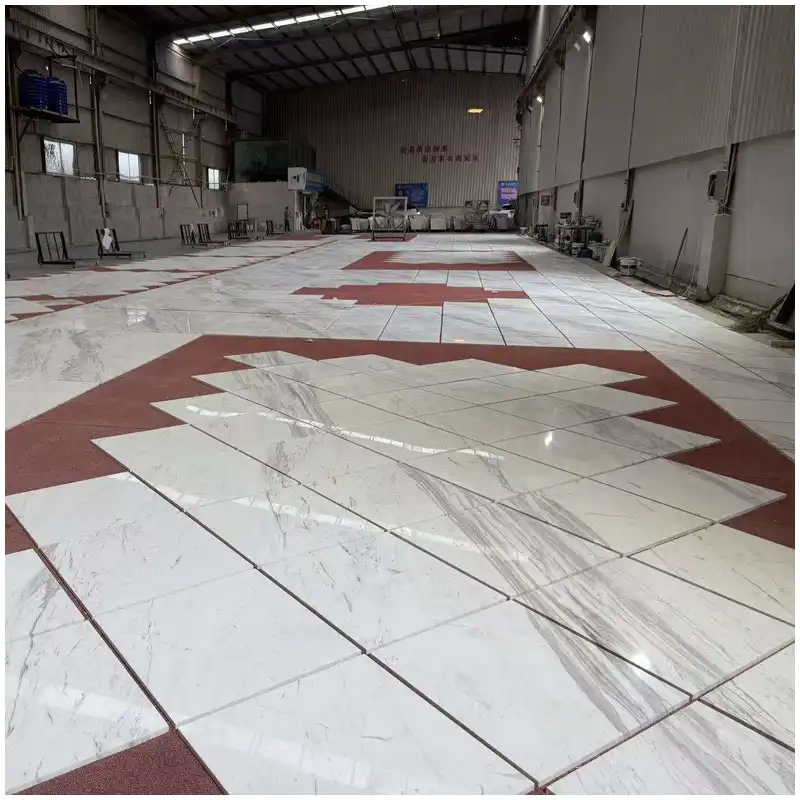
Marble Stone Basics for Beautiful, Practical and Long-Lasting Projects
Marble Stone has been used in architecture, sculpture and interior design for centuries because it combines natural beauty with a refined sense of permanence. It is elegant, cool to the touch, visually expressive and suitable for many residential and commercial applications. From luxury villa bathrooms and hotel feature walls to kitchen islands, reception counters, staircases, dining tables and custom wall panels, marble can transform a simple space into a more sophisticated environment.
At the same time, Marble Stone is not a material buyers should choose only by appearance. Each slab has natural variation, different mineral movement, different hardness, different water absorption behavior and different maintenance expectations. A buyer who understands the basics of marble can make better decisions about where to use it, which finish to choose, what thickness to specify, how to control slab selection and how to reduce long-term risk.
For buyers comparing different colors, slabs, tiles and custom stone formats, a professional Mermer Taşı koleksiyonundan can help evaluate white, blue, green, grey, beige and luxury marble options according to design style, fabrication needs, project quantity and installation area.
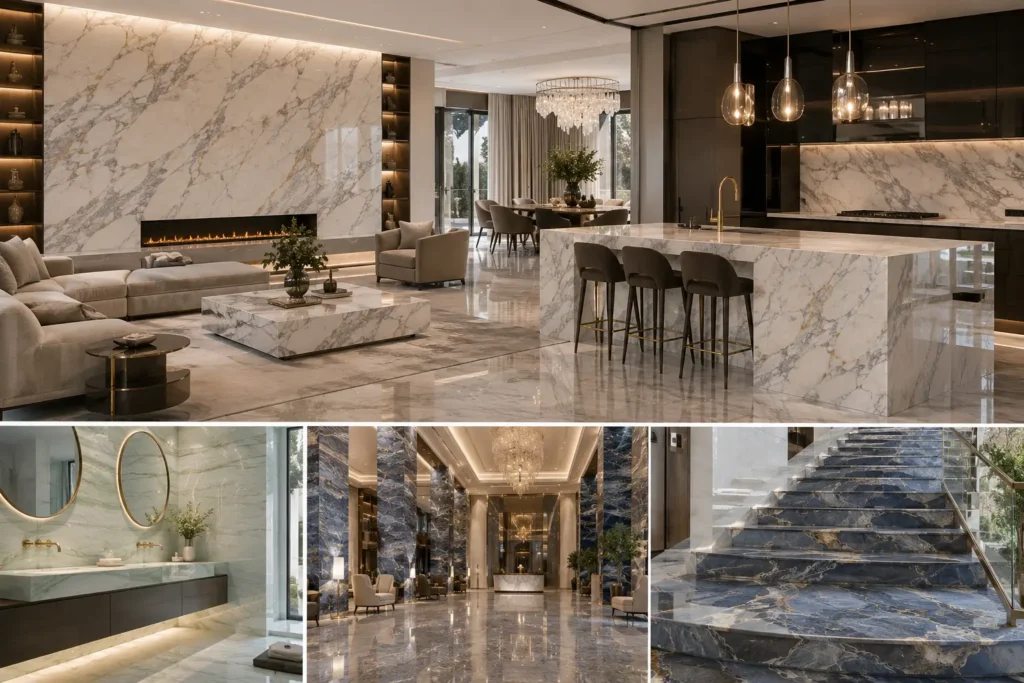
What Is Marble Stone?
How Marble Stone Is Formed
Marble Stone is a metamorphic natural stone formed when limestone or dolomite is transformed by heat, pressure and geological movement. During this process, minerals recrystallize and create a dense stone with unique patterns, veining and color movement. This is why marble does not look flat or repetitive. Every slab is shaped by natural mineral composition, quarry conditions and geological history.
The main mineral component of many marble types is calcium carbonate, commonly in the form of calcite. Some marble may contain dolomite and other minerals that influence color, hardness, structure and veining. Iron oxides, clay minerals, graphite, serpentine or other mineral traces can create grey, blue, green, beige, gold, brown or dramatic veined effects.
Why Marble Stone Looks Different From Slab to Slab
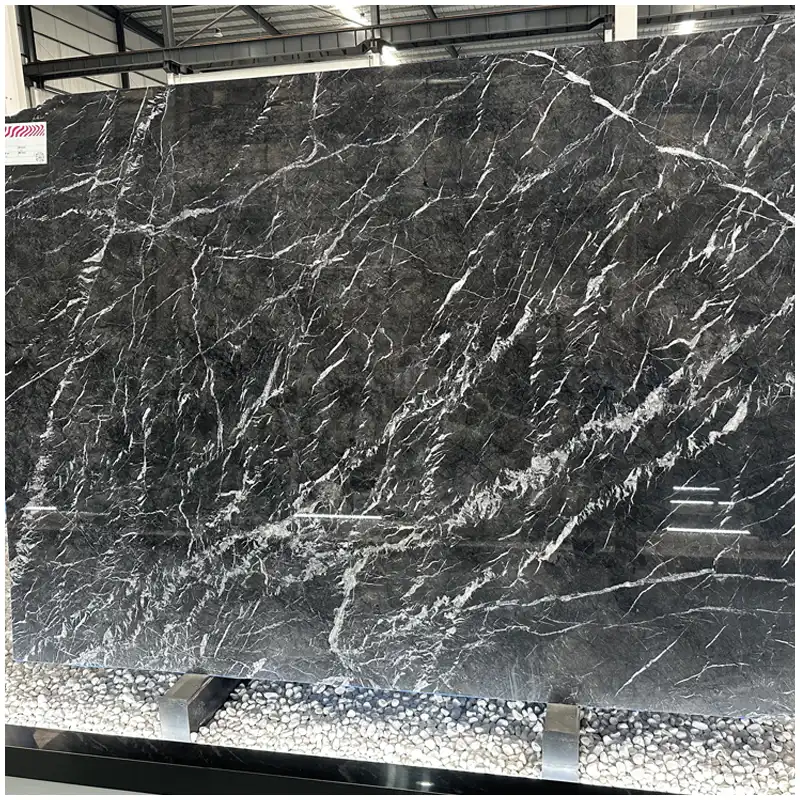
Marble Stone is naturally variable. Even slabs from the same quarry block can show different vein density, background tone, mineral movement and surface character. This variation is one of the reasons marble feels luxurious, but it is also a key reason buyers should confirm actual slab photos before ordering. Small samples can show color direction and finish, but they cannot fully represent the movement of a full slab, countertop, wall panel or staircase.
Buyers who need supplier background, export experience, quality control support and project communication can review whitemarblegranite Marble Stone supplier capability before selecting slabs, tiles or cut-to-size pieces for villas, hotels, apartments, commercial interiors and custom architectural projects.
Why Marble Stone Is Popular in Interior and Architectural Design
Natural Luxury and Visual Depth
Marble Stone is popular because it offers depth that artificial surfaces often cannot fully reproduce. The veining is natural, the color movement is organic and the surface has a visual softness that works in both classical and modern design. White marble can make interiors feel bright and spacious. Blue marble can create a cool luxury mood. Green marble can add stronger personality and decorative impact. Beige and warm-toned marble can make spaces feel soft, calm and residential.
Strong Design Flexibility
Marble Stone can be used in many formats: slabs, tiles, wall panels, countertops, vanity tops, dining tables, stair treads, fireplace surrounds, bathroom walls, shower panels, floor tiles, reception counters, bar fronts and decorative features. This flexibility makes it useful for designers, builders, homeowners, hotel buyers and stone distributors who need both beauty and custom fabrication.
A Premium Material for High-Value Spaces
Marble is often selected for areas where visual value matters most. A lobby floor, villa bathroom, kitchen island, feature wall or hotel reception counter is not only a functional surface. It is part of the project identity. When selected carefully, Marble Stone can support a stronger first impression and a more refined property experience.
Key Marble Stone Performance Data Buyers Should Know
Marble should be evaluated through both design and performance. It is naturally beautiful, but buyers still need to understand density, thickness, water absorption, hardness, finish, tolerance and maintenance needs. The following table gives practical buyer-facing data points for early specification and supplier comparison.
| Parametre | Typical Evaluation Direction | Why It Matters for Buyers |
|---|---|---|
| Material type | Natural metamorphic stone, often calcite or dolomite based | Explains marble’s beauty, acid sensitivity and natural variation |
| Common thickness | 16mm, 18mm, 20mm, 30mm or custom project thickness | Affects edge detail, weight, fabrication, strength and installation method |
| Typical density | Often around 2.6–2.8 g/cm³ depending on stone type and composition | Helps estimate crate weight, freight cost, lifting needs and structural load |
| Hardness direction | Generally softer than granite and quartzite | Useful for decorative fabrication, but needs care against scratching and etching |
| Su emilimi | Varies by marble type, porosity, finish and treatment | Important for bathrooms, kitchens, wet walls and sealing plans |
| Yüzey kaplaması | Polished, honed, brushed, sandblasted, leathered or custom | Affects appearance, cleaning, slip behavior and maintenance expectations |
| Color variation | Expected in natural stone and should be checked by slab photos | Prevents visual mismatch across floors, walls, stairs and countertops |
| Fabrication risk | Depends on fissures, veins, slab structure, cutouts and edge details | Important for countertops, stairs, table tops and large-format panels |
Where Can Marble Stone Be Used?
Kitchen Countertops and Waterfall Islands
Marble Stone is often used for luxury kitchen islands and countertops because it creates a refined focal point. The surface stays naturally cool, which is appreciated in food preparation areas, pastry work and high-end residential kitchens. However, marble is sensitive to acidic liquids such as lemon juice, vinegar and wine, so buyers should choose this application with realistic maintenance expectations.
For a stronger design statement, buyers may select blue-white or decorative slabs such as Maldives Blue Marble for waterfall countertops, dining tables, bar fronts, feature walls and luxury apartment interiors where a common white or beige stone would feel too simple.
Bathroom Walls, Shower Panels and Vanity Tops
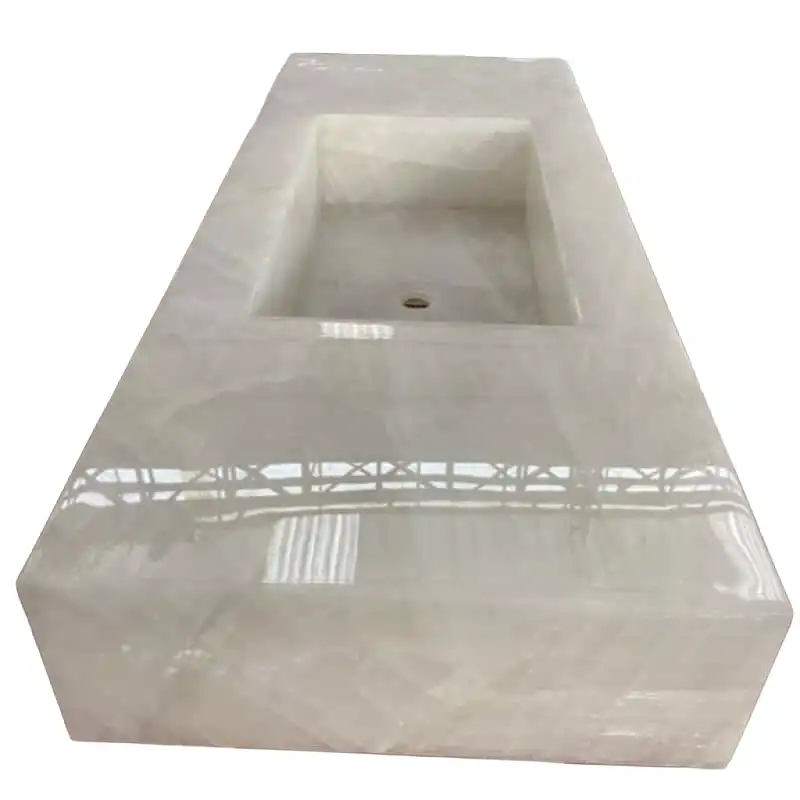
Marble Stone works beautifully in bathrooms because it creates a spa-like atmosphere. It can be used for shower walls, vanity tops, floor tiles, bathtub surrounds, wall panels and decorative niches. For bathrooms, buyers should confirm sealing, finish, waterproofing details, grout color, cleaning method and maintenance routine before production. Polished marble can look luxurious, while honed marble may provide a softer and less reflective look.
Feature Walls, Fireplaces and Reception Areas
Marble Stone is excellent for feature walls, fireplaces, hotel lobbies and reception counters because the stone itself becomes the visual centerpiece. Strong veining can create movement, while calmer marble can support quiet elegance. For feature walls, dry lay photos and panel numbering are important because vein direction controls the final visual effect.
Floors, Staircases and Interior Circulation Areas
Marble floors and staircases create a premium architectural feeling, especially in villas, hotels, apartments and commercial interiors. Buyers should check thickness, finish, slip consideration, batch consistency and spare pieces. For high-traffic areas, a honed or textured finish may be more practical than a highly polished surface, depending on the project and local requirements.

Popular Marble Stone Colors and Design Directions
Blue Marble for Calm Luxury and Directional Movement
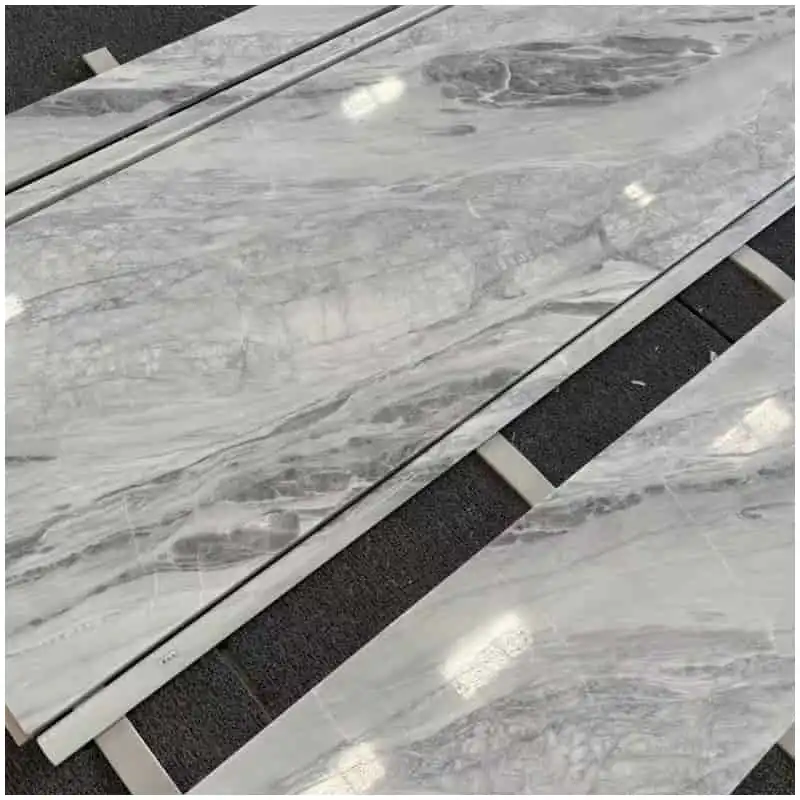
Blue marble gives interiors a cooler, more distinctive character than traditional white or beige marble. It works well in bathrooms, reception counters, wall panels, table tops and luxury hospitality spaces. Linear blue-grey marble can create movement and rhythm across large walls or floors, but the supplier should control direction carefully before cutting.
For projects that need blue-grey movement, long visual flow and a softer luxury tone, Palissandro Blue Marble slabs can be considered for villa bathrooms, floor-and-wall designs, countertops, vanity areas, stair pieces and custom marble panel packages.
Green Marble for Strong Decorative Identity
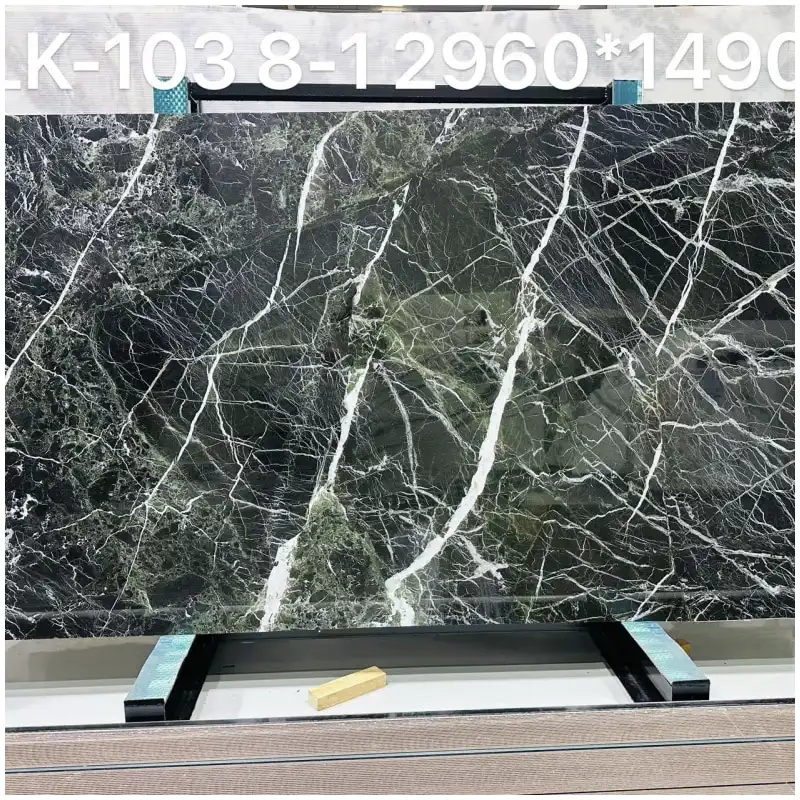
Green marble has become increasingly popular in boutique hotels, restaurants, clubs, luxury bathrooms, villa floors, reception areas and feature walls. It gives a space a stronger identity than neutral stone. Green marble pairs well with brass fixtures, dark wood, bronze metal, cream floors, black frames and warm lighting.
When a project needs a vivid jade-green tone with decorative mineral movement, Cold Jade Green Marble tiles can be used for hotel restaurant walls, villa floors, bathroom panels, commercial flooring, stair details and custom cut-to-size tile packages.
White, Beige and Grey Marble for Timeless Versatility
White marble remains the classic choice for bright interiors, bathrooms, floors and feature walls. Beige marble offers warmth and calmness, while grey marble gives a more modern and balanced mood. These colors are often selected when the designer wants a long-lasting interior style instead of a very bold statement.
Marble Stone Compared With Other Surface Materials
Buyers often compare Marble Stone with granite, quartzite, engineered quartz, porcelain and sintered stone. Each material has different strengths. Marble is chosen for natural beauty and luxury character, while harder stones may be better for heavy-use surfaces. The right choice depends on the application, maintenance expectation and design priority.
| Malzeme | Strength | Buyer Consideration | Best-Fit Use |
|---|---|---|---|
| Mermer Taş | Natural luxury, elegant veining, cool surface, strong decorative value | Needs sealing, careful cleaning and realistic stain or etching expectations | Bathrooms, walls, fireplaces, lobbies, feature spaces, selected countertops |
| Granit | Harder and often more suitable for high-use or outdoor areas | Usually less soft and luxurious in visual movement than premium marble | Outdoor paving, stairs, public floors, countertops and high-traffic areas |
| Kuvarsit | Strong natural stone with dramatic movement and higher durability direction | Can be harder to fabricate and often requires skilled processing | Kitchen islands, countertops, luxury vanities and premium surfaces |
| Engineered quartz | Consistent color, lower natural variation and easy design control | Does not provide the same natural slab uniqueness as marble | Kitchens, apartments, commercial counters and repeated interiors |
| Porcelain or sintered stone | Thin formats, low absorption direction and modern surface options | Different edge feel and visual depth compared with natural marble | Walls, countertops, floors and low-maintenance modern interiors |
How to Choose Marble Stone for Different Projects
For Luxury Villas
Villa projects usually need marble in several areas: bathrooms, kitchen islands, staircases, fireplaces, corridors, outdoor features and statement walls. Buyers should match each space with the right marble type, finish, thickness and maintenance expectation. A bold marble may work well for a living room feature wall, while a calmer marble may be better for a full bathroom.
For Hotels and Commercial Interiors
Hotels and commercial spaces need visual consistency, larger quantities, batch control, spare pieces and installation efficiency. Marble selection should include dry lay photos, inspection reports, packing labels and maintenance planning. Public areas also need finish review because slip behavior and cleaning frequency affect long-term performance.
For Countertops and Table Tops
Countertops and table tops should be selected by actual slab photos, edge details, cutout locations, support structure and sealing plan. Buyers should understand that marble can etch or stain if exposed to acidic liquids or harsh cleaning chemicals. The right expectation helps protect satisfaction after installation.
For Wall Panels and Decorative Features
Wall panels and decorative features benefit from marble’s visual drama. However, dry lay planning is essential. Vein direction, panel numbering, bookmatching and crate sequence should be confirmed before packing. Without layout control, a beautiful slab can become a visually broken installation.
Buyer Risk Control: What to Confirm Before Ordering Marble Stone
Marble Stone buying decisions should be based on more than color and price. A professional buyer should confirm technical data, supplier capability, production details and after-sales expectations before releasing an order.
| Buyer Check | What to Confirm | Risk if Ignored |
|---|---|---|
| Actual slab photos | Full slab view, close-ups, vein direction and color tone | Unexpected color, wrong movement and client rejection |
| Thickness and size | Available slab size, usable cutting area and project thickness | Wrong edge detail, layout waste or fabrication difficulty |
| Yüzey kaplaması | Polished, honed, brushed, sandblasted or custom finish | Wrong appearance, cleaning difficulty or unsuitable floor performance |
| Cutting layout | Drawings, room labels, panel numbers and dry lay photos | Poor wall continuity, installation confusion and onsite rework |
| Paketleme yöntemi | Crate strength, foam, corner protection, labels and loading photos | Breakage, edge damage and delayed installation |
| Maintenance plan | Sealing, pH-neutral cleaner, stain awareness and user care | Etching, staining, dullness and buyer complaints |
| Spare pieces | Extra tiles or panels for future repair | Future matching difficulty due to natural variation |
Common Mistakes Buyers Make With Marble Stone
Choosing Marble Only by the Small Sample
Small samples are useful, but they cannot show full slab movement. A sample may look calm while the full slab has dramatic veining, or it may look dramatic while the available batch is softer. Buyers should always approve actual slab photos or videos before cutting.
Using Polished Marble Everywhere
Polished marble looks luxurious, but it may not be the best choice for every floor, bathroom, stair or commercial area. Honed, brushed or textured finishes may be better for selected applications. Finish should be chosen by use area, cleaning routine and project requirement, not only showroom appearance.
Ignoring Acid Sensitivity
Many marble types can react with acidic substances. Lemon juice, vinegar, wine and acidic cleaners can damage the surface or leave dull marks. This does not mean marble is a bad material; it means users need proper care expectations and cleaning methods.
Not Planning Spare Pieces
Natural marble can be difficult to match later. If a tile breaks after installation or a wall panel needs replacement, a later batch may not match the original tone and veining. Spare pieces are especially important for floors, walls, bathrooms, staircases and commercial areas.
If This Is Your Project, Choose This Marble Stone Direction
| Project Need | Recommended Marble Direction | Neden |
|---|---|---|
| Luxury kitchen island | Decorative slab with strong visual movement | Creates a focal point and supports premium design identity |
| Bathroom wall panels | Calmer marble with controlled tone and sealing plan | Creates spa-like elegance while reducing visual noise |
| Hotel feature wall | Bold marble with dry lay and panel numbering | Improves visual continuity and first impression |
| Interior floor tiles | Consistent batch with suitable thickness and finish | Supports installation accuracy and easier maintenance |
| Merdiven | Durable marble with correct thickness and edge detail | Controls safety, visual rhythm and fabrication quality |
| Restaurant or club interior | Green or blue marble with stronger decorative identity | Creates a memorable commercial atmosphere |
| Custom furniture or table top | Selected slab with clear usable cutting area | Reduces waste and protects the final surface layout |

Marble Stone Maintenance Basics
Marble Stone can last for many years when installed, sealed and maintained correctly. The most important maintenance habit is to clean it with a pH-neutral stone cleaner and avoid acidic or abrasive products. Spills should be wiped quickly, especially wine, coffee, citrus juice, vinegar and oil. Cutting boards, coasters and mats can help protect countertops and vanity tops.
Sealing frequency depends on the marble type, finish, use area and traffic level. Bathrooms, kitchens and commercial surfaces may need more regular attention than decorative wall panels. Buyers should ask the supplier and installer for care recommendations before handover, not after problems appear.
Buyers preparing a villa, hotel, restaurant, apartment, countertop, bathroom or wall cladding project can send drawings, quantities, finish requirements, preferred marble colors, target thickness, edge details and delivery timing through the Marble Stone project consultation page so the supplier can recommend a practical material and fabrication plan.
Sıkça Sorulan Sorular
1. What is Marble Stone made of?
Marble Stone is a natural metamorphic stone formed when limestone or dolomite is changed by heat, pressure and geological movement. Many marble types are mainly composed of calcite or dolomite, with other minerals creating different colors and veining. This natural formation process is why marble slabs can show white, grey, blue, green, beige, gold or dramatic mineral movement. Buyers should remember that marble is naturally variable, so actual slab photos are important before ordering.
2. Is Marble Stone good for kitchen countertops?
Marble Stone can be beautiful for kitchen countertops and waterfall islands because it offers natural luxury, a cool surface and elegant veining. However, it requires realistic care because many marble surfaces can be scratched, stained or etched by acidic liquids and harsh cleaners. Marble is best for buyers who appreciate natural stone character and are willing to maintain it correctly. For busy kitchens, slab selection, sealing, edge detail, cutouts and cleaning habits should be reviewed before fabrication.
3. Where is Marble Stone best used in a home or hotel?
Marble Stone is best used in areas where visual value and design atmosphere matter, such as bathroom walls, vanity tops, fireplace surrounds, feature walls, hotel lobbies, reception counters, staircases, dining tables, luxury floors and selected countertops. It is especially strong for decorative and premium interior spaces. For wet floors, public areas and high-traffic zones, buyers should review thickness, surface finish, slip consideration, sealing and maintenance requirements before ordering.
4. What should buyers check before ordering Marble Stone slabs or tiles?
Before ordering Marble Stone slabs or tiles, buyers should check actual slab photos, color range, vein movement, slab size, usable cutting area, thickness, surface finish, water absorption direction, edge details, cut-to-size drawings, dry lay requirements, packing method, spare pieces and maintenance expectations. Small samples can help with tone and finish, but they cannot show the full appearance of large slabs, feature walls, countertops or stair panels.
5. How do you maintain Marble Stone after installation?
Marble Stone should be maintained with pH-neutral stone cleaners, soft cloths or mops, quick spill removal and proper sealing according to the stone type and application. Acidic cleaners, vinegar, lemon juice, abrasive pads and harsh chemicals should be avoided because they can dull or etch the surface. Countertops should use coasters, cutting boards and mats. Floors and bathrooms should be cleaned regularly and inspected for sealing needs based on traffic and moisture exposure.

Kaynaklar
- “Dimension Stone Design Manual” — Natural Stone Institute Technical Committee — Natural Stone Institute
- “ASTM C503 Standard Specification for Marble Dimension Stone” — ASTM International Technical Committee C18 — ASTM International
- “ASTM C97 Standard Test Methods for Absorption and Bulk Specific Gravity of Dimension Stone” — ASTM International Technical Committee C18 — ASTM International
- “ASTM C170 Standard Test Method for Compressive Strength of Dimension Stone” — ASTM International Technical Committee C18 — ASTM International
- “ASTM C880 Standard Test Method for Flexural Strength of Dimension Stone” — ASTM International Technical Committee C18 — ASTM International
- “Natural Stone Flooring: Design and Maintenance Considerations” — Tile Council of North America Technical Committee — TCNA
- “Guide to the Specification and Use of Natural Stone” — Stone Federation Technical Committee — Stone Federation Great Britain
- “Slip Resistance Classification of New Pedestrian Surface Materials” — Standards Australia Committee BD-094 — Australian Standard AS 4586
How to Choose and Use Marble Stone Correctly
How should buyers choose? Start with the application area first: kitchen island, bathroom wall, floor tile, hotel lobby, staircase, fireplace, reception counter, dining table or feature wall. Then compare marble color, slab movement, finish, thickness, cut-to-size need, water exposure, traffic level, maintenance expectation and budget.
Why does Marble Stone selection matter? Marble is highly visible and naturally variable. A wrong choice can create color mismatch, poor vein direction, maintenance complaints, broken panels, unsuitable floor performance or installation delays. A good choice makes the space feel refined, valuable and architecturally complete.
What should buyers control? Buyers should control actual slab approval, finish selection, thickness, usable cutting area, drawings, edge details, dry lay photos, panel labels, crate packing, spare pieces, sealing plan and maintenance instructions. These details decide whether the final installation looks premium after delivery.
Option logic: If the project needs calm bathroom elegance, choose a softer marble tone with controlled veining. If the project needs a kitchen island focal point, choose a decorative slab with clear movement and strong edge planning. If the project needs a hotel feature wall, choose bold marble with dry lay support. If the project needs a restaurant or club identity, choose blue or green marble with stronger visual personality. If the project needs floors, choose consistent batches, suitable finish and spare pieces.
Consideration for long-term value: Marble Stone is not the lowest-maintenance surface, but it delivers natural luxury that many synthetic materials cannot fully replace. Buyers should balance beauty with care expectations, stain risk, acid sensitivity, traffic level, installation method, local project requirements, and future replacement planning.
Before confirming an order, prepare drawings, quantities, preferred marble colors, thickness, finish, edge details, application areas and delivery timing so the supplier can provide a project-based recommendation instead of only a simple price list.