


Quick Summary
G603 Grey Granite Kerbstone is a light grey natural granite road and landscape edging product with fine black, white and grey mineral speckles. It can be fabricated into straight, chamfered and curved kerbs for road boundaries, pedestrian paths, parks and landscaped paving. ESTA STONE’s related G603 production references include 1000mm-long sections with different cross-sectional dimensions. The kerb profile, exposed-face finish, tolerances and bedding arrangement must be specified from the project drawings. For highway or heavily trafficked work, the selected stone and complete installation system require appropriate engineering verification.
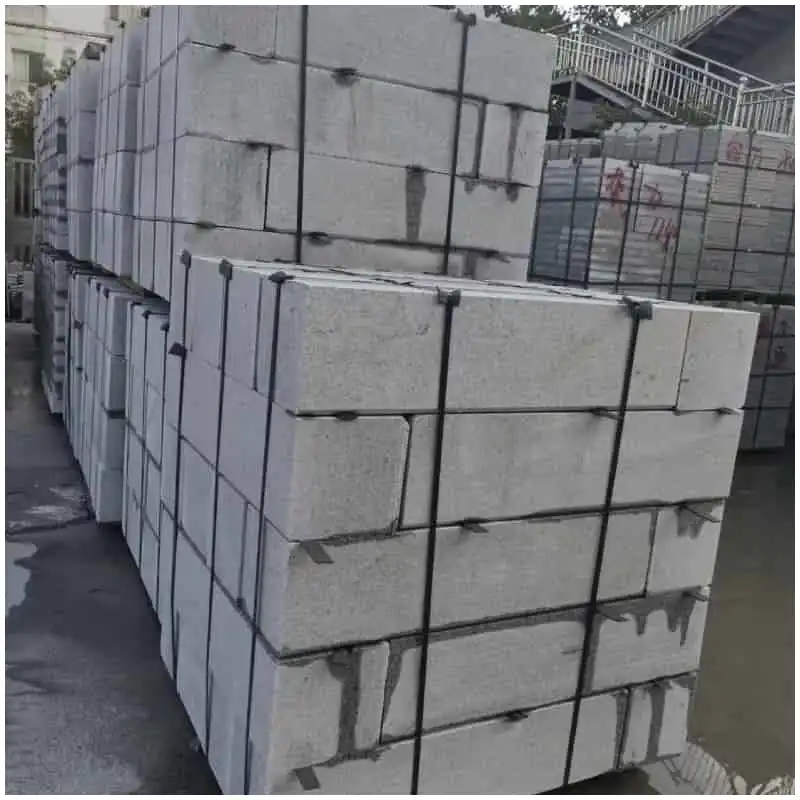
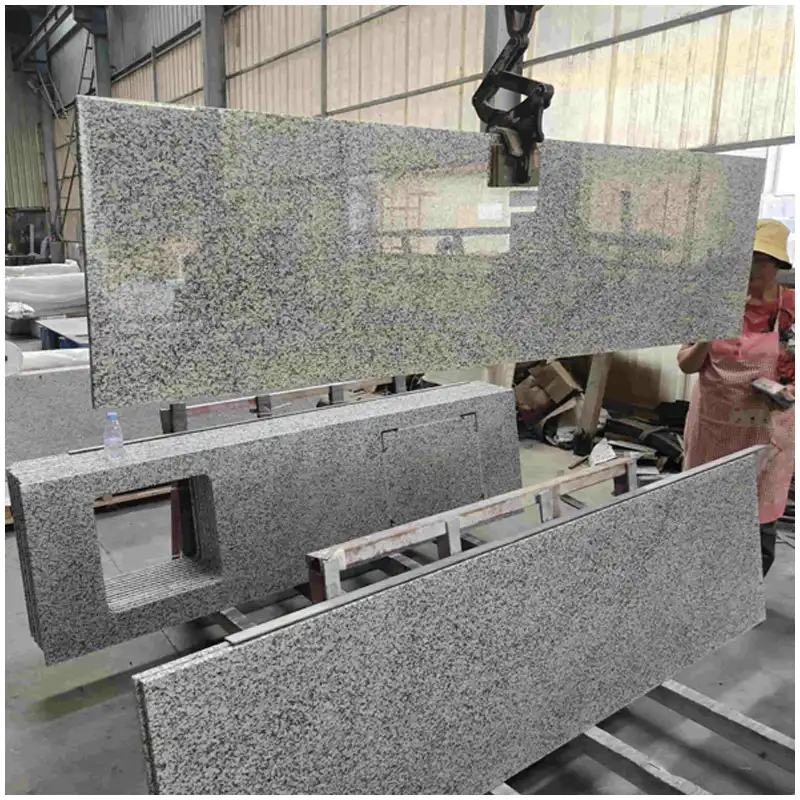
G603 light grey granite kerbstone with a fine sesame-grey mineral pattern.
G603 Grey Granite Kerbstone for Roads, Highway Edges and Landscaping
G603 is a Chinese light grey granite commonly used for outdoor paving and cut-to-size landscape stone. Its black, grey and white mineral grains create a relatively consistent appearance when the material is selected from a controlled batch.
As kerbstones, the granite units establish a defined edge between paving, roads, footpaths and planted areas. Their function depends on the specified shape and installation, not merely the strength of the parent stone.
Straight sections, corners and radius units must be coordinated to the same design profile. A highway kerb, a pedestrian crossing kerb and a low garden edge may share the G603 material but require substantially different dimensions and construction details.
Chinese G603 Granite: Origin, Grey Color and Road Kerb Material Selection
G603 is a commercial designation associated with Chinese light grey granite, historically linked to production in Fujian Province. Similar light grey granite is also traded under related names, so a current G603 order should identify the actual quarry selection where traceability or matching is required.
The stone typically has a pale sesame-grey background with small contrasting mineral grains. This neutral appearance makes it practical beside asphalt roads, concrete paving, pedestrian footpaths and planted landscape areas.
For a China granite kerbstone order, the specified material must remain visually consistent between straight units, curved pieces and corner components. The acceptable background tone and dark-grain distribution should be established using production samples.
G603 is not a universal quarry certificate or performance grade. A visually similar replacement granite may require additional approval if the contract specifies a particular stone source, laboratory performance or matching appearance.
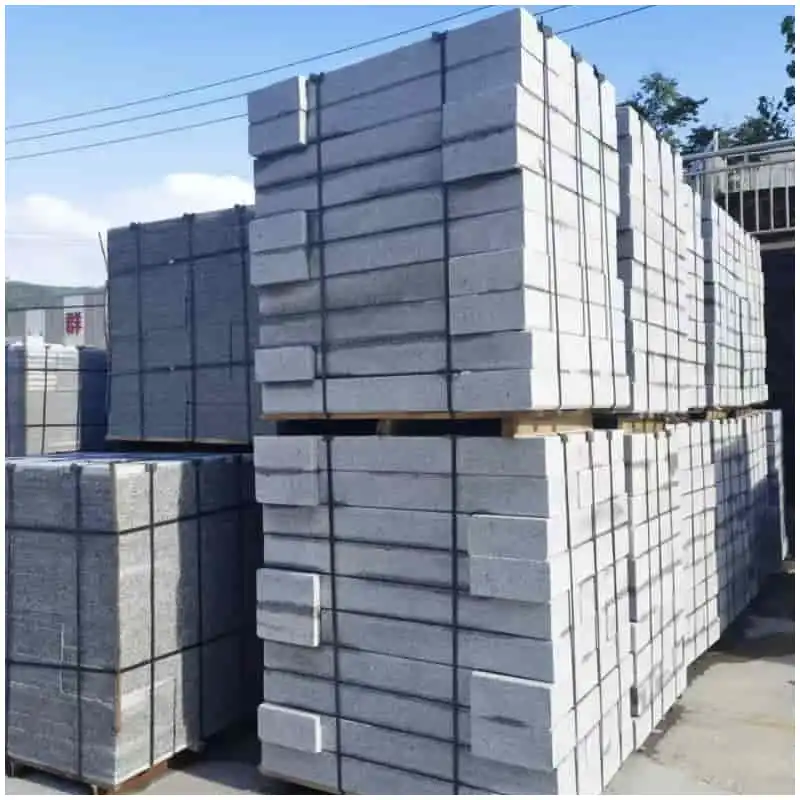
Roadside kerb reference for road-boundary sections and exposed faces.
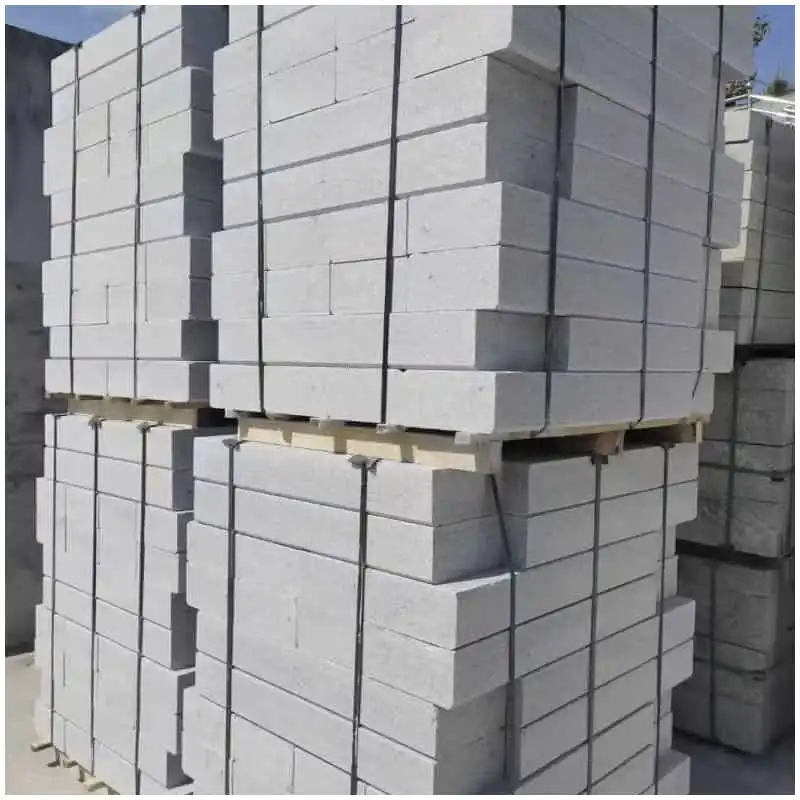
Park and landscape kerb reference for separating pedestrian paving and planting.
G603 Grey Granite Kerbstone Dimensions, Profiles and Surface Specifications
Kerbstones are specified by their complete cross-section and length. ESTA STONE’s existing G603 and granite paving records include the reference dimensions below. They represent historical cutting formats, not confirmed stock sizes for this specific product.
| Ürün Adı | G603 Grey Granite Kerbstone |
| Malzeme | Natural Chinese G603 Light Grey Granite |
| Menşe Referansı | China; current quarry and material selection by confirmation |
| Renk | Light grey / Sesame grey / White-grey with fine mineral speckles |
| Kerb Size Reference A | 1000 × 150 × 150mm |
| Kerb Size Reference B | 1000 × 150 × 200mm |
| Kerb Size Reference C | 1000 × 150 × 300mm |
| Additional Site References | 1000mm length × 300mm section height × 150/200/250mm section width; actual orientation and availability by drawing |
| Dimension Convention | Nominal length × width × height; drawings must define each cross-sectional dimension |
| Kerb Profiles | Straight / Square / Chamfered / Splayed / Bullnose / Half-Battered / Curved / Special Profiles |
| Yüzey İşlemleri | Sawn / Flamed / Bush-Hammered / Natural Split / Fine-Picked by face specification |
| Edge Details | Straight / Chamfer / Rounded / Bullnose / Project-specific edge transitions |
| End Cutting | Square / Mitred / Angled for curves and transitions |
| Uygulamalar | Roadside Boundaries / Highways / Pedestrian Footpaths / Parks / Courtyards / Landscape Edging |
| Standard Reference | EN 1343 for natural stone kerbs for external paving where applicable; contractual edition and acceptance class by project |
G603 Granite Physical Properties and EN Reference Test Data
The following figures are indicative published test values for a commercially identified Chinese G603 granite reference material. They assist preliminary stone assessment but are not certified results for the current Esta Stone kerbstone production batch.
| Fiziksel Özellik | Reference Value | Test Standard |
| Apparent Density | 2570–2670 kg/m³ | EN 1936 |
| Open Porosity | 0.6% by volume | EN 1936 |
| Su Emme | 0.22–0.30% by mass | EN 13755 |
| Basınç Dayanımı | 140–160 MPa | EN 1926 |
| Flexural Strength | 15–22 MPa | EN 12372 |
| Flexural Strength After Freeze–Thaw Conditioning | 14–21 MPa | EN 12372 after conditioning; actual exposure test details to be verified |
Reference Technical Data: The values are indicative G603 material data, not a laboratory certificate for the supplied kerbstones. Current quarry identity, declared strength, frost resistance, abrasion, surface slip performance and any additional requirements must be verified against the actual material and the project specification. Product requirements and test methods for natural stone kerbs may be referenced to EN 1343 where applicable.
G603 Granite Curbstone for Highway and Urban Road Boundaries
A G603 curb for highway projects must be specified as a road component rather than simply a rectangular stone block. The required cross-section, kerb reveal, vehicle interface, foundation and supporting construction all affect its service behavior.
A G603 granite curbstone can form part of a roadside edge separating the carriageway from a verge, footpath or drainage zone. Its exact function depends on the road design: some kerbs primarily delineate an edge, while others form part of a raised or mountable boundary.
The contract drawings must identify the top width, total depth, exposed height, front-face slope and required end geometry. A general 1000mm-long rectangular unit cannot be substituted for a specified highway profile without approval.
Where vehicle contact is anticipated, the pavement designer must verify the profile and the installed assembly under the relevant road authority requirements. A compressive-strength reference for granite alone does not establish impact resistance or highway suitability.
G603 Granite Road Side Stone: Kerb Reveal, Drainage and Street Alignment
A granite road side stone often defines the transition from road pavement to a pedestrian or planted area. The visible height of the kerb needs to coordinate with the finished road level, adjacent paving and drainage design.
On long straight roads, kerb alignment is an important acceptance point. Variation in unit height or inaccurate bedding can create visible steps along the top edge, even when individual stones have acceptable dimensions.
At drainage inlets, pedestrian crossings and driveway entrances, the kerb profile may change. Transition stones, dropped kerbs and curved pieces should be shown separately in the cutting schedule rather than improvised on site.
A roadside kerb can help define the edge of a drainage channel, but surface falls, inlet capacity and water flow must still be designed. The kerbstone itself is not a replacement for a complete drainage system.
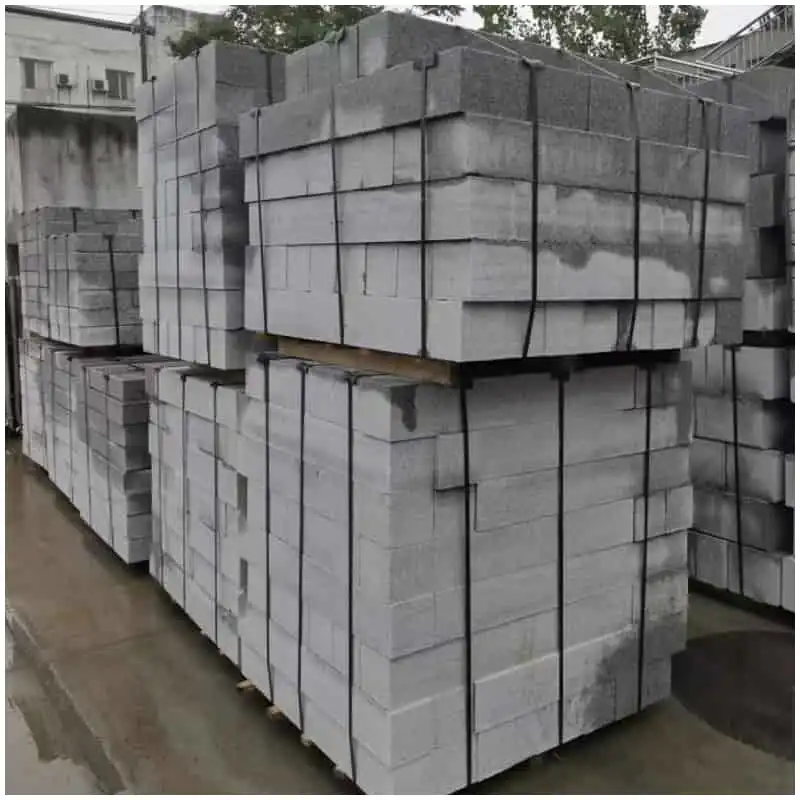
Outdoor Granite Kerb Surface Finishes and Exposed Faces
For an outdoor granite kerb, the top, front, back and end faces may have different processing requirements. Specifying a single finish for the entire block can create unnecessary work or leave the visible face inconsistent.
Sawn: A comparatively regular cut face, often appropriate where tight adjoining surfaces or accurate dimensions are important.
Flamed or bush-hammered: A textured finish for visible external faces and selected pedestrian-contact surfaces, subject to the specification.
Natural split: A rougher, less uniform surface that may suit landscape-style kerbs. Its irregularity must be considered wherever paving, joints or specified dimensional classes require greater precision.
Landscape Granite Curb for Parks, Gardens and Pedestrian Walkways
A landscape granite curb can separate pedestrian paving from grass, planted beds, gravel areas and adjacent garden surfaces. The same light grey granite may coordinate with steps, paving slabs and outdoor seating areas.
In parks, the visual relationship between the top of the kerb and the neighboring paving is important. A low edging unit may sit nearly flush with the finished walkway, while a raised planting border may use a deeper visible profile.
For curved paths and garden beds, the radius must be specified. A series of short straight units creates segmented joints and cannot reproduce every tight curve smoothly. Purpose-cut radius sections can be considered where the project requires a continuous curve.
Pedestrian areas also require suitable edge details. Sharp exposed corners, uneven kerb tops and unexpected level changes should be reviewed in the accessibility and landscape construction design.
G603 Grey Granite Kerbstone for Landscaping Projects
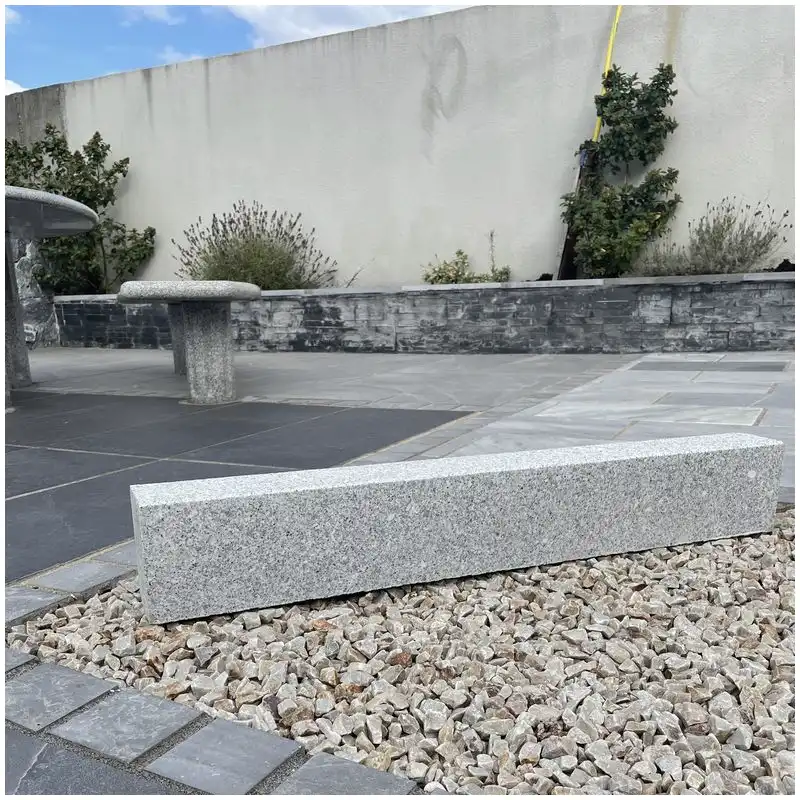
G603 kerbstones can create a defined boundary in landscaped public spaces. Their pale granite color works alongside grey paving, planting beds, lawn edges and concrete architectural elements.
For broad landscape paths, the kerb line should follow the paving grid and the approved finished levels. Corners, changes of direction and transitions to steps need their own detail rather than a continuous row of identical straight blocks.
A light grey granite roadside stone used beside planted areas may be exposed to soil, irrigation water and periodic cleaning. The design should avoid trapping water behind the kerb or undermining the base through poorly controlled runoff.
The image is a landscape application reference. Final profile dimensions, foundations, paving support and drainage details must follow the actual project drawings.
Natural Granite Road Kerb Profiles: Straight, Chamfered, Bullnose and Curved
The required natural granite road kerb profile should be established before production. Straight-edged units are comparatively simple to measure and align, while shaped faces introduce additional geometric and finishing requirements.
Chamfered and bullnose profiles may be specified where a defined edge transition is required. Their radius or chamfer dimensions must appear on the sectional drawing, along with any requirement for an eased top corner.
Splayed, battered and mountable profiles are application-specific. They should only be fabricated against the road engineer’s approved cross-section, particularly where vehicle movement across the kerb is expected.
Curved and transition kerbs need the plan radius, direction, chord length, end-cut angles and piece numbering. For tight curves, a physical template or detailed coordinate drawing may be needed to check the finished geometry.
EN 1343 Kerbstone Tolerances and Project Acceptance Requirements
EN 1343 addresses natural stone kerbs for external paving. It includes requirements and test methods related to dimensions, stone properties and product declaration. The applicable edition and national or project-specific requirements must be confirmed.
İçin grey granite kerbstone production, the purchase drawing should identify the dimensional tolerance class and any special limits for the finished face, cross-section, end squareness and curve geometry.
Sawn, flamed and natural split faces do not necessarily share identical surface tolerances. A nominal dimension without a finish designation may therefore be insufficient to determine whether a finished kerb meets the intended specification.
No universal tolerance such as ±1mm is promised for every kerbstone in this listing. The accepted deviations depend on the specified product form, surface processing, standard and contractual drawings.
G603 Granite Kerbstone Bedding, Foundation Support and Installation
Road and landscape kerbs must be supported by a suitable base. The selected bedding and backing details depend on soil conditions, road or paving construction, traffic loading and the specified kerb profile.
For trafficked road boundaries, the foundation and any backing or haunching should follow the engineer’s design. For park paths and landscape edging, the support arrangement still needs sufficient restraint to prevent movement, rotation or settlement.
Kerb units should be installed to the approved line and level. Joints must accommodate the specified layout, while curved runs and corner transitions require accurately numbered pieces.
Construction tolerances are influenced by the installed system as well as the factory-cut stone. A correctly sized kerbstone can still produce an unacceptable finished line if the bedding or alignment is inaccurate.
Frost Resistance, Road Salt and Exterior Exposure of G603 Granite
G603 reference data indicates relatively low water absorption, but this alone does not establish that every current quarry selection is suitable for all climates. The selected kerbstone must be assessed for the project’s actual exposure conditions.
In freeze–thaw regions, moisture saturation, drainage and foundation conditions influence durability. Where required, obtain appropriate frost-resistance testing for the selected stone and follow the contract’s acceptance criteria.
Roads treated with de-icing chemicals may need additional consideration. A general freeze–thaw reference is not equivalent to verified resistance under every de-icing salt exposure condition.
The design should also prevent standing water from undermining the kerb base. Joint condition, drainage routes and the surrounding pavement system affect the long-term stability of the roadside edge.
G603 Kerbstone Project Measurement, Cutting Schedule and Quantity Planning
Kerbstones are commonly scheduled by linear metres or individual pieces. The project bill of quantities should distinguish straight runs, radius units, corners, transitions and special-shaped components.
A straight 1000mm-long unit and a specially cut curved unit may require different production arrangements, even when their nominal lengths appear comparable. The complete cross-section also affects each piece’s volume, weight and transport requirements.
For a larger project, prepare a drawing-based schedule containing unit length, cross-sectional dimensions, profile, visible-face finish, quantity, curve radius and location code. This allows fabrication and packing to follow the intended installation sequence.
If the commercial inquiry uses a square-metre unit, the measurement basis must be clarified before quoting. Kerbstone quantities cannot be converted reliably from area into linear metres without an agreed dimensional and measurement convention.
G603 Granite Kerbstone Factory Inspection and Quality Control
- Confirm the actual G603 material selection, light grey tone and mineral grain distribution against approved production samples.
- Measure the finished length, cross-section, overall height and exposed-face dimensions against the approved kerb drawings.
- Check chamfers, bullnose profiles, splayed faces and end-cut angles where specified.
- Inspect visible faces for unacceptable chips, cracks, open defects and inconsistent sawn or textured processing.
- Verify the radius and geometric continuity of curved kerbs against approved templates or dimensional drawings.
- Check end squareness, top-edge alignment and the specified dimensional acceptance class.
- Identify straight, curved and special-shaped pieces by drawing reference and installation zone before packing.
Export Packing and Handling for G603 Granite Road Kerbs
Granite kerbstones are dense and may be substantially heavier than floor tiles. Export packaging should account for piece length, cross-section, total weight and the condition of exposed edges.
Straight kerbs can be arranged on suitable supports or reinforced pallets, with appropriate separation and restraint to avoid movement during shipping. Long units, curved kerbs and shaped corners may require different packing arrangements.
Crate and pallet identification should correspond to the road section or landscape area. Packing lists should distinguish the sizes, profiles and quantities of regular units from special-shaped components.
Cleaning and Maintaining G603 Granite Roadside and Landscape Kerbs
Routine cleaning should remove accumulated soil, road dust and organic deposits using methods compatible with the granite finish and adjacent paving materials.
Textured and split-face surfaces may retain more dirt than smooth sawn faces. Cleaning equipment should not damage joints, surrounding planting or the supporting pavement construction.
Periodic site inspection should check damaged kerb edges, settlement, loose units, blocked drainage areas and displaced joints. A loose kerbstone requires assessment of its foundation and restraint rather than surface cleaning alone.
Frequently Asked Questions About G603 Grey Granite Kerbstone
What is G603 Grey Granite Kerbstone?
G603 Grey Granite Kerbstone is a natural Chinese light grey granite product cut into roadside and landscaping kerb units. It is used for road edges, pedestrian paths, public parks and landscape borders, subject to project-specific profile and installation requirements.
What sizes are available for G603 Granite Curbstone?
ESTA STONE’s related G603 production records include 1000×150×150mm, 1000×150×200mm and 1000×150×300mm kerb references. The actual cross-sectional dimensions, special shapes and current production availability must be confirmed from approved drawings.
Can G603 curb be used for highway construction?
G603 kerbs can be considered for highway and roadside projects when the specified stone, cross-section, foundation, vehicle interface and performance documentation meet the applicable road authority requirements. A generic granite kerb is not automatically certified for every highway application.
Which finishes can be used for landscape granite curbs?
Common options include sawn, flamed, bush-hammered and natural split finishes. The top, front and back faces can have different finish requirements, depending on adjacent paving, exposed surfaces and dimensional tolerances.
Can G603 granite kerbstones be manufactured in curved profiles?
Curved and special-shaped kerbstones can be considered using approved drawings. The required radius, chord length, kerb profile, end-cut geometry and piece numbering must be specified before production.
Are the G603 technical values certified for this kerbstone order?
No. The listed density, water absorption and strength values are indicative G603 reference data, not laboratory certification for the current Esta Stone production batch. Projects requiring verified frost, mechanical or other performance must obtain appropriate documentation for the selected granite.
G603 Granite Kerbstone Compared with Four Outdoor Stone Products
These products serve related but different external construction functions. Selecting a flat paving slab, a stair unit or a decorative edging stone does not automatically satisfy a road-kerb specification.
| Comparison | G603 Grey Granite Kerbstone | Granit Dış Mekan Plakaları | Gri Granit Bordür Taşları Peyzaj | Honed Bluestone Limestone Steps | Siyah Granit Kenar Taşları |
| Görünüm | Light grey fine-grained granite with white and dark speckles. | Natural granite paving surfaces; color and grain depend on selection. | Grey natural granite in roadside and garden border formats. | Blue-grey limestone with a smooth honed appearance. | Dark granite providing a strong edge contrast. |
| Product Form | Straight, chamfered, splayed and curved road kerb sections. | Flat outdoor paving slabs and cut-to-size stone surfaces. | Granite curb blocks and landscape border units. | Limestone steps, stair blocks and yard components. | Black stone edging and landscaping boundary pieces. |
| Installation Role | Defines the boundary between roads, footpaths, verges and paving. | Forms the horizontal walking or exterior paving surface. | Defines pedestrian, driveway or landscape edges by profile. | Forms steps and changes in walking level. | Creates dark visual boundaries around planting or paving. |
| Key Specification | Cross-section, kerb reveal, radius, backing support and road requirements. | Slab thickness, paving support, drainage and walking-surface performance. | Profile height, width, corner details and installation level. | Tread depth, support, nosing, limestone exposure and slip performance. | Edge dimensions, dark finish consistency and restraint system. |
| Best Project Fit | Roadside kerbs, municipal street edges, highway projects and park paths. | Courtyard paving, plazas, paths and outdoor floors. | Garden borders, landscape edging and related roadway details. | Garden steps, terraces and selected yard transitions. | Dark garden edging, architectural planting beds and path borders. |
| Buying Decision | Choose when a road or landscape scheme specifies G603 light grey granite kerbs. | Choose for paving areas rather than raised road-edge profiles. | Compare when a different grey granite curb format is required. | Choose for step construction, not as an automatic road kerb substitute. | Choose when a darker decorative edging material is preferred. |
Recommended Outdoor Granite and Landscape Stone Products

Granit Dış Mekan Plakaları
Exterior granite paving slabs for courtyards, walkways and landscaped public spaces.

Gray Granite Curb Stones
Grey natural granite border units for garden edging and pedestrian landscape construction.

Honed Bluestone Limestone Steps
Blue-grey limestone steps and yard components for coordinated landscape transitions.

Siyah Granit Kenar Taşları
Dark granite border pieces for planting beds, garden paths and exterior edging.

Request G603 Grey Granite Kerbstone for Road and Landscape Projects
Send the required G603 Grey Granite Kerbstone length, cross-section, profile drawing, exposed-face finish and installation location. For highway kerbs, include the road specification, transition details and applicable test requirements. For parks and landscaping, provide the path alignment, curve radii, finished levels and piece schedule. Confirm the quotation measurement unit before order approval.