
Résumé rapide
Dalles en granit noir d’Angola are dark crystalline natural stone slabs used to produce kitchen islands, sink countertops, backsplashes and custom stone surfaces. Esta Stone supplies jumbo slabs and featured 18mm polished material, with 20mm and 30mm options subject to slab selection. The stone has a black to charcoal background with fine silver-grey reflections rather than broad decorative veins. Full-slab photographs help fabricators group pieces by background tone and crystal distribution. For kitchen production, cutting yield, sink openings, visible edges and cabinet support are more useful purchasing considerations than nominal slab area alone.
Angola Black Granite Jumbo Slabs for Kitchen Islands and Custom Countertops
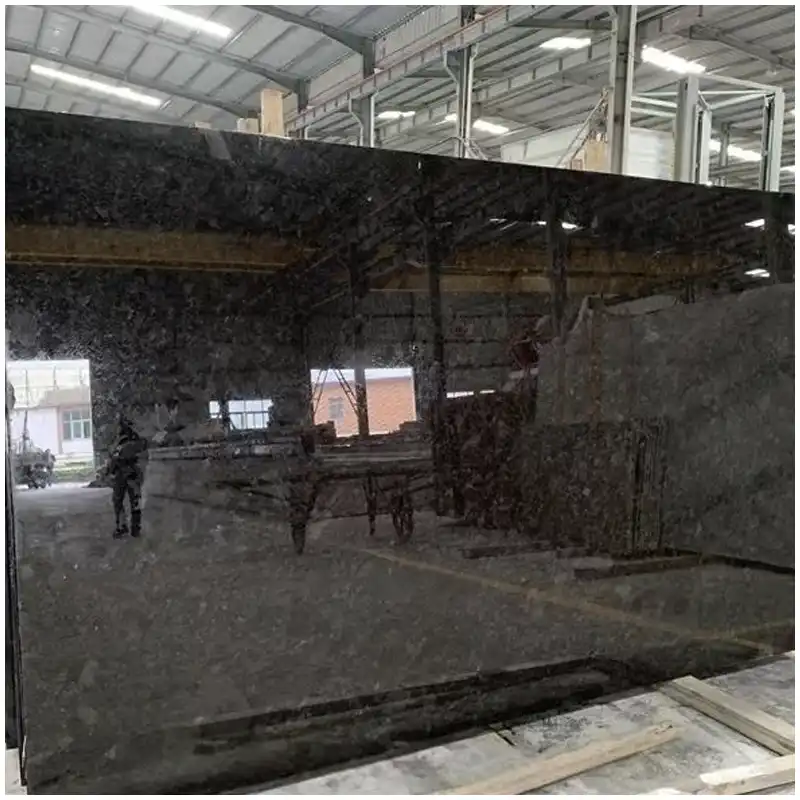
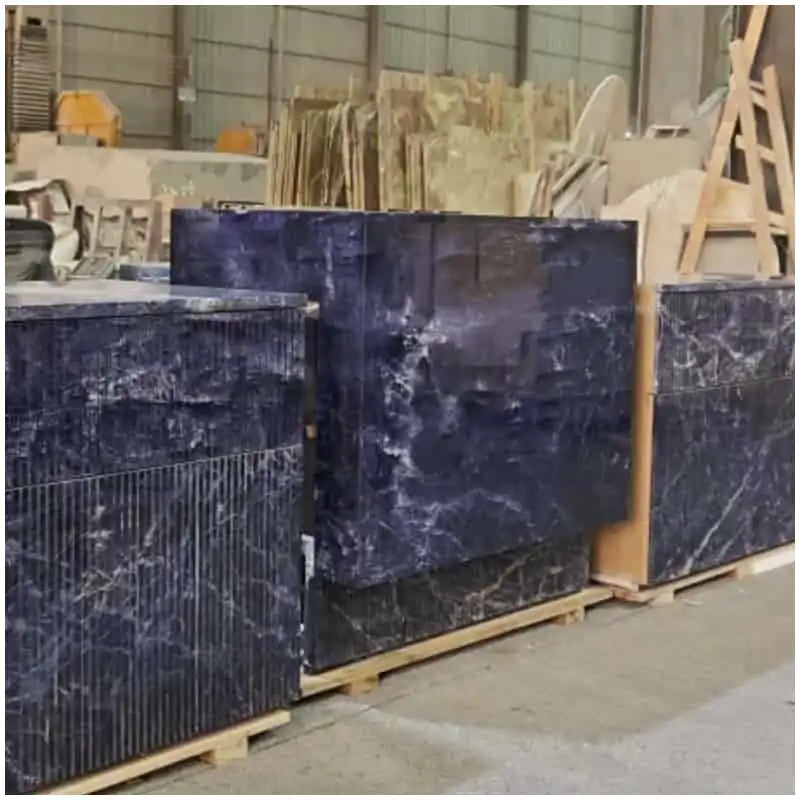
Angola Black Granite Jumbo Slabs allow fabricators to cut broad kitchen surfaces from a single piece of natural stone where the selected dimensions permit. Their dark crystalline appearance works particularly well when the finished design calls for a continuous black island surface without conspicuous white or golden veins.
A kitchen island measuring 2600 × 1100mm, for example, needs more than a slab with that nominal area. The fabricator must allow for edge trimming, cutting clearance and the actual shape of the stone. This dimension is an illustration of cutting-plan assessment, not a stated available stock size.
The principal advantage of ordering a full slab is control over the finished components. An island top, matching waterfall return and smaller backsplash pieces can be allocated from one selected group, depending on usable slab area and the arrangement of any natural defects.
Esta Stone’s Angola Black slab range includes large-format cutting references. Buyers ordering multiple kitchens can establish a black-tone grade before allocating slabs to each countertop package, rather than receiving unrelated pieces with noticeable differences in crystal brightness.
18mm Angola Black Granite Slabs for Supported Countertop Fabrication
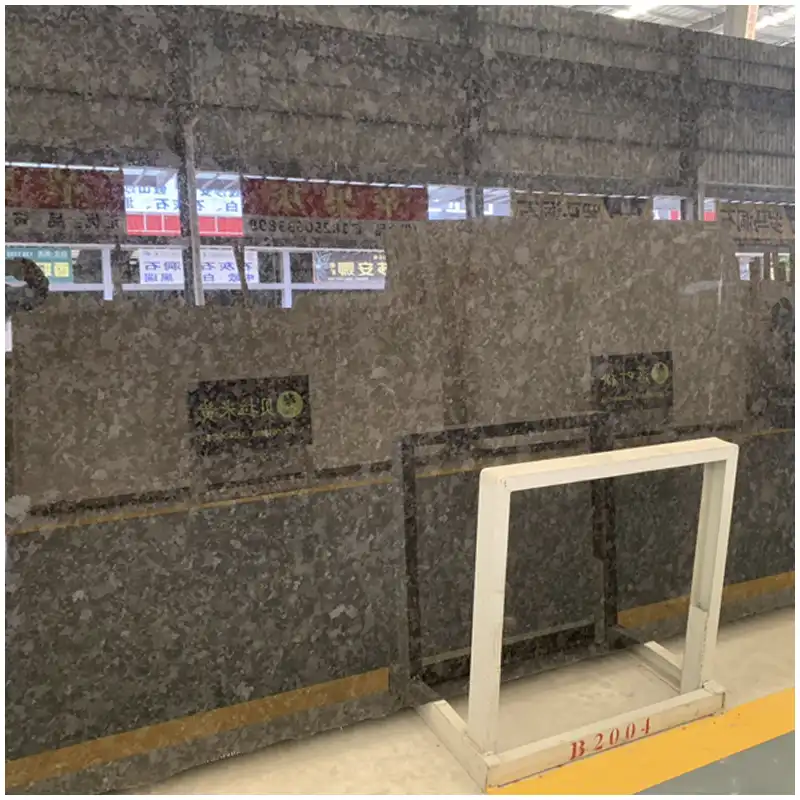
The featured 18mm Angola Black Granite Slab is a relevant format for countertops installed over appropriately designed cabinets or continuous support. Its thinner profile can be incorporated into contemporary kitchens with straight or lightly eased edges.
A countertop with an undermount sink requires careful attention to the stone remaining at the front and rear of the opening. Faucet holes, sink dimensions and any reinforcement arrangement must be included in the shop drawing before cutting.
The same thickness is not automatically appropriate for every installation. Long seating overhangs and narrow stone bridges around appliance openings can change the stress in a finished component. For these designs, a supporting frame, modified geometry or alternative thickness may be needed.
A mitered front edge can create the appearance of a thicker countertop while using thinner stone components. It is a fabricated buildup rather than a solid full-thickness slab, and the corner detail should identify the joint, adhesive and visible crystal alignment.
Where a project includes 20mm or 30mm Angola Black Granite, the buyer should still specify finished dimensions and exposed edges. Greater nominal thickness does not remove the need to coordinate sink supports and cabinet openings.
Polished Angola Black Granite Slabs: Black Background and Crystal Consistency
A polished Angola Black Granite surface is characterized by closely distributed dark crystals with subtle silver-grey reflections. The distinction is important: this stone is generally selected for a relatively consistent crystalline field, not the sweeping decorative veins found in Cosmic Black or other strongly patterned black granites.
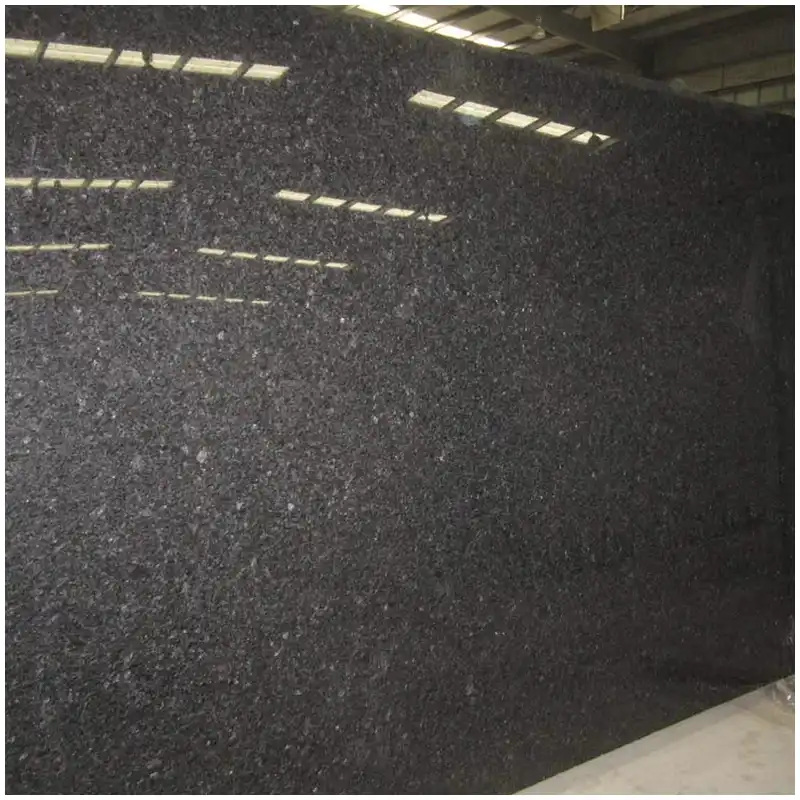
Under directional lighting, individual crystals can reflect more strongly than the surrounding dark minerals. Two slabs may therefore appear similar in ambient light but show different levels of sparkle beneath pendant lighting above a kitchen island.
Buyers specifying a consistent black finish should compare the background darkness, crystal size and reflectivity of the actual slabs. Mixed polished batches can produce visible differences between a main island and its adjoining perimeter countertops.
Honed and leathered finishes are alternative surface treatments, but they change how the black background is perceived. Honing can produce a softer charcoal appearance, while leathering creates a textured reflection. These finishes should be approved from actual samples rather than judged from photographs of polished material.
Angola Black Granite Slab Cutting Yield for Matching Kitchen Components
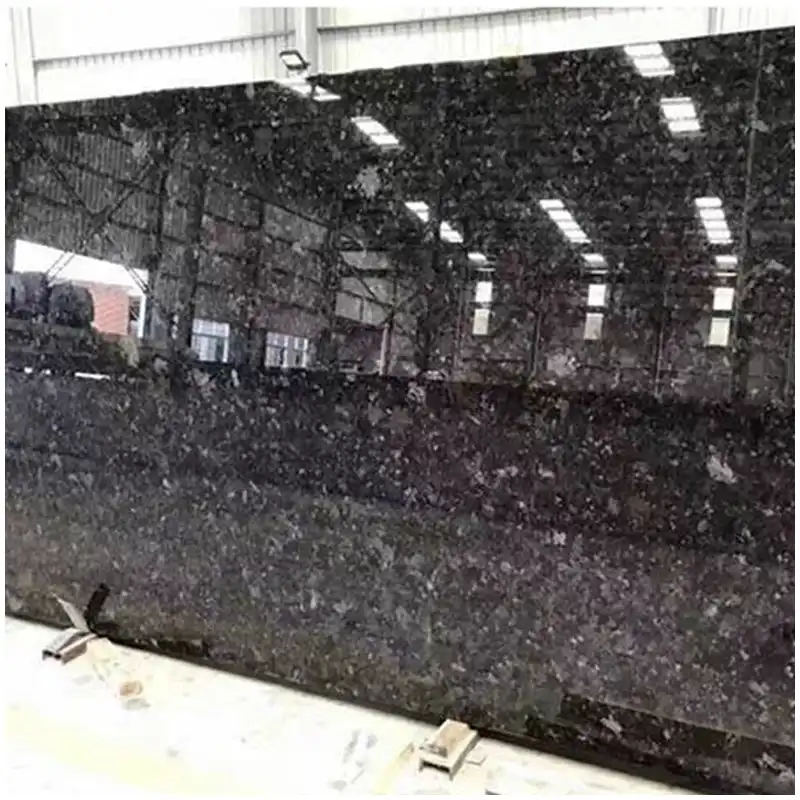
When a kitchen order contains more than one top, slab allocation should begin with the complete cutting list. A straight counter, central island, sink strip and wall backsplash do not necessarily fit efficiently into the same rectangular slab.
Large uninterrupted pieces should be allocated first. Smaller components can then be positioned in the remaining usable areas, provided their visible faces and natural crystal grading remain compatible with the rest of the kitchen.
Sink cutouts and hob openings generate offcuts that may or may not be suitable for narrow accessories. Their usefulness depends on size, corner condition and how the material has been cut. Such offcuts should not automatically be counted as recoverable production area.
For multi-kitchen residential orders, finished component numbers can identify which pieces belong together. That prevents a replacement backsplash or island return from being installed with a visibly different black tone after the original slab group has been processed.
Angola Black Granite Slab Sizes, Thicknesses and Fabrication Formats
The following dimensions are catalogue cutting references from the product range, rather than verified current stock measurements. Slabs are selected individually; the finished cutting schedule should use actual usable dimensions after edge trimming.
| Produit | Dalles en granit noir d’Angola |
| Commercial Material | Angola Black Granite / Negro Angola |
| Origine | Angola, Southern Africa |
| Color & Grain | Black to Charcoal / Fine Silver-Grey Crystal Reflections |
| Small Slab Reference | 1800mm+ × 600mm+ |
| Large Slab Reference | 2400mm+ × 1200mm+ |
| Jumbo Slab Reference | 2800mm+ × 1500mm+; verify actual slab outline |
| Featured Thickness | 18mm |
| Other Thickness References | 20mm / 30mm |
| Surface Finishes | Polished / Honed / Leathered; by sample approval |
| Cut-to-Size References | 300 × 600mm / 600 × 600mm / Custom Dimensions |
| Countertop Formats | Straight Runs / Islands / Sink Tops / Backsplashes / Returns |
| Traitement des bords | Eased / Beveled / Rounded / Mitered Buildups by Drawing |
Angola Black Granite Kitchen Countertops in Private Residential Interiors
The kitchen application image shows how dark Angola Black-style stone can be incorporated into a private residential countertop scheme. For this product, the most relevant fabrication work is the coordination of the island, perimeter tops and exposed stone edges with the cabinetry.
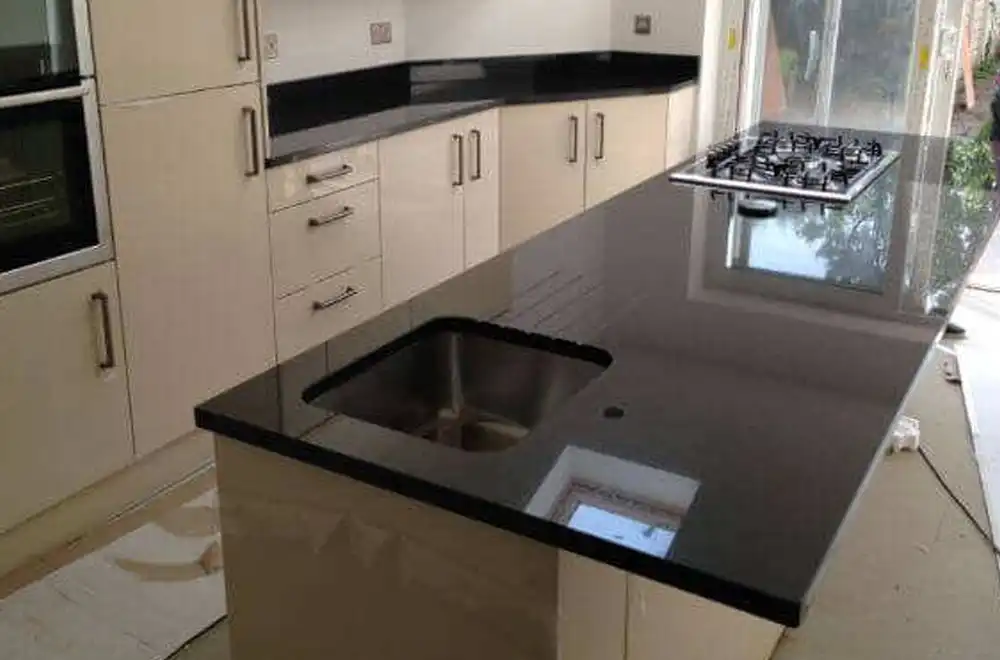
On an island, the uninterrupted black surface directs attention to the cabinet geometry and the shape of the countertop. Straight edges work well when the design uses flat-front cabinet doors. Rounded corners can be incorporated where circulation space is limited, but their radius must be included in the fabrication drawing.
A sink countertop needs additional information: undermount or top-mount installation, sink template, faucet-hole positions and the finished width of stone around the opening. Where an undermount sink is specified, the sink should have its own appropriate support rather than relying solely on the stone edge.
Full-height backsplashes can be cut from matching slab material when the dimensions allow. Their black crystal grading should be reviewed alongside the worktop, particularly in kitchens where concealed lighting makes differences in surface reflection more visible.
The image illustrates a residential design arrangement. It does not establish the dimensions, stone batch or support details of a verified completed Esta Stone installation.
Sink Openings, Mitered Islands and Cabinet Interfaces in Black Granite
For a fabricated kitchen package, the countertop drawing should record the actual cabinet lengths and depths rather than using nominal kitchen-module dimensions. Finished wall conditions, cabinet alignment and appliance clearance can change the required stone measurements.
At sink openings, internal corners should be cut using a method and radius appropriate to the stone and equipment. Narrow sections need inspection before the slab is processed; a strong-looking black surface does not reveal every internal seam or local weakness.
A mitered waterfall edge adds two separate cutting requirements: the top surface must meet the vertical return accurately, and the polished black crystal field should appear consistent across the corner. Any buildup also needs an agreed visible joint and secure support.
For long countertop runs, joint positions are most useful when coordinated with cabinet divisions and accessible installation locations. The joint should not be placed simply where it minimizes cutting waste if that position leaves a fragile narrow section near a cutout.
Angola Black Granite and Its Anorthosite Geological Classification
Angola Black Granite is a commercial dimension-stone name. Petrographic research on Angola’s black ornamental stone identifies an anorthosite dominated by plagioclase feldspar, with smaller amounts of dark minerals such as pyroxene and olivine.
This matters when buyers request an exact geological material specification. A product sold as black granite does not necessarily have the quartz-rich mineral composition of a typical geological granite. The polished, crystalline black appearance remains the basis of its established commercial name.
Variation in mineral composition can also influence surface appearance, including the distribution of reflective crystals or locally altered minerals. For projects requiring a particular petrographic class, the actual lot should be identified by its stone documentation rather than by marketing terminology alone.
Angola Black Granite Physical Properties: Material Test References
The table uses one published Angola Black natural-stone technical record. Its strength and abrasion figures are useful for preliminary comparison with project specifications, but they are not measurements of the slabs currently supplied by Esta Stone.
| Propriété physique | Reference Result | Test Information |
| Reported Density | 2,840 kg/m³ | Material specification reference |
| Flexural Strength — LEV | 19.5 MPa | BS EN 12372 |
| Compressive Strength — LEV | 201 MPa | BS EN 1926 |
| Open Porosity | 0.3% | BS EN 1936 |
| Wide-Wheel Abrasion | 16.1 mm | BS EN 14157 |
| Honed Slip Resistance — Dry | 59 | BS EN 14231; tested honed finish |
| Honed Slip Resistance — Wet | 19 | BS EN 14231; tested honed finish |
Data limitation: LEV denotes the lower expected value reported in the reference record. The results apply to a tested Angola Black stone sample, not to Esta Stone’s current batch. The source’s water-absorption entry has an ambiguous unit and is deliberately excluded rather than being converted into a percentage. The honed slip measurements cannot be used as a polished-floor rating.
For countertop fabrication, these figures do not establish the allowable overhang or strength of narrow stone around openings. Those decisions depend on the actual slab condition, completed geometry and support arrangement.
Cleaning and Maintaining Polished Angola Black Granite Countertops
Polished black stone shows certain residues more readily than lighter surfaces. Fingerprints, dried water droplets, soap film and cleaning streaks can become visible under oblique kitchen lighting even when the stone itself is clean.
For daily use, remove loose particles with a soft cloth and clean with a pH-neutral product formulated for natural stone. Rinse and dry the worktop to reduce visible residue. Avoid abrasive scouring pads and harsh chemical cleaners that could affect the polished surface or any existing treatment.
Natural Angola Black should not be advertised as scratch-proof, stain-proof or unaffected by extreme heat. Use cutting boards and trivets, and test any proposed impregnating treatment on an inconspicuous sample first. Sealing suitability and maintenance frequency depend on the selected stone and finish.
Angola Black Granite Slab Inspection, Cutting Approval and Export Packing
| Slab Selection | Record selected slab numbers, usable dimensions, thickness and polished black grade. Inspect the surface under consistent light for differences in crystal brightness, filled areas, discoloration or edge damage. |
| Fabrication Approval | Match countertop drawings to each slab’s cutting layout. Check sink openings, finished edges, mitered returns, thickness tolerances and part numbers before the completed pieces are released for packing. |
| Shipment Preparation | Separate polished faces with appropriate protection, secure slabs or cut pieces in suitable export packing and identify kitchen sets by package number. Verify photographs, packing quantities, weights and shipping details against the order. |
Five Mistakes When Ordering Angola Black Granite Slabs for Kitchens
- Buying jumbo slabs by gross area only: An island that appears to fit a slab’s dimensions may not leave enough material for trimming, saw cuts or a matching waterfall return.
- Mixing noticeably different polished black grades: Variations in crystal reflectivity can become visible beneath kitchen pendants even when the stone appears uniformly black in storage.
- Cutting an 18mm sink top without a support plan: The narrow stone remaining around an undermount sink and the sink support must be reviewed together.
- Specifying thick-looking edges without identifying their construction: A mitered buildup is not equivalent to a solid 30mm or 40mm slab, and its joints must be detailed.
- Accepting generic black-granite test numbers: Angola Black, Absolute Black and Blue Pearl are different stone selections. Engineering data should identify the actual material and sample.
Frequently Asked Questions About Angola Black Granite Slabs
Where is Angola Black Granite quarried?
Angola Black Granite is a commercial natural stone quarried in Angola, southern Africa. It is also marketed under names such as Negro Angola and Angola Labrador. Exact quarry identification should match the purchased stone lot.
Is Angola Black Granite suitable for kitchen countertops?
Angola Black Granite slabs can be cut into kitchen islands, straight countertops, sink tops and backsplashes. Finished dimensions, sink openings, exposed edges and cabinet support should be included in the fabrication drawing.
What thicknesses are available for Angola Black Granite slabs?
The featured slab selection includes 18mm material, with 20mm and 30mm as additional catalogue thickness references. Actual dimensions and thickness availability depend on the selected slabs.
Can Angola Black Granite jumbo slabs be used for large kitchen islands?
Jumbo slabs can be considered for large kitchen islands when the finished outline fits within the usable slab dimensions. Sink cutouts, edge trimming, waterfall returns and support details affect the final cutting plan.
What is the difference between polished and honed Angola Black Granite?
Polished Angola Black has a reflective black surface that highlights its fine silver-grey crystals. Honing reduces gloss and can make the background appear softer or more charcoal-colored. The chosen finish should be approved on the actual stone.
Is Angola Black Granite geologically a true granite?
Angola Black Granite is an established commercial stone name. Petrographic research on related Angolan black ornamental stone identifies an anorthosite rich in plagioclase, rather than a typical quartz-rich geological granite.
What physical properties can be referenced for Angola Black Granite?
One published Angola Black material record reports density of 2,840 kg/m³, flexural strength LEV of 19.5 MPa, compressive strength LEV of 201 MPa and open porosity of 0.3%. These are reference values, not certified results for the current slabs.
How should polished Angola Black Granite countertops be cleaned?
Use a pH-neutral natural-stone cleaner and a soft cloth, then dry the surface to reduce visible water marks and streaks. Avoid abrasive cleaners, use cutting boards and trivets, and check sealer compatibility before treatment.
Angola Black Granite Compared with Four Decorative Granite Slab Options
Angola Black is the quieter option in this group: its closely distributed dark crystals are less visually dominant than flowing multicolor veins, broad gold formations or prominent blue reflective minerals. The comparison below helps buyers choose the right slab appearance for the intended surface.
| Stone | Visual Pattern | Selection Difference |
| Granit noir d'Angola | Dark crystalline field with fine silver-grey reflections | Coordinated black islands and multiple countertop runs |
| Magic Rainbow Granite | Sweeping multicolor mineral movement | A patterned alternative for a more visually active island or wall |
| Granit labradorite bleu | Dark ground with stronger blue reflective mineral areas | Blue-reflective accent surfaces rather than uniform black |
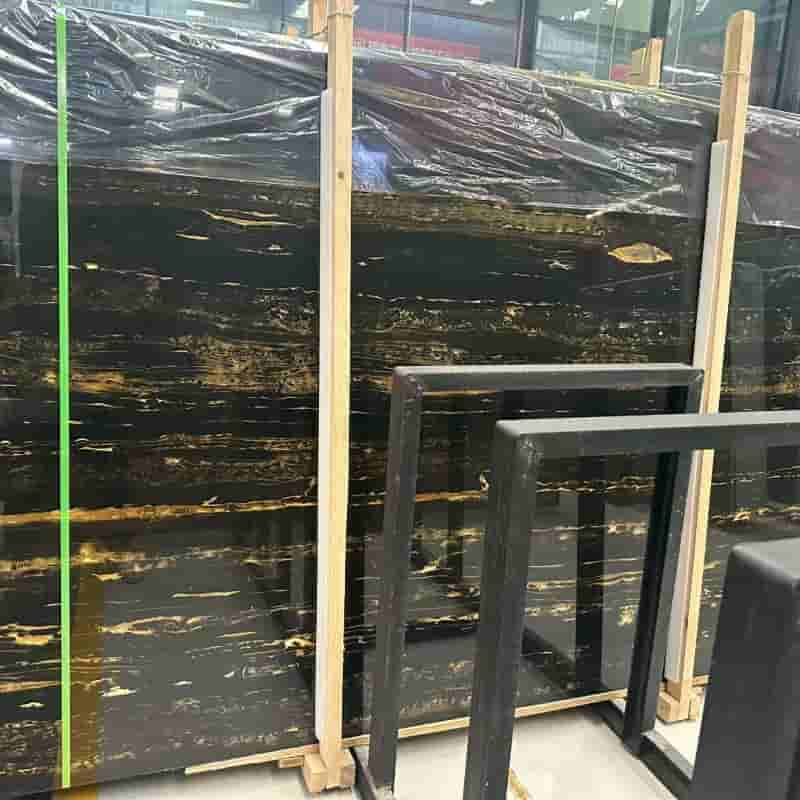
| Granit or titane | Dark background with broad gold and pale mineral bands | Large decorative movement for feature countertops and walls |
| Granit bleu nacré | Dark grey-blue stone with reflective feldspar crystals | Brighter blue-grey crystalline appearance for selected tops and panels |
Recommended Granite Slabs with Contrasting Mineral Patterns
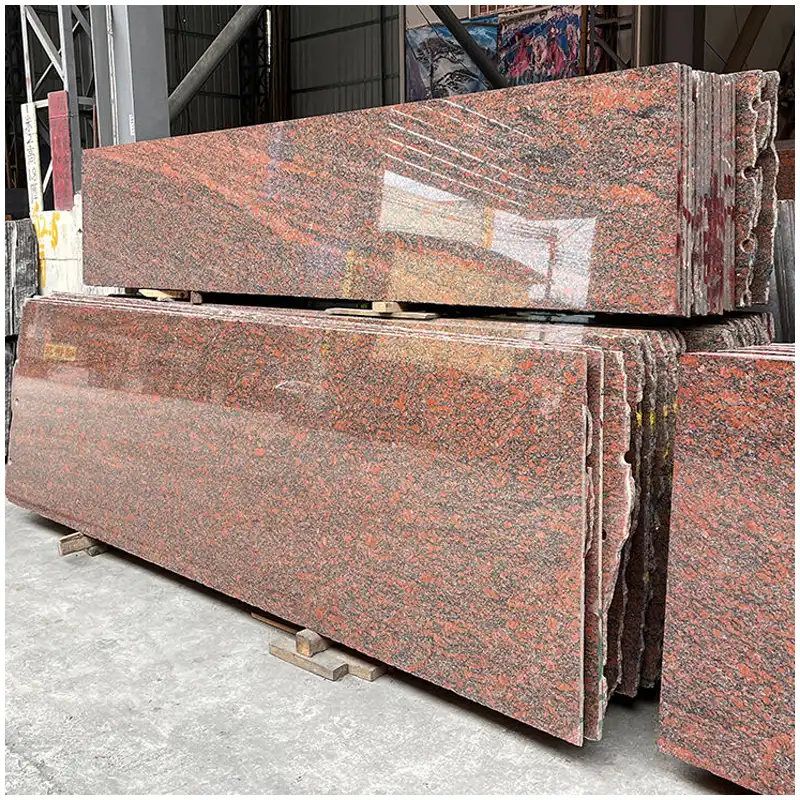
Dalle de granit Magic Rainbow
Multicolor natural slab for strongly patterned countertops and feature surfaces.
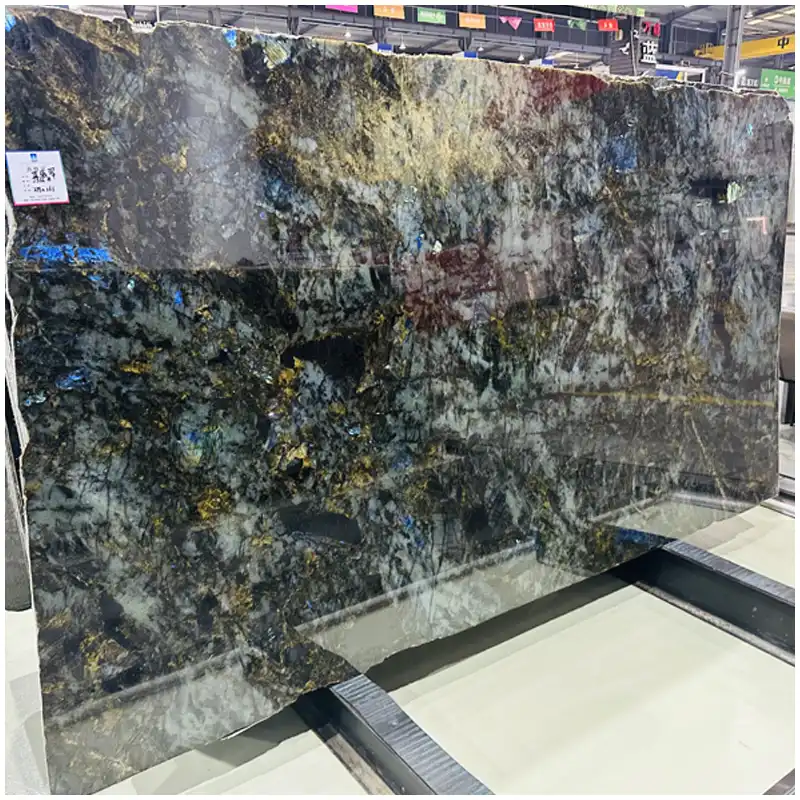
Granit labradorite bleu
Dark stone with reflective blue crystalline areas for decorative surfaces.

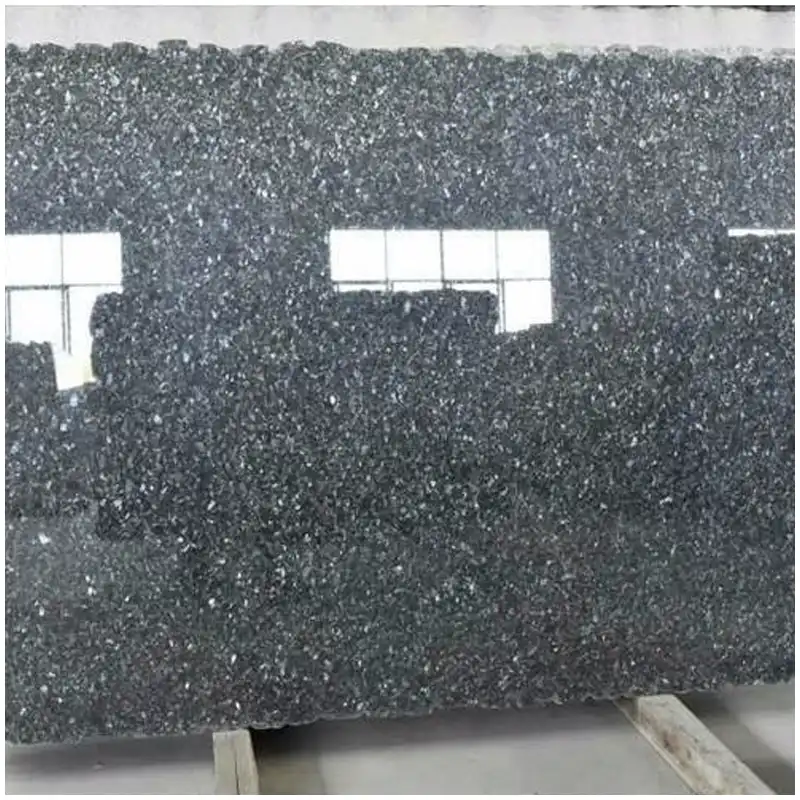
Select Angola Black Granite Slabs for Your Kitchen Cutting Schedule
For a kitchen countertop order, send Esta Stone the island dimensions, perimeter countertop lengths, sink and hob templates, exposed-edge details and preferred slab thickness. Include any matching backsplash or waterfall returns in the cutting list. The selected Angola Black Granite slabs can then be assessed for usable cutting area, consistent black grading and the number of pieces obtainable from each slab. This establishes a more accurate quotation basis than the finished square-metre total alone.
| Demander un devis | View Granite Slabs |