



Quick Summary
Italy Portoro Gold Marble is a black-and-gold Italian natural stone originating from the Portovenere area of Liguria. Commercially known as Nero Portoro Marble, it has a black limestone background with irregular golden-yellow and occasional white calcite veins. Esta Stone supplies Portoro Marble Slabs for hotel wall panels, custom dining tables, bathroom cladding and selected interior flooring. Catalogue thickness references include 18mm, 20mm and 30mm, with polished and honed finishes subject to slab selection. Buyers should review actual slab origin, gold-vein distribution, usable cutting areas and the installation conditions before approving finished components.
Italy Portoro Gold Marble Slabs for Hotel Wall Cladding and Custom Stone Furniture
Italy Portoro Gold Marble Slabs are selected for interiors that call for a predominantly black stone surface interrupted by distinct golden mineral formations. The material is traditionally associated with the Portovenere area of northwestern Italy, where natural black limestone contains yellow-gold and occasional white calcite veins.
In a hotel reception area, broad Portoro panels can form the main architectural wall behind a counter or be incorporated into the front face of a reception desk. The relationship between the black background and the gold veins should be established across the whole wall, not evaluated from an isolated sample.
A private dining room presents a different scale of application. Here, a single stone table may display the natural vein structure more clearly than a wall divided into multiple panels. Its dimensions and edge treatment determine which part of the original slab remains visible on the finished tabletop.
Portoro is best approached as a selected architectural material rather than a uniform black surface. The quantity, direction and width of its golden veins vary from piece to piece. These variations influence cutting yield, panel composition and the visual consistency of adjoining components.
Italian Nero Portoro Marble Slab Selection and Gold Vein Placement
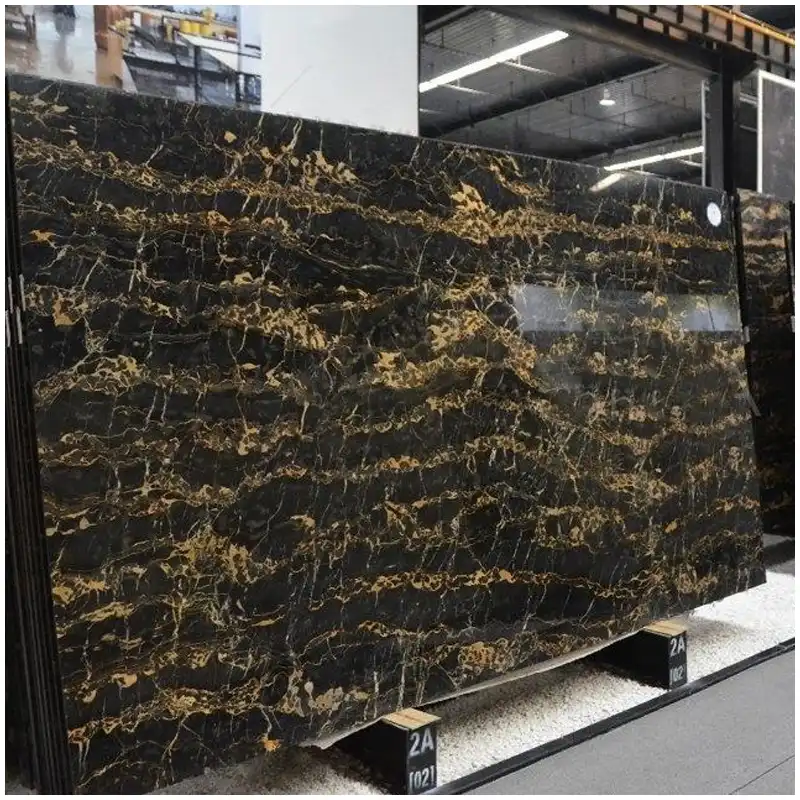
Nero Portoro has a fine-grained black limestone background containing irregular calcite veins and mineral seams. Some slabs have relatively narrow golden lines, while others contain broader branching formations with pale yellow, cream or white sections.
For architectural panels, a narrow gold vein can be positioned to cross several adjoining pieces, provided the selected slabs and cutting arrangement allow it. A thicker mineral formation may be better placed within a single panel, avoiding an abrupt interruption at a central joint.
The cutting direction matters because the natural structure is not evenly distributed. Turning a piece may bring an attractive vein into a more prominent position, but it may also create an undesirable transition where panels meet.
A project requiring mirrored bookmatching needs suitable consecutive slab faces. Two independent black-and-gold slabs cannot be assumed to produce matching patterns merely because their colors are similar. Slab numbering, orientation and visible-face approval should be established before fabrication.
Portoro Gold Marble Slab Gallery and Polished Surface Selection
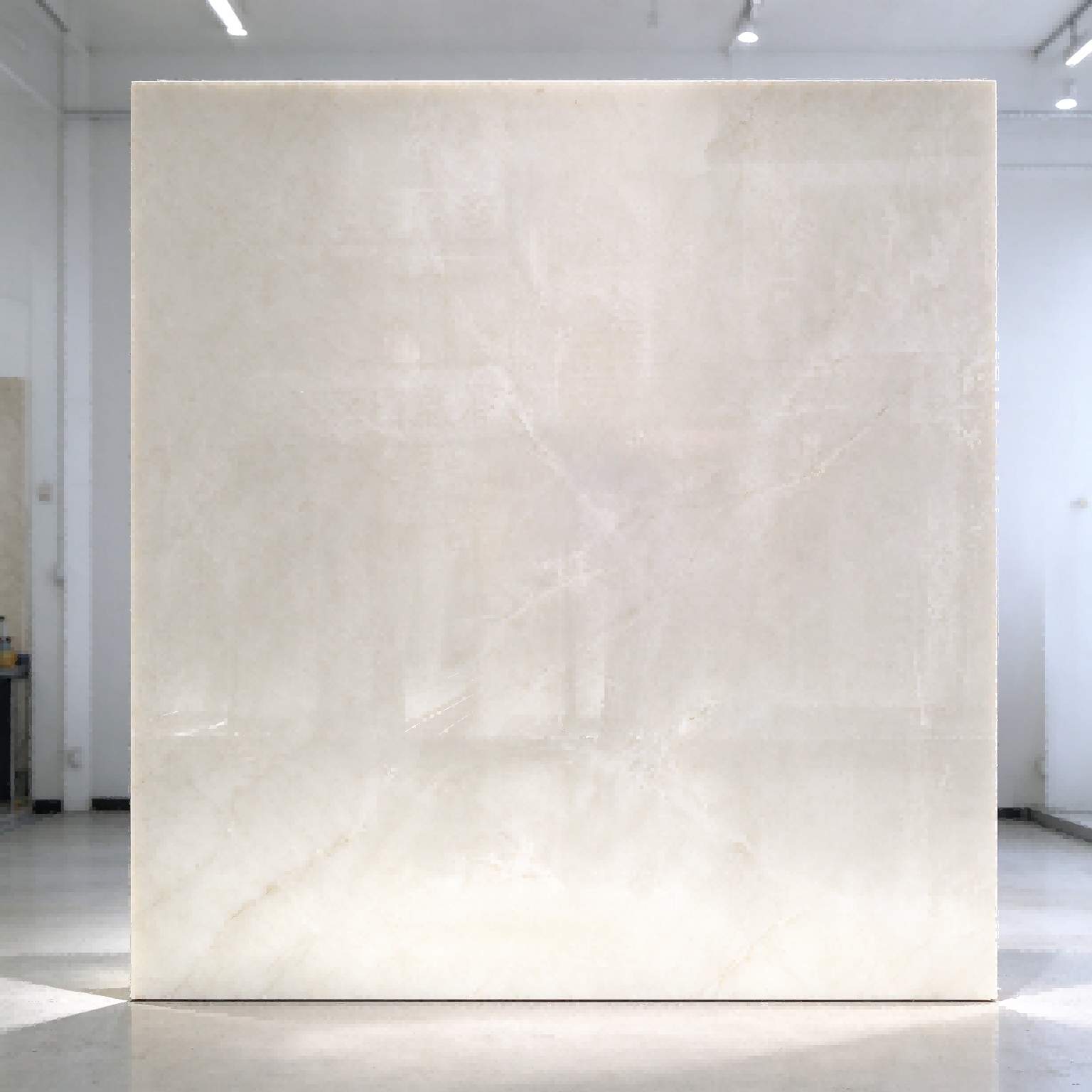
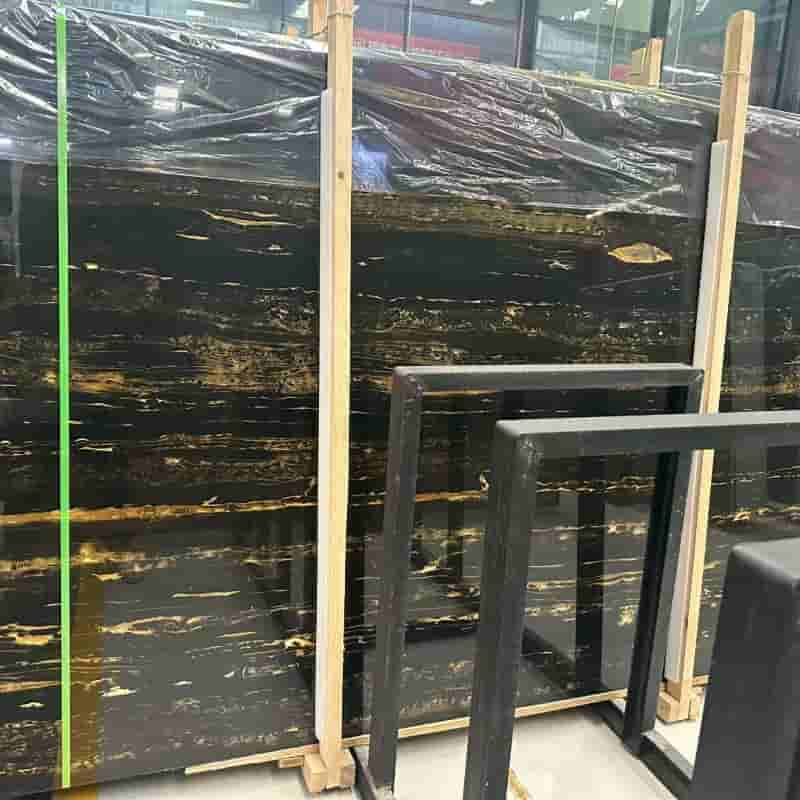
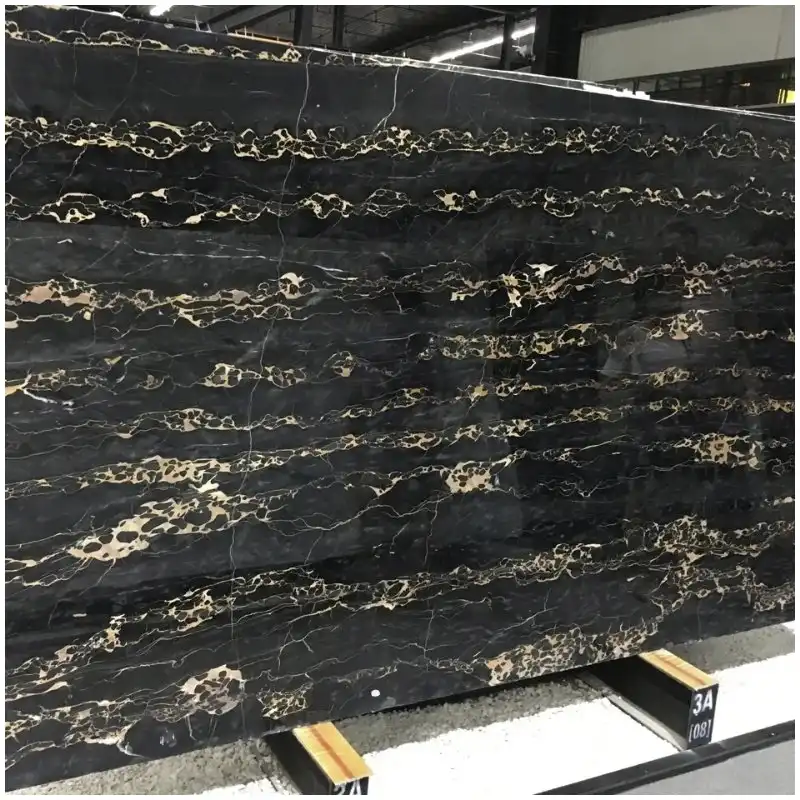
The following slab views show the black background and irregular gold-vein arrangement of the Portoro product selection. A polished surface enhances reflected light, but vein density and color proportions must be checked from the actual slabs rather than inferred from a representative photograph.
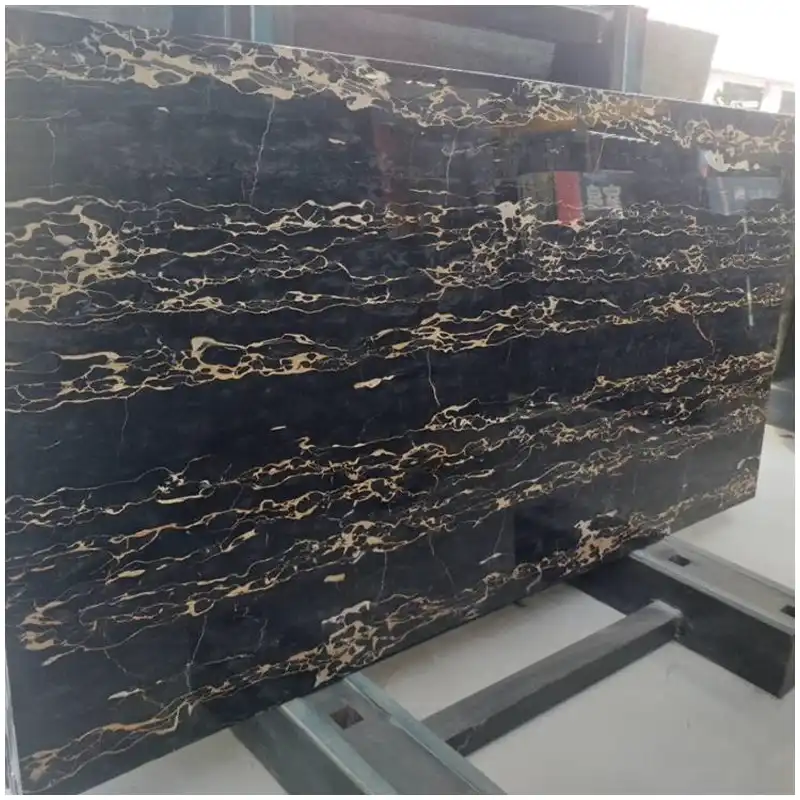
Full-slab view for gold-vein distribution and usable panel selection.
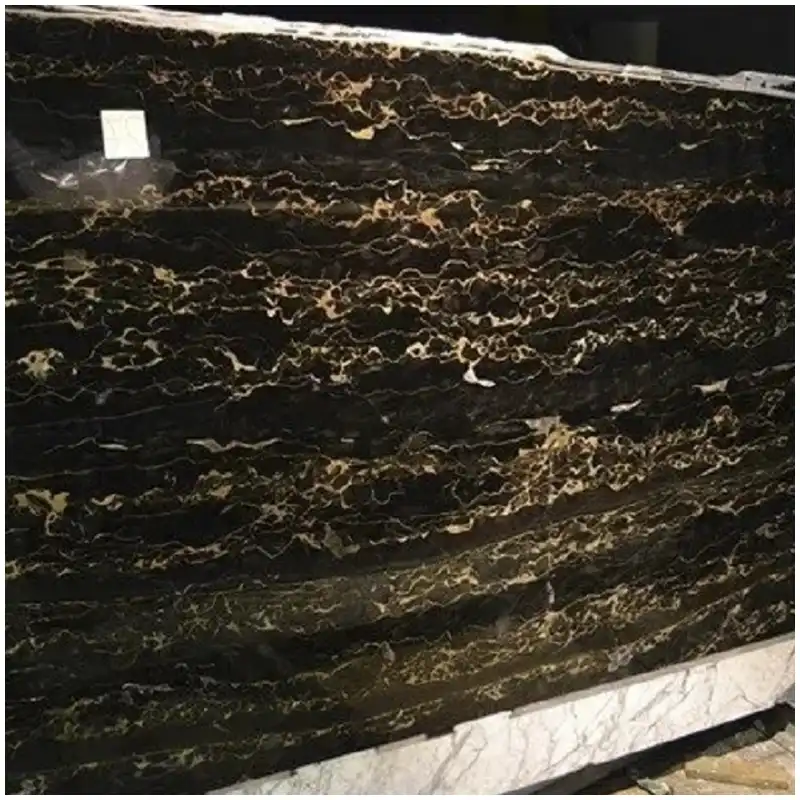
Italian Portoro surface showing the contrast between dark stone and calcite veins.
Italy Portoro Gold Marble Slab Sizes, Thicknesses and Fabrication Specifications
Portoro Gold Marble can be supplied as full slabs or processed into interior wall panels, decorative tiles and furniture components. The following sizes are catalogue references. Actual available dimensions, thicknesses and finished cutting yields depend on the selected stone lot and slab condition.
| Product Name | Italy Portoro Gold Marble Slabs |
| Commercial Names | Nero Portoro / Portoro Gold / Italian Portoro Marble |
| Material | Natural Black Limestone, Commercially Classified as Marble |
| Origin | Portovenere / La Spezia, Liguria, Italy; actual lot origin to be verified |
| Color | Black / Golden Yellow / Occasional White Veins |
| Slab Size References | 1800mm+ × 600mm+ / 2400mm+ × 1200mm+ / 2800mm+ × 1500mm+; subject to selected slabs |
| Main Slab Thicknesses | 18mm / 20mm / 30mm |
| Additional Thickness References | 15mm / 25mm; availability subject to confirmation |
| Tile Size References | 300 × 600mm / 305 × 305mm / 457 × 457mm / 600 × 600mm / 800 × 800mm |
| Surface Finishes | Polished / Honed; other finishes subject to material assessment |
| Custom Components | Wall Panels / Table Tops / Vanity Panels / Interior Tiles / Decorative Inserts |
| Main Applications | Hotel Interiors / Villa Dining Rooms / Bathroom Cladding / Selected Interior Floors |
Nero Portoro Gold Marble Dining Tables: Slab Orientation and Edge Fabrication
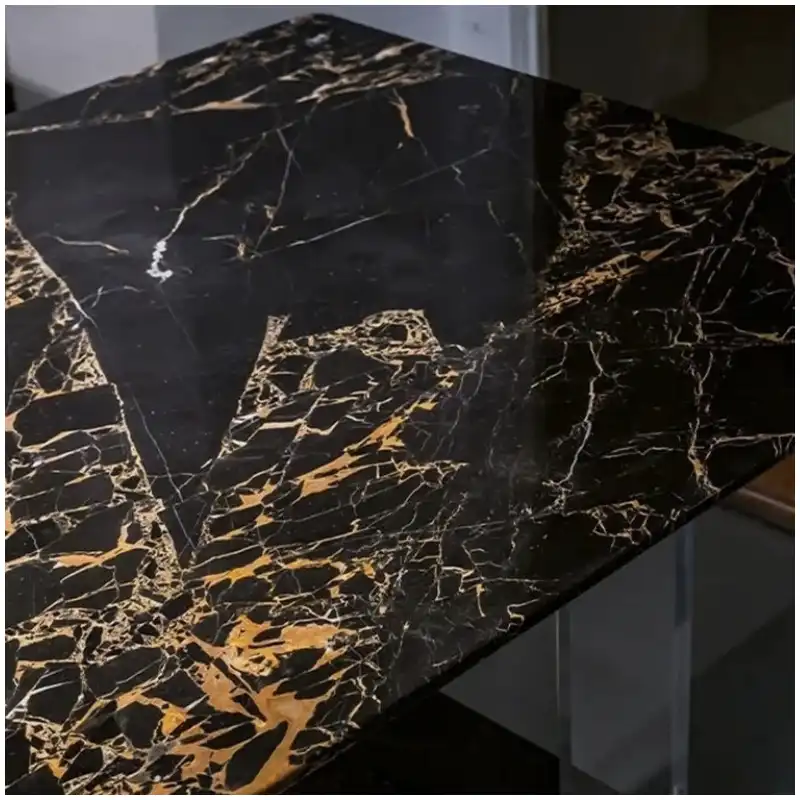
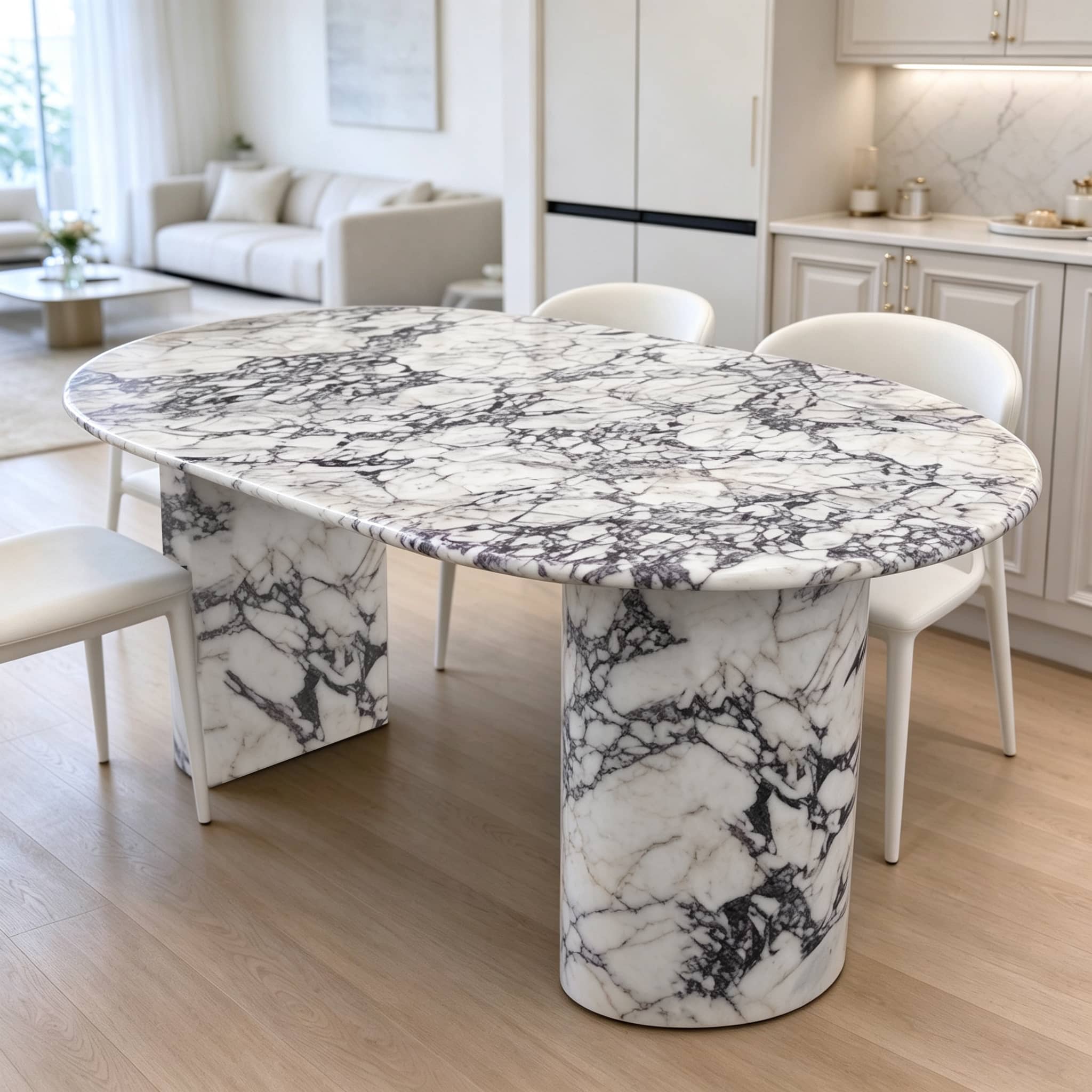
A Portoro Gold Marble dining table concentrates the stone’s natural pattern within a defined furniture surface. The table dimensions determine how much of the original slab can be retained and where the main golden veins intersect its edges.
For a long rectangular table, a vein running along the length can establish a continuous direction. A diagonal mineral band creates a different arrangement, especially where it intersects the corners. Both are possible design approaches, but the appearance must be determined from the actual slab photograph.
The selected edge profile also affects the finished furniture. Straight polished edges expose the stone’s actual thickness, while a mitered buildup may create a deeper visual profile. Such a buildup is an assembled construction, not a solid slab of equivalent full depth.
The table base must adequately support the stone, including its ends, corners and any narrow regions containing prominent mineral seams. Unsupported spans and overhangs cannot be approved from slab thickness alone. The fabrication drawing should identify the table dimensions, base contact points and the position of visible veins before production.
Italy Portoro Marble Wall Panels: Joint Alignment and Decorative Vein Layouts
For a hotel reception wall or private villa interior, Portoro Marble can be arranged in broad panels that preserve the character of its black-and-gold mineral structure. The gold veins may run through a central panel or cross several pieces where the slab sequence allows a coordinated arrangement.
Wall openings, concealed access doors and changes in plane influence the panel schedule. A joint placed through the widest gold formation can create an abrupt interruption, while a narrower black section may be a more appropriate position for the division.
True bookmatching depends on compatible consecutive slabs and the correct visible faces. Where these are unavailable, a directional layout may be preferable. Neither configuration should be promised before reviewing the material photographs and proposed cutting plan.
Large stone panels require a suitable fixing system, substrate assessment and movement detailing. The selected thickness, finished dimensions, anchoring arrangement and slab condition must be considered together. Backing mesh or resin treatment, where present, does not independently establish the load-bearing capacity of an installed panel.
Italy Portoro Gold Marble Bathroom Flooring and Interior Surface Design

Portoro Gold Marble can create a dark, strongly patterned bathroom interior when used on selected wall and floor surfaces. In a bathroom design, its golden veins introduce contrast against white sanitaryware, mirrors and surrounding light-colored materials.
The illustrated flooring arrangement is a design reference rather than evidence that a specific surface finish has passed a wet-area slip test. Polished Portoro may become slippery when exposed to water, and the suitability of any honed or textured alternative must also be assessed under the intended conditions.
Floor tiles require appropriate substrate preparation, setting materials, joint details and waterproofing where applicable. Dark marble can make mineral residue, cleaning marks and surface wear noticeable under strong lighting. Tile selection should therefore account for maintenance as well as visual appearance.
In wet rooms, the waterproofing membrane, drainage and movement joints belong to the construction system. The natural stone itself should not be treated as a waterproof layer. For shower floors or other frequently wet walking areas, a tested and approved surface assembly is required before selecting Portoro as the finished flooring material.
Authentic Italian Portoro and Other Black-and-Gold Commercial Marbles
Traditional Italian Nero Portoro is associated with the Portovenere and La Spezia area of Liguria. The material is a black carbonate stone containing golden-yellow calcite formations. Its commercial identity is tied to this geological and geographic origin, not merely to the presence of gold veins on black stone.
Other natural stones are marketed with similar terms, including Portoro Gold, Black Gold Marble and Nero Portoro-style names. Some come from countries outside Italy and may have quite different mineral structures, vein patterns and physical properties.
For an architectural specification requiring genuine Italian material, the country of origin and actual quarry source should be confirmed for the selected lot. A visually similar slab should not be substituted under the assumption that all black-and-gold marbles share the same identity.
This distinction also affects material comparison. Afghanistan Portoro Gold Marble, for example, can be considered as a separate black-and-gold design option, but it should retain its own origin, test documentation and material approval rather than being described as Italian Nero Portoro.
Portoro Marble Physical Properties and Technical Test Reference
The following values come from a published technical record for a natural Portoro commercial stone selection. They offer preliminary information on density, water absorption and mechanical strength. The tested sample has not been verified as the same quarry lot as the Italy Portoro Gold Marble Slabs presented on this page.
| Physical Property | Published Portoro Reference | Test Method |
| Bulk Density | 2,710 kg/m³ | EN 1936 |
| Water Absorption | 0.09% | EN 13755 |
| Flexural Strength | 10.2 MPa | EN 12372 |
| Compressive Strength | 157 MPa | EN 1926 |
Technical qualification: These are published values for one natural Portoro commercial stone selection, not an Esta Stone current-batch laboratory report. They must not be treated as guaranteed properties of every material sold under the Portoro name. Slab origin, geological classification and test methods should be verified for the selected lot. These figures do not determine finished-floor slip resistance, wall-panel fixing capacity, tabletop support spans or suitability for exterior exposure.
Polished and Honed Portoro Marble: Surface Finish and Maintenance
Polished Portoro emphasizes the contrast between its dark background and golden mineral formations. Reflections from architectural lighting can make the gold lines more prominent on vertical panels and dining tables. The same reflective finish may reveal fine scratches, etched areas and dried water marks.
Honed Portoro has a lower-gloss appearance and may be considered where direct reflection is undesirable. Its black tone can appear softer after processing, so the finished sample should be reviewed rather than assuming it will match the appearance of a polished slab photograph.
As a carbonate-based stone, Portoro can be etched by acidic substances. Vinegar, citrus juice, acidic bathroom cleaners and unsuitable descalers may dull the surface. Routine care should use a pH-neutral cleaner compatible with natural marble and a soft, non-abrasive cloth.
For dining tables, spills should be removed promptly and protective pads used beneath hot or abrasive objects. A compatible impregnating treatment may help with certain staining risks, but it does not prevent acid etching. The choice of sealer, if needed, should be checked against the selected stone and its surface treatment.
Packing, Shipping & Inspection Workflow
| Before Production | Confirm Italian Portoro origin documentation, selected slab photographs, black-background consistency, gold-vein layout, available dimensions, thickness, surface finish and component drawings. |
| Before Packing | Inspect finished dimensions, agreed thickness tolerances, polished or honed surfaces, natural seams, filled veins, table edges, panel corners, cutting orientation and component identification. |
| Before Shipment | Verify approved slab and finished-piece photographs, surface protection, packing condition, crate and component numbers against the packing list, gross weight and shipment documentation. |
Common Italy Portoro Gold Marble Specification Mistakes to Avoid
- Assuming every Portoro Gold Marble is Italian: Black-and-gold commercial stones come from different countries. An Italian Portoro specification requires confirmation of the actual origin and selected material.
- Approving gold-vein distribution from a small sample: Full-slab photographs are needed to identify broad veins, relatively plain black areas and natural mineral seams before a panel or table is cut.
- Expecting automatic vein continuity across adjoining panels: Bookmatching or directional matching depends on the available slab sequence and cutting orientation, not simply on the commercial stone name.
- Selecting polished Portoro for wet bathroom floors without testing: A glossy decorative surface must not be assumed slip-resistant. The finished floor requires an appropriate wet-use assessment and installation design.
- Ignoring support and carbonate-stone maintenance: Dining tables and large wall panels require suitable structural support, while acidic cleaners and spills can damage the polished marble surface.
Frequently Asked Questions About Italy Portoro Gold Marble
Where does authentic Italian Portoro Gold Marble come from?
Traditional Italian Portoro Marble originates from the Portovenere and La Spezia area of Liguria, Italy. The actual quarry source should be verified for the selected slab lot.
Is Nero Portoro a marble or limestone?
Nero Portoro is commercially sold as marble but is geologically a black fine-grained carbonate stone, generally described as limestone or weakly metamorphosed limestone, with golden and white calcite veins.
What slab thicknesses are available for Italy Portoro Gold Marble?
Main catalogue thickness references include 18mm, 20mm and 30mm. Other thicknesses and usable slab dimensions depend on the selected material and fabrication requirements.
Can Portoro Gold Marble be fabricated into dining tables?
Portoro Gold Marble can be fabricated into custom dining tables. Tabletop dimensions, vein orientation, edge details, stone thickness and support must be coordinated with the furniture design.
Is Italian Portoro the same as Afghanistan Portoro Gold Marble?
No. Italy Portoro Gold Marble and Afghanistan Portoro Gold Marble are separately sourced commercial stones. Similar black-and-gold appearances do not establish identical quarry origin, geological composition or physical properties.
Can polished Portoro Marble be used for bathroom flooring?
Portoro Marble may be considered for selected bathroom surfaces, but polished flooring must not be assumed suitable for wet walking areas without the relevant slip assessment, waterproofing and installation details.
What are the reference physical properties of Portoro Marble?
A published natural Portoro stone reference lists bulk density of 2,710 kg/m³, water absorption of 0.09%, flexural strength of 10.2 MPa and compressive strength of 157 MPa. These are not certified values for the current Esta Stone slabs.
How should polished Nero Portoro Marble be cleaned?
Use a pH-neutral natural-stone cleaner and non-abrasive equipment. Avoid acidic cleaners, remove spills promptly and confirm the compatibility of any sealer with the selected material. Sealing does not prevent acid etching.
Italy Portoro Gold Marble Compared with Four Decorative Marble Slabs
Italian Portoro is selected for its black background and naturally occurring gold veins. The following alternatives offer different colors and mineral patterns. Afghanistan Portoro is included as a separate black-and-gold stone selection, not as an interchangeable Italian material.
| Marble | Surface Character | Selection Difference |
| Italy Portoro Gold Marble | Black Italian carbonate stone with irregular golden calcite veins | Italian-origin black-and-gold panels and custom dining tables |
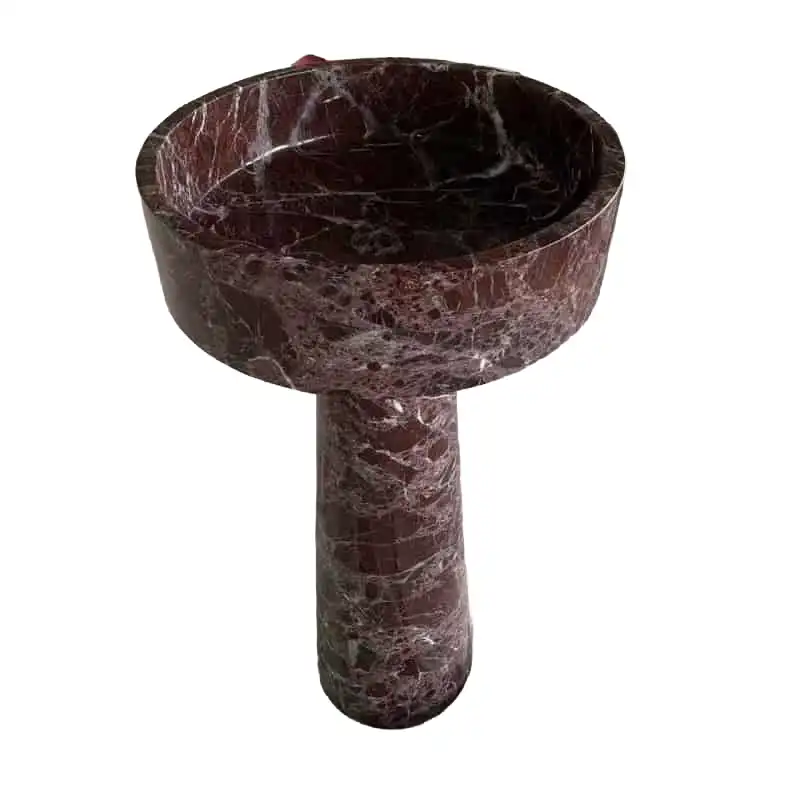
| Rojo Alicante Marble | Burgundy-red stone with contrasting white calcite veins | Spanish red wall panels and decorative interiors |
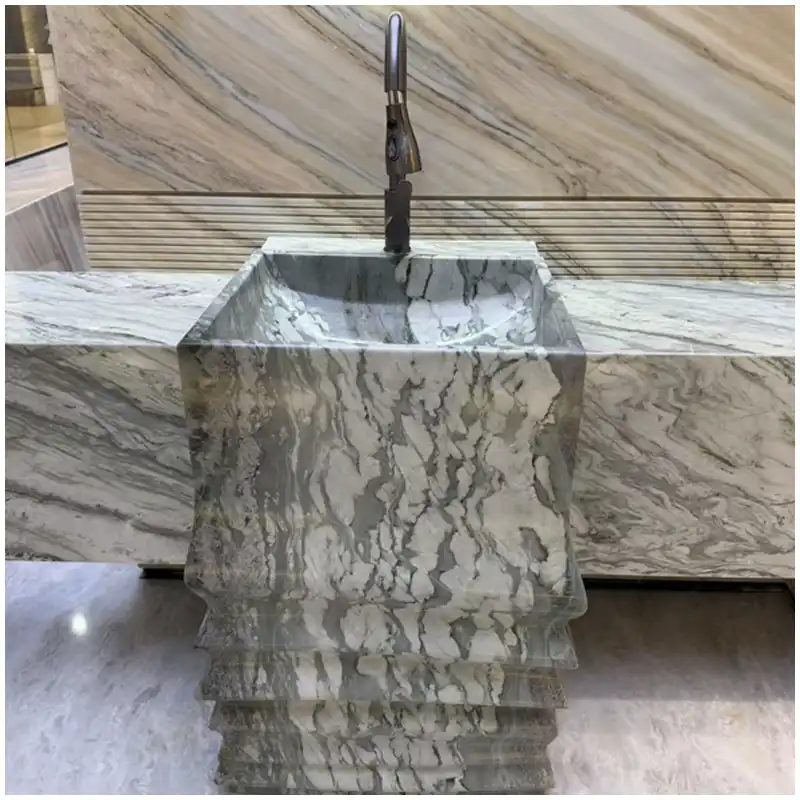
| Cold Emerald Marble | Green, white and dark mineral formations with irregular movement | Multicolor feature walls and stone furniture |
| Black White Flower Marble | Dark background crossed by strong white mineral formations | Black-and-white contrast without a gold-dominant pattern |
| Afghanistan Portoro Gold Marble | Black-and-gold decorative stone supplied under a separate regional name | Alternative origin requiring independent material and test approval |
Recommended Red, Green and Black Decorative Marble Slabs
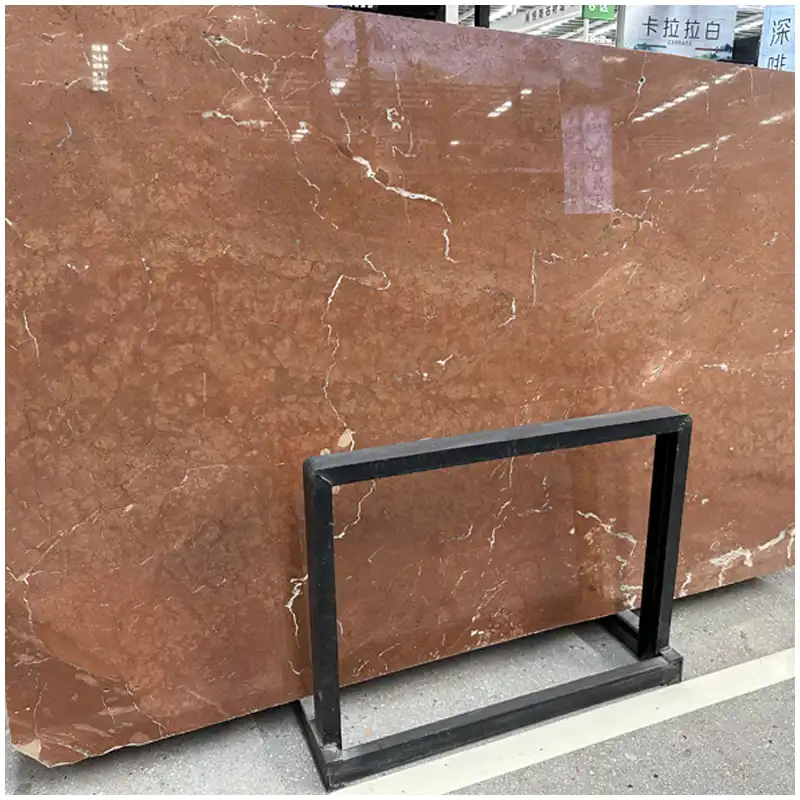
Rojo Alicante Red Marble
Spanish red marble for interior wall cladding and decorative stone components.
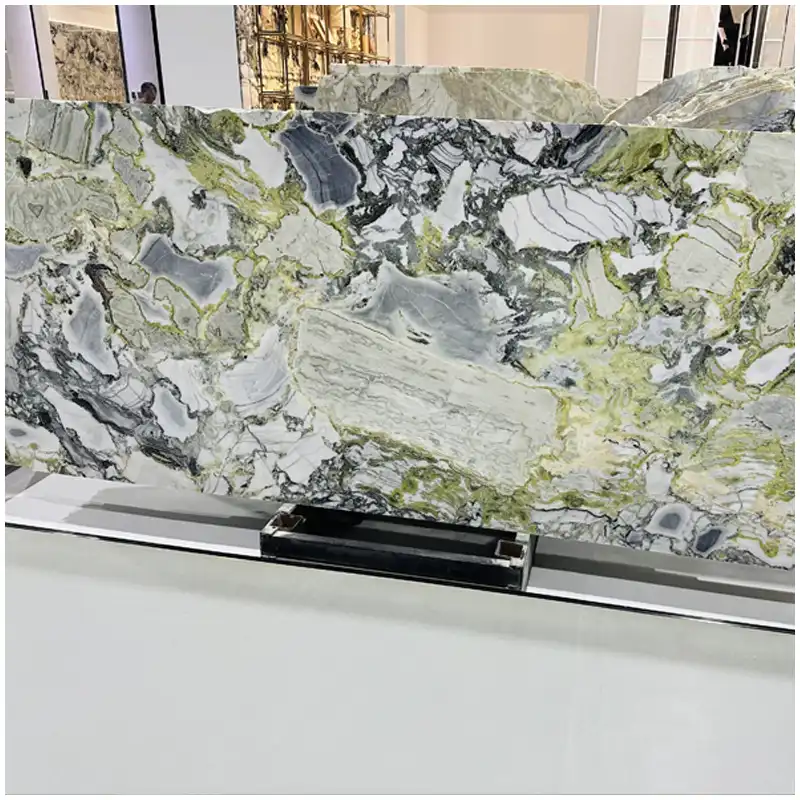
Cold Emerald Marble
Green-and-white decorative marble for large panels and custom furniture.

Black White Flower Marble
High-contrast black-and-white marble for architectural wall panels.
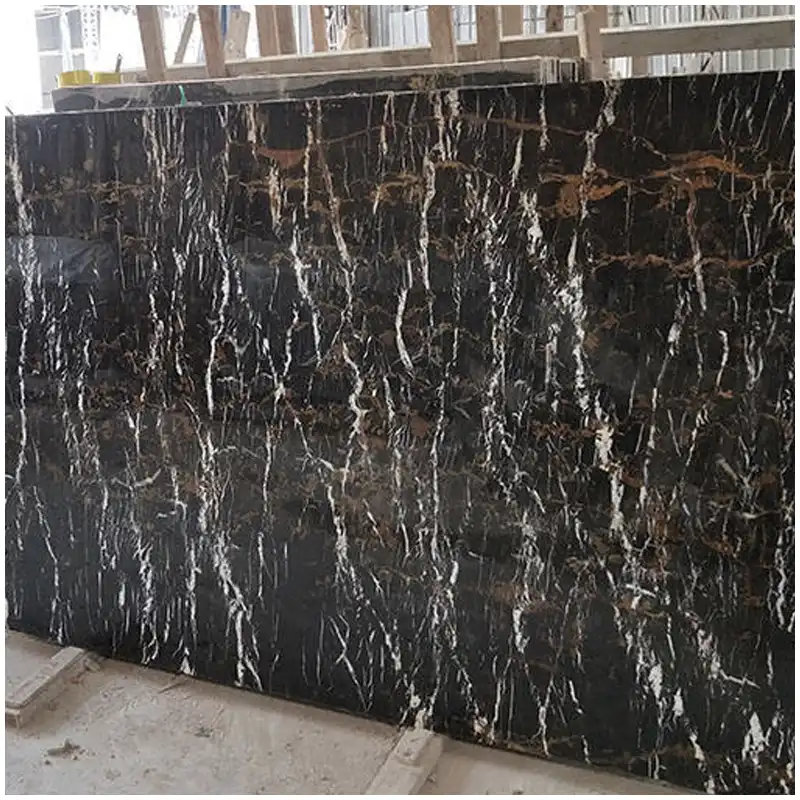
Afghanistan Portoro Gold Marble
A separate black-and-gold marble selection with a different declared origin.
Italian Portoro Gold Marble Slab Orders for Hotel Panels and Dining Tables
Esta Stone supplies Italy Portoro Gold Marble Slabs for interior architectural panels and custom stone furniture. For an Italian-origin specification, the selected lot should be supported by appropriate source documentation and full-slab photographs. Hotel cladding orders need dimensioned panel schedules and approved gold-vein arrangements, while dining tables require separate confirmation of tabletop geometry, edge treatment and support. These details establish the material and fabrication requirements before the final cutting schedule and shipment arrangement are approved.
| Request a Quote | View Marble Slabs |