





Quick Summary
Noce Travertine Tile is a walnut-brown natural travertine with cream, beige, grey, and occasional reddish variation. Cross-cut pieces show softer cloud-like pores, while vein-cut selections produce a more linear banded pattern. It is used for floors, wall cladding, bathrooms, stairs, façades, terraces, and hospitality or villa interiors.
The current Esta Stone page lists 600 × 600, 600 × 1200, and 1200 × 1200 mm tile references, thicknesses from 15 to 30 mm, and polished, honed, or tumbled surfaces. Filled or unfilled pore treatment should be selected according to the installation, finish, maintenance, and exposure.
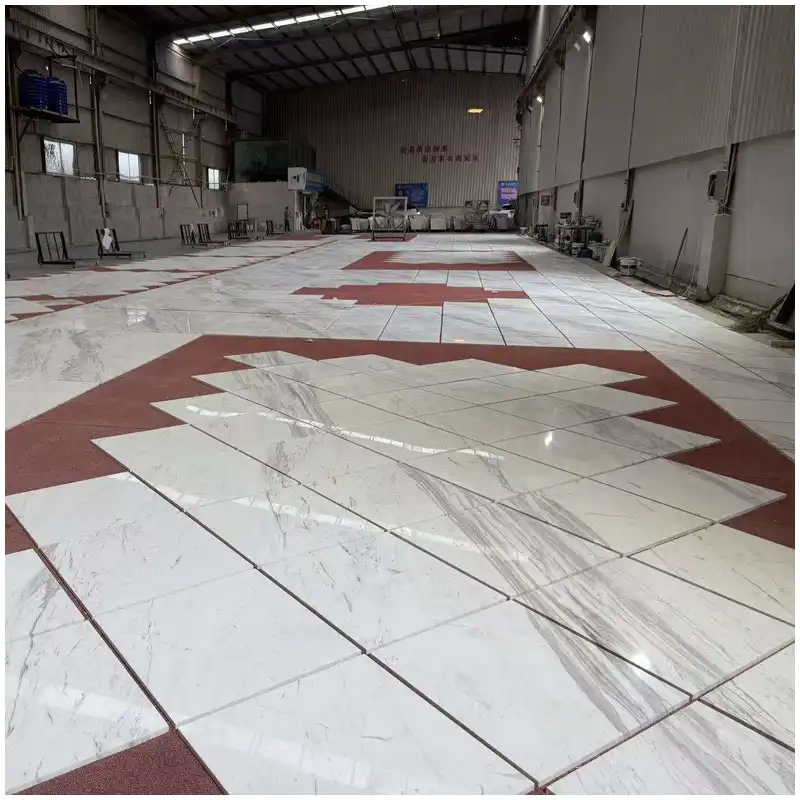
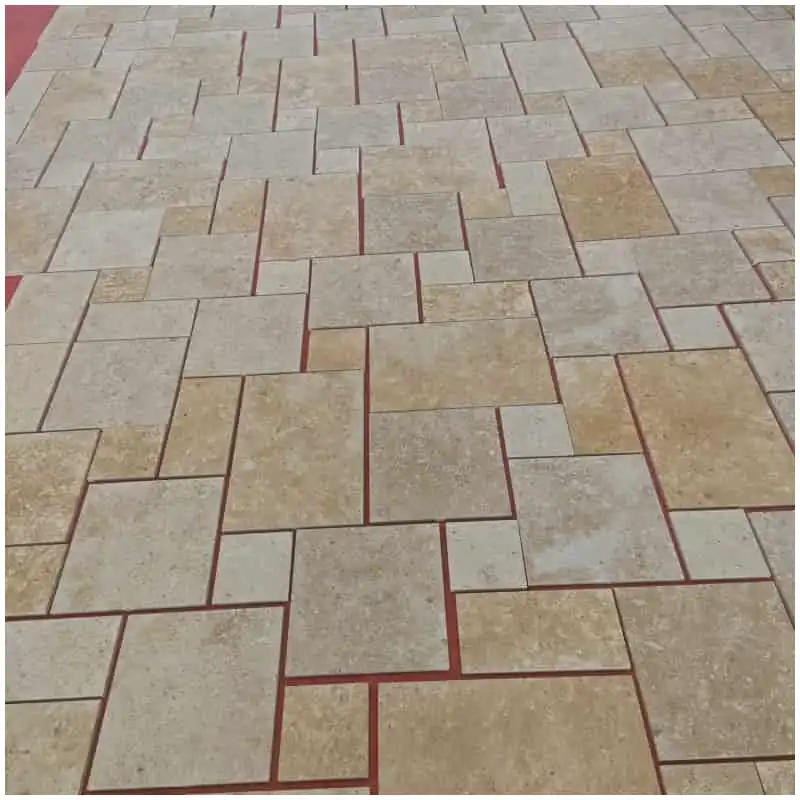
Polished Noce Travertine reference showing the warm brown field, natural pores, and cream-to-grey tonal movement.
Noce Travertine Tile for Interior Floors, Wall Cladding, Bathrooms, and Exterior Projects
Noce Travertine is a brown travertine commonly supplied from Turkey, with colors ranging from light milk-chocolate and beige to deeper walnut brown. Cream, grey, red-brown, and pale mineral areas can appear within the same production range. Natural pores and fossil-related structure are part of the material rather than defects.
The stone can be processed as cross-cut or vein-cut. Cross-cut tiles expose a softer, cloud-like pore pattern; vein-cut pieces show stronger linear bands running through the stone. That choice changes the visual rhythm substantially, especially on large floors, stair runs, hotel corridors, or full-height wall cladding.
- Warm brown travertine for floors, walls, stairs, bathrooms, façades, terraces, and landscape details.
- Cross-cut and vein-cut directions produce distinctly different pattern structures.
- Filled, unfilled, polished, honed, and tumbled selections can be matched to interior or exterior project conditions.
Brown Noce Travertine: Cross-Cut Pores, Vein-Cut Bands, and Tile-to-Tile Variation
Noce Travertine is not a flat brown tile. Some pieces are lighter and creamier, while others carry deeper walnut zones, red-brown accents, grey areas, stronger pores, or more linear banding. Large installations should therefore be blended before fixing. For vein-cut cladding, the direction should be marked consistently so the bands do not rotate randomly from one panel to the next.
Noce Travertine Tile Specification for Floors and Walls
| Nome do produto | Noce Travertine Tile |
| Material | Noce Travertine / Brown Travertine |
| Referência de Origem | Turkey is the principal commercial source used for published Noce technical references; confirm current production source for project submittals |
| Color Character | Light brown to walnut brown with beige, cream, grey, occasional red-brown tones, natural pores, and fossil-related movement |
| Current Page Tile Sizes | 600 × 600 / 600 × 1200 / 1200 × 1200 mm |
| Current Page Thickness | 15 / 18 / 20 / 25 / 30 mm |
| Current Page Finish | Polished / honed / tumbled |
| Pore Treatment | Filled or unfilled according to finish, interior / exterior use, maintenance strategy, and approved sample |
| Cut Direction | Cross-cut for cloud-like pore structure / vein-cut for linear banding |
| Current Page MOQ | 300 SQM |
| Principais Aplicações | Interior flooring, wall cladding, bathrooms, stair treads and risers, hotel corridors, villa interiors, façades, terraces, pool surrounds, and custom cut-to-size work |
Published EN Test Reference for Turkish Noce Travertine
A published technical sheet for Noce Travertine from Turkey provides exact-material values under named EN methods. The density is closely supported by separate Turkish Noce suppliers, while water absorption and strength values vary more widely between quarry selections and test sheets. For that reason, the EN-tested Noce dataset below is used as the primary material reference and the cross-check column shows where other exact Noce sources differ.
| Propriedade | Método de Teste | Published Result | Cross-Check Note |
| Apparent Density | EN 1936 | 2485 kg/m³ | Daymar publishes 2489 kg/m³; Arel lists approximately 2474–2580 kg/m³ for Turkish Noche |
| Open Porosity | EN 1936 | 4% | Exact-material EN result; pore structure and fill treatment can change surface behavior |
| Water Absorption at Atmospheric Pressure | EN 13755 | 1.2% | Other exact Turkish Noce sheets publish approximately 0.87–1.03% in comparable supplier data; wider quarry variation also exists |
| Flexural Strength | EN 12372 | 8.5 ± 3 MPa; lower expected value 4.6 MPa | Other Noce sources publish higher modulus-of-rupture values, confirming meaningful block and test-source variation |
| Resistência à compressão | EN 1926 | 101 ± 23 MPa; lower expected value 61.7 MPa | Arel publishes 90.6 MPa; Daymar publishes 66.42 MPa for Turkish Noce, so current-batch testing matters for engineering approval |
| Abrasion Resistance | EN 14157 | 22.07 mm; upper expected value 23 mm | Exact-material EN result for the referenced Noce selection |
| Resistência ao gelo | EN 12371 | OK | Exterior approval still depends on current batch, pore treatment, finish, drainage, fixing, climate, and installation detail |
| Dureza de Mohs | Mohs scale | 3 | Consistent with the normal calcite-rich character of travertine |
Reference basis: Brachot NOCE technical sheet for Turkish travertine, cross-checked against exact Noce / Noche data published by Daymar Stone, Arel Stone, and Alimoğlu Madencilik.
Final values can be confirmed by current-batch test report when required for project approval.
Noce Travertine Floor Tile: Filled vs. Unfilled, Finish, Slip, and Layout
Interior floors are commonly specified honed and filled when a smoother surface and easier routine cleaning are required. Tumbled or brushed-style textures are often selected when a more aged or tactile surface is preferred. Unfilled material keeps more of the natural pore structure visible and requires a different maintenance strategy.
The floor drawing should define tile size, thickness, cut direction, fill treatment, finish, joint width, movement joints, substrate, slip requirement, and installation pattern. On 600 × 1200 mm or 1200 × 1200 mm formats, blending several tiles before fixing helps distribute the darker walnut and lighter cream areas naturally.
For wet or heavily trafficked areas, finish selection should be based on the project’s required slip performance rather than assuming a polished, honed, or tumbled surface is suitable in every condition.
Noce Travertine Wall Tile and Travertine Cladding Tile
Noce Travertine Wall Tile can be used for bathroom walls, hotel corridors, lobby features, fireplace surrounds, villa interiors, façades, garden walls, and other cladding. Cross-cut panels produce a calmer cloud-like structure, while vein-cut panels give the wall a more linear architectural direction.
For exterior cladding, panel size, thickness, fixing method, substrate, anchors, drainage, cavity ventilation, freeze-thaw exposure, finish, filled or unfilled pore treatment, and corner returns should be reviewed as part of the façade design. A sealer is not a substitute for a correct fixing and drainage system.
Bathroom Floors and Walls: Pores, Waterproofing, Grout, and Cleaning
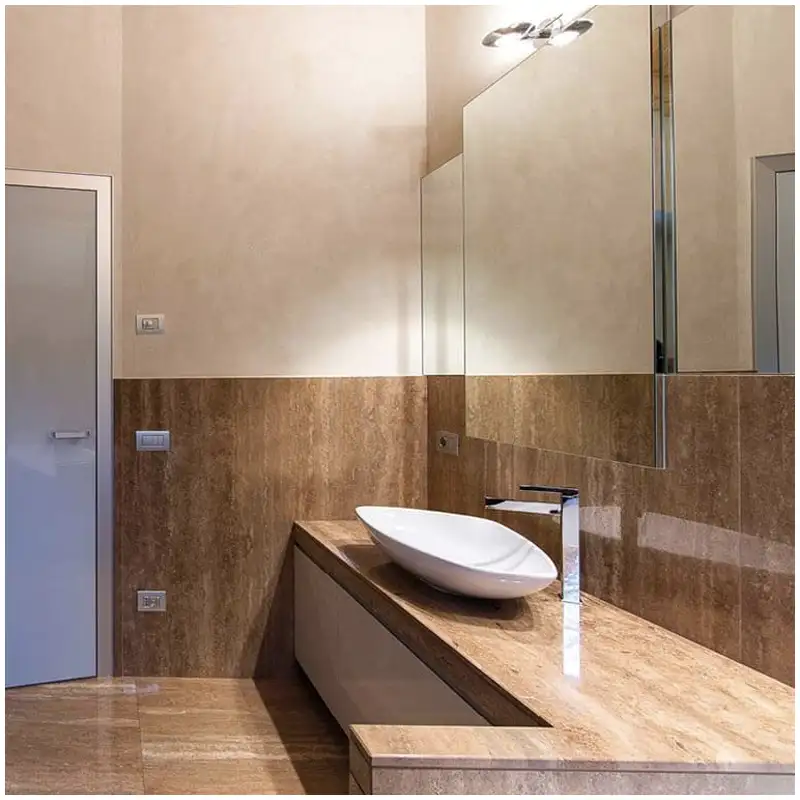
Brown Noce Travertine adds warmth to bathrooms without relying on highly reflective surfaces. Filled-and-honed tile can create a more controlled interior finish, while selected textured or tumbled pieces can introduce stronger natural character.
Travertine itself is not a waterproofing system. Shower walls and wet floors require a suitable waterproof substrate and membrane, correct drain and penetration details, compatible adhesives and grout, and a finish that meets the project’s slip requirement.
Because travertine is calcium-carbonate based, acidic bathroom cleaners, vinegar, citrus products, and aggressive descalers can etch the surface. Maintenance planning should be established before handover, especially where pore filler or grout is exposed.
Stairs, Terraces, Pool Surrounds, and Exterior Use
Noce Travertine is used for stair treads and risers, terraces, patios, garden paths, pool surrounds, coping, and selected façade applications. Exterior use should match the finish and pore treatment to climate, drainage, water exposure, freeze-thaw conditions, traffic, and cleaning requirements.
Where project approval relies on numerical performance, the published EN data above is useful for preliminary review but should not replace current-batch testing. Pool and wet exterior details also need attention to edge geometry, slip resistance, salt or chemical exposure, water drainage, and joint design.
Dry-Lay, Cut Direction, and Installation Planning
Noce’s brown tone and natural pores can vary visibly across a large tile package. Dry-lay review is useful for floors, stair runs, wall panels, and cladding where the designer wants controlled blending rather than random shade changes.
- Separate cross-cut and vein-cut pieces unless the design intentionally mixes the two structures.
- Blend darker walnut, medium brown, and lighter cream tiles across the installation area before fixing.
- Mark vein direction for rectangular wall and floor pieces so linear patterns remain intentional.
- Confirm filled or unfilled pore treatment, grout color, joint width, and finish before production.
- Carry room, elevation, stair-flight, or façade-zone labels through inspection, packing, and installation.
Factory Support, Inspection, and Export Packing
Travertine tile projects often contain many repeated pieces, so consistency of size, thickness, finish, fill treatment, shade blending, and packing sequence matters more than selecting one perfect slab.
- Inspect brown color range, pore density, cut direction, fill quality, surface finish, and visible natural features before packing.
- Check tile dimensions, thickness, squareness, calibration, edges, stair profiles, and custom cut-to-size details against approved schedules.
- Photograph representative dry-lay groups where shade or vein continuity is important.
- Label tiles and custom pieces by room, wall elevation, stair flight, terrace, or façade zone when sequence matters.
- Use reinforced export crates or pallets with separation and corner protection appropriate to tile size and finish.
Common Specification Mistakes with Noce Travertine Tile
- Calling all Noce tile “Italian travertine” without confirming the actual source; Turkish Noce is a major commercial reference.
- Mixing cross-cut and vein-cut tiles without intentionally controlling the pattern direction.
- Assuming filled and unfilled surfaces will weather, clean, and age in the same way.
- Choosing polished tile for wet walking areas without reviewing the required slip performance.
- Treating sealer as waterproofing in showers or exterior cladding.
- Using one published Noce test sheet as a universal current-batch certificate despite natural block and quarry variation.
Care and Maintenance for Brown Noce Travertine
Use a pH-neutral cleaner intended for travertine or limestone. Avoid vinegar, citrus cleaners, acidic bathroom products, aggressive descalers, and abrasive pads. Acidic products can etch calcite-rich travertine even when the surface is sealed.
Sealing requirements depend on fill treatment, finish, exposure, and application. Filled interior floors, unfilled exterior paving, bathroom walls, and pool details do not have identical maintenance needs. During construction, protect finished tile from grout haze, mortar contamination, metal dust, dragged grit, and impact.
FAQs About Noce Travertine Tile
O que é o Azulejo de Travertino Noce?
Noce Travertine Tile is a warm brown natural travertine tile with walnut, beige, cream, grey, and occasional reddish variation. It can be cross-cut for a cloud-like pore pattern or vein-cut for stronger linear banding and is used for floors, walls, bathrooms, stairs, façades, and terraces.
Is Noce Travertine from Turkey?
Turkish Noce is one of the principal commercial sources for this brown travertine and is the basis of the EN technical reference used on this page. Because Noce naming is also used by other suppliers, the current production source should be confirmed for project documentation.
What tile sizes are listed on the current Esta Stone page?
The current page lists 600 × 600 mm, 600 × 1200 mm, and 1200 × 1200 mm tile references, with 15, 18, 20, 25, and 30 mm thickness options.
What is the difference between filled and unfilled Noce Travertine?
Filled travertine has visible pores closed with a compatible filler or grout to create a smoother surface. Unfilled travertine keeps more of the natural void structure visible. The choice affects appearance, cleaning, weathering, maintenance, and the suitability of the finish for interior or exterior use.
Can Noce Travertine Floor Tile be used in bathrooms?
Yes. It can be used on bathroom floors and walls when the finish, slip requirement, waterproof substrate, membrane, grout, pore treatment, sealing, and maintenance system are specified for the wet area.
Can Noce Travertine Wall Tile be used outdoors?
Yes, Noce travertine is used for exterior wall cladding and landscape applications, but final suitability depends on panel size, thickness, fixing system, drainage, pore treatment, finish, climate, freeze-thaw exposure, and current-batch engineering data.
What published test data is available for Turkish Noce Travertine?
A published Turkish Noce technical sheet reports 2485 kg/m³ apparent density and 4% open porosity under EN 1936, 1.2% water absorption under EN 13755, 8.5 ± 3 MPa flexural strength under EN 12372, 101 ± 23 MPa compressive strength under EN 1926, 22.07 mm abrasion resistance under EN 14157, and frost resistance rated OK under EN 12371.
How should Noce Travertine Tile be cleaned?
Use a pH-neutral cleaner intended for travertine or limestone. Avoid acidic cleaners, vinegar, citrus products, strong descalers, and abrasive pads because calcite-rich travertine can etch. Sealing and maintenance frequency should follow the actual finish, pore treatment, traffic, and exposure.
Recommended Travertine Products from Esta Stone
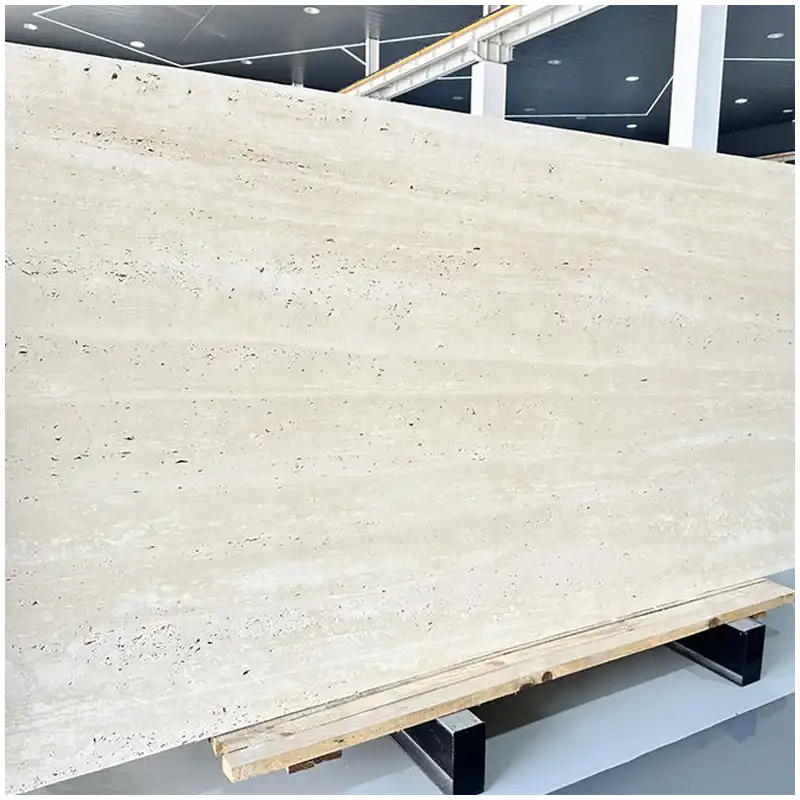
Italy Super White Travertine Slabs
Pale white-to-ivory travertine for wall panels, floors, bathrooms, stairs, fireplace features, tables, and light architectural interiors.

Travertino prateado
Silver-grey travertine with beige and cream banding for façades, wall cladding, floors, stairs, terraces, bathrooms, and contemporary interiors.
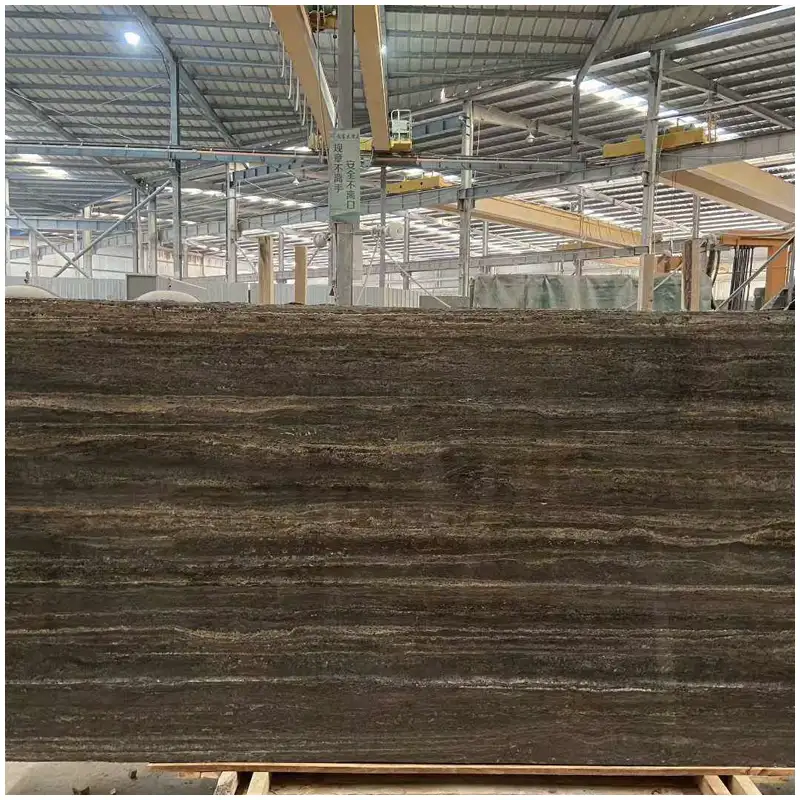
Lajes de travertino cinza prateado escuro
Smoky silver-grey travertine with charcoal and cream movement for villas, hotels, floors, walls, patios, stairs, bathrooms, and darker architectural schemes.

Iranian Ultra White Travertine
Bright ivory-white travertine for façade cladding, walls, floors, stairs, bathrooms, fireplace surrounds, exterior details, and light-toned stone projects.
Request Noce Travertine Tile Photos, Finish Options, and Project Quotation
Send the information that defines the finished tile package so the brown-tone selection, cut direction, pore treatment, finish, fabrication, and quotation can match the actual floor, wall, bathroom, stair, façade, terrace, or landscape application.
- Application: floor, wall cladding, bathroom, stair, façade, terrace, pool surround, fireplace, or other architectural use
- Required tile or cut-to-size quantity, dimensions, and thickness
- Polished / honed / tumbled finish, filled or unfilled pores, and cross-cut / vein-cut preference
- Floor layout, wall elevations, vein direction, stair details, joints, waterproofing / drainage, fixing, and slip requirements
- Need for shade photos, dry-lay review, current-batch testing, inspection photos, piece labels, packing sequence, destination, and project schedule
| Request Noce Travertine Tile Quote | View Travertine Collection |