Quick Summary
Quick Answer: Taj Mahal Quartzite or Perla Venata Quartzite?
If you want a warmer, richer, and more luxurious cream stone for a high-end kitchen, Taj Mahal Quartzite is usually the better choice. If you prefer a whiter, more linear, and more visually consistent cream quartzite for large minimalist projects, Perla Venata Quartzite can be the better fit.
In 2026, designers, developers, and luxury homeowners are choosing both stones for their durability, stain resistance, and marble-like elegance. However, Taj Mahal Quartzite remains the stronger commercial keyword winner because it offers broader design versatility, stronger market recognition, and better resale perception in premium kitchens, bathrooms, wall cladding, and waterfall islands.
Taj Mahal Quartzite vs. Perla Venata Quartzite: Which Cream Luxury Stone Is Right for You?
Expert Specification & Industry Authority: This technical analysis is synthesized from over a decade of mineral sourcing expertise and large-scale global project fulfillment. Beyond mere aesthetic comparison, this guide integrates real-world performance metrics, ASTM mechanical testing standards, and logistical supply chain insights. Designed for lead architects, procurement heads for luxury hospitality brands, and commercial real estate developers, this article provides the systematic technical framework required for high-stakes material specification in the 2026 luxury stone market.
1. Introduction: The Rise of the “Warm Minimalist” Kitchen
The 2026 luxury interior market has moved decisively away from cold white sterility and grey-heavy surfaces. Homeowners, architects, and developers are now gravitating toward what many specifiers call the Cream & Gold Era: interiors that feel grounded, soft, premium, and emotionally warm. In this climate, the contest between Taj Mahal Quartzite and Perla Venata Quartzite has become one of the most commercially relevant material decisions in luxury residential and hospitality design.
Both stones belong to the elite class of Brazilian Exotic Quartzite, prized for their refined coloration, high hardness, and ability to deliver marble-like elegance without the structural fragility associated with calcitic stones. Yet they are not interchangeable. One leans more fluid, creamy, and layered; the other leans whiter, calmer, and more linear. The right choice depends on project mood, lighting strategy, cabinetry palette, finish selection, and the visual role the stone is expected to play.
At Esta STONE, these distinctions matter. As a project-focused supplier working across slabs, tiles, vanity fabrication, and custom architectural stone packages, Esta STONE understands that selecting a premium quartzite is not about trend alone. It is about performance, visual consistency, block grading, and how the material will live over the next 20 to 50 years.
If you are exploring premium cream quartzite slabs for large-scale design, or evaluating premium quartzite applications for countertops, walls, and surfaces, this guide will give you the technical, visual, and procurement intelligence needed to make a confident decision.
2. Geological Origins: The Brazilian Crystalline Corridor
To understand why these two materials dominate the cream luxury segment, it helps to begin with geology. Both Taj Mahal Quartzite and Perla Venata Quartzite originate in Brazil, one of the most geologically diverse and commercially important stone-producing nations in the world. The most desirable cream quartzites are generally associated with Brazil’s high-grade metamorphic belts, especially regions where sandstone-rich protoliths underwent intense heat and pressure over millions of years.
2.1 The Shared Heritage of Brazilian Quartzite
Both stones are true quartzites when properly sourced. That means they began as quartz-rich sandstone and were transformed through metamorphism into a dense, interlocking quartz crystal structure. This transformation is what gives them their impressive hardness, low porosity, and resistance to everyday kitchen abuse. A reputable exporter or Taj Mahal Quartzite Manufacturer will always distinguish between real quartzite and mislabeled “soft quartzite” materials that are actually dolomitic marble or transitional stones.
2.2 Mineral Composition and Warm Cream Tones
The cream, ivory, champagne, and pale gold coloration seen in premium slabs comes from trace mineral inclusions—often iron oxides, mica traces, and subtle accessory minerals embedded within the quartz matrix. These inclusions determine whether a slab reads more “buttery and warm” like classic Taj Mahal Quartzite or more “white and cloud-like” like Perla Venata.
2.3 The Rarity of White-Base Quartzite
Not all cream quartzites are equal. In global sourcing, blocks with a cleaner, brighter white background and fewer muddy or charcoal inclusions command higher prices and stronger demand. This is one reason premium bundles from a serious Taj Mahal Quartzite Supplier are often booked before they even arrive in destination markets. Slab homogeneity, fissure behavior, and color consistency remain major procurement variables.
3. Visual Identification: The Art of the Vein
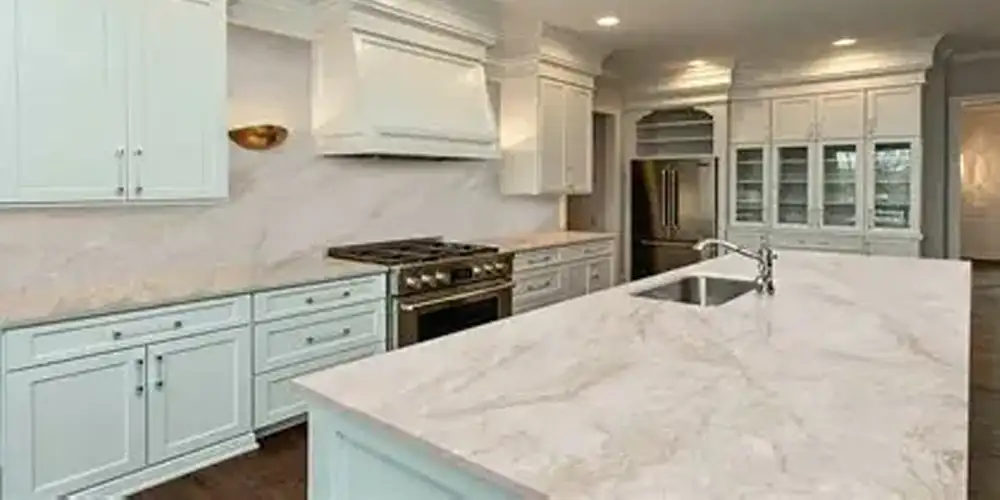
3.1 Taj Mahal Quartzite Aesthetics
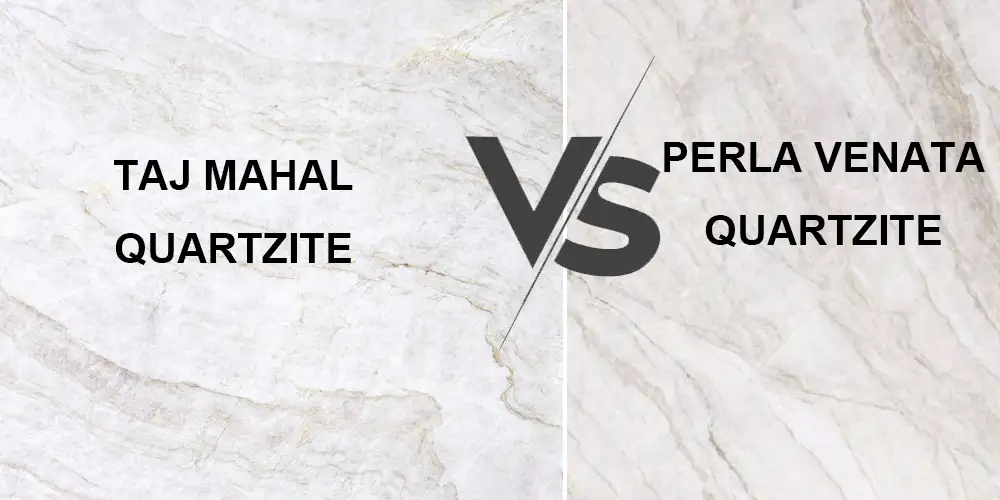
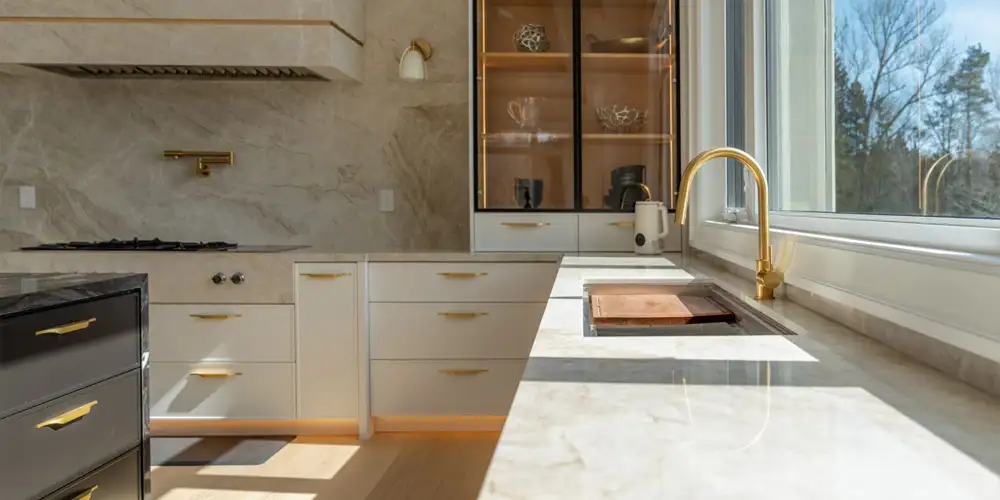
Taj Mahal Quartzite is famous for its soft, fluid movement. It often shows layered ribbons of ivory, warm beige, light taupe, pale gold, and translucent cream. The effect is less “graphic” than bold marble and more “atmospheric” than many granites. This is why it has become the benchmark for quiet luxury kitchens and upscale hospitality interiors.
Its strongest design advantage lies in visual depth. A high-quality taj mahal quartzite slab appears almost luminous under natural light, especially when polished. In leathered finishes, it takes on a sophisticated tactile quality that feels both architectural and organic.
3.2 Perla Venata Quartzite Aesthetics
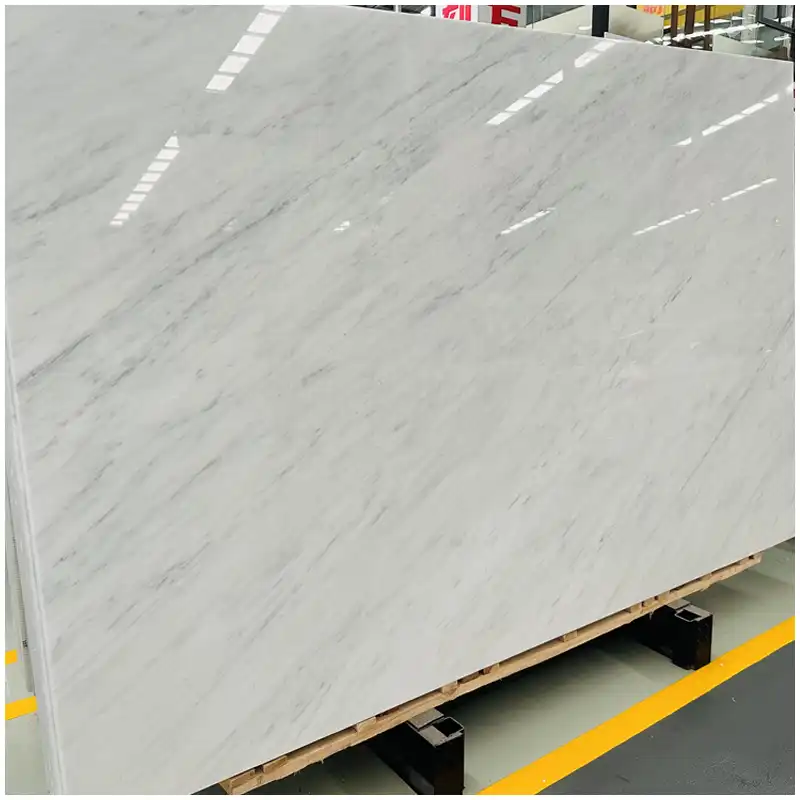
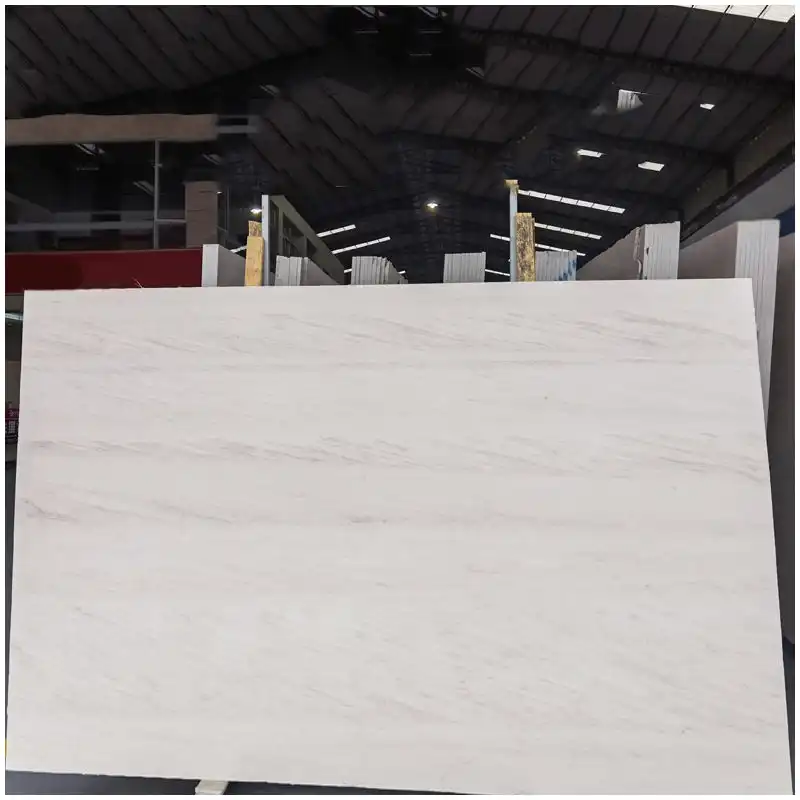
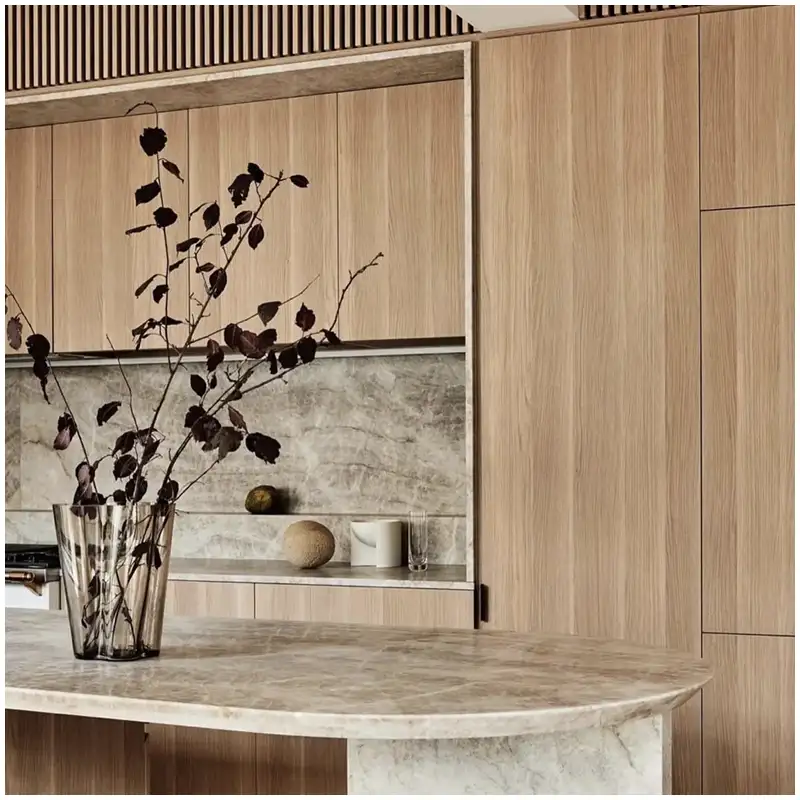
Perla Venata typically appears whiter and more linear. It often carries a clouded, sandy, or gently striated visual profile that appeals strongly to modern minimalist interiors. Compared to Taj Mahal, it usually looks slightly cooler in bright daylight, though still warm enough to work with oak, cream lacquer, and brushed brass design schemes.
3.3 Consistency vs. Character
If your project needs dramatic movement and emotional richness, Taj Mahal often wins. If your project needs calmer repetition across a larger footprint, Perla Venata can offer stronger visual consistency. This matters especially for developers, hoteliers, and architects buying full bundles rather than a single island slab.
4. Taj Mahal Quartzite vs. Perla Venata Quartzite: Fast Decision Matrix
| Category | Taj Mahal Quartzite | Perla Venata Quartzite | Best For |
|---|---|---|---|
| Base Tone | Cream, ivory, champagne, warm beige | Whiter cream, pale sand, soft pearl | Taj for warmth / Perla for brightness |
| Vein Style | Fluid, layered, organic movement | More linear, airy, cloud-like flow | Taj for drama / Perla for calm minimalism |
| Luxury Recognition | Very high global recognition | Growing but less recognized | Taj Mahal Quartzite |
| Kitchen Popularity | Extremely high | High | Taj Mahal Quartzite |
| Bookmatching Appeal | Excellent | Very good | Taj for fluid art walls |
| Backlit Potential | Moderate to high depending on slab | Moderate | Case by case slab selection |
| Commercial Scalability | Excellent for luxury developments | Excellent for minimalist hospitality | Depends on design intent |
| Resale Perception | Very strong | Strong | Taj Mahal Quartzite |
5. Technical Specifications: The Quantified Performance Hub
Visual appeal sells the first impression. Material science determines whether that beauty survives daily use. Both Taj Mahal and Perla Venata are valued because they deliver luxury without requiring the fragility compromises associated with marble. Below is a professional comparison range based on typical premium Brazilian quartzite performance benchmarks. Exact values vary by quarry zone, slab density, and lab testing sample.
| Property | Taj Mahal Quartzite | Perla Venata Quartzite | Why It Matters |
|---|---|---|---|
| Density (kg/m³) | 2,620–2,690 | 2,610–2,680 | Affects structural load and edge engineering |
| Water Absorption (ASTM C97) | 0.08%–0.25% | 0.10%–0.28% | Lower absorption means better stain resistance |
| Compressive Strength (MPa) | 170–230 | 165–225 | Indicates resistance to heavy use and load |
| Mohs Hardness | ~7.0 | ~7.0 | High scratch resistance for kitchens |
| Flexural Strength (MPa) | 15–24 | 14–22 | Relevant for overhangs and vertical cladding |
| Thermal Stability | Excellent | Excellent | Suitable for active kitchens and sunlit spaces |
| Light Transmission | Low to moderate depending on slab | Low to moderate depending on slab | Useful for feature walls and selective backlighting |
5.1 Durability Benchmarking
In practical terms, both stones are highly resistant to kitchen acids compared with marble. Lemon juice, vinegar splashes, tomato sauce, and wine are far less threatening here than they would be on calcitic stone. This is a major reason why taj mahal quartzite kitchen countertops have exploded in popularity among families and serious cooks.
5.2 Light Transmission and Surface Depth
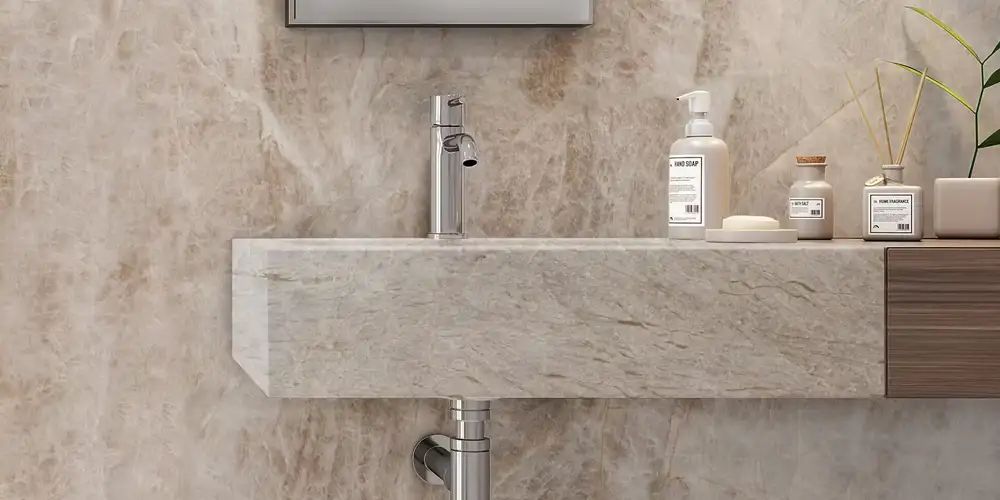
Neither Taj Mahal nor Perla Venata is a fully translucent stone like onyx or Cristallo, but select slabs—especially cleaner, whiter ones—can show beautiful sub-surface luminosity under the right lighting. This makes them especially compelling in high-end bathrooms, backlit niches, and hospitality features.
6. The Quartzite vs. Marble Distinction: Why Beauty No Longer Means Fragility
For decades, luxury kitchens defaulted to white marble. That era is not over, but it has changed. In 2026, clients want beauty that survives real life. That is why true quartzite has become such a dominant category.
6.1 Acid Resistance
Marble is composed primarily of calcite, which reacts with acids and etches almost immediately. Quartzite, by contrast, is composed mainly of quartz crystals, which are dramatically more chemically stable in normal household use. This means both Taj Mahal and Perla Venata are far more forgiving in kitchens and bars.
6.2 Thermal Stability
Quartzite also performs exceptionally well under intermittent heat exposure. While trivets are always recommended as best practice, both materials are more resilient than many clients expect. This makes them ideal for island tops, integrated work zones, and large-format culinary surfaces.
6.3 The “Soft Quartzite” Warning
Not every slab sold as quartzite is true quartzite. Some materials in the market are actually softer metamorphic stones that can etch or scratch more like marble. This is why working with an experienced Taj Mahal Quartzite Factory or project-oriented supplier is critical. Real quartzite should not behave like a fragile decorative stone.
7. Real-World Scenarios: Designing for the 2026 Lifestyle
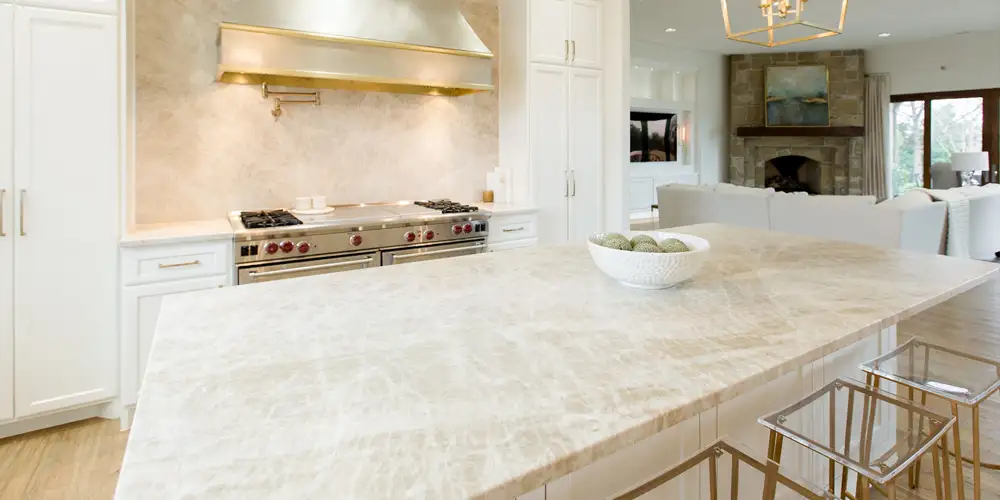
7.1 The Monolithic Island
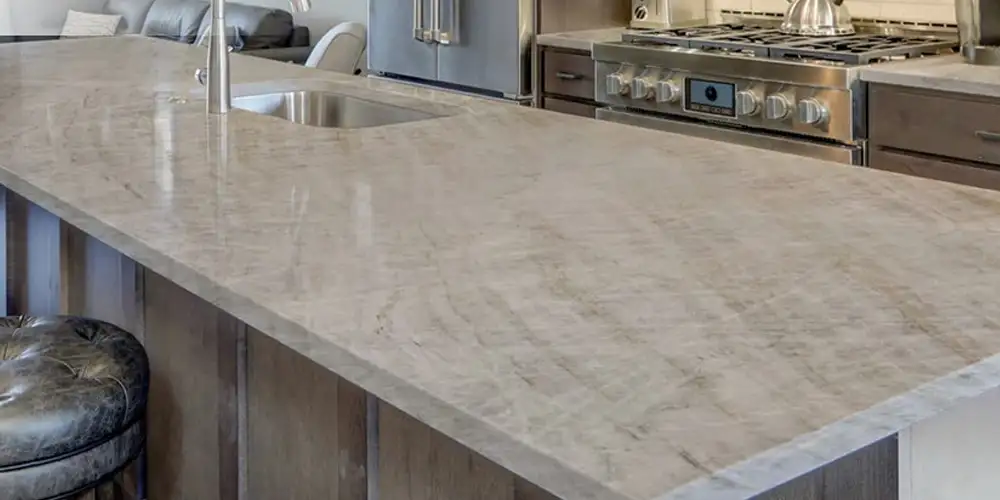
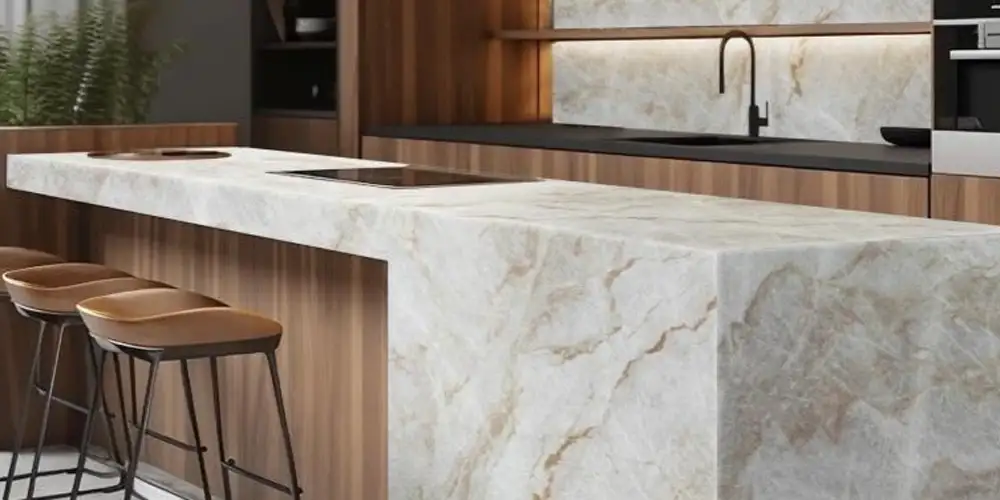
Few applications sell a premium kitchen faster than a large waterfall island. If your goal is a statement centerpiece, Taj Mahal Quartzite often delivers the stronger result because its layered movement flows beautifully down a mitred edge. For inspiration, many buyers begin by reviewing custom Taj Mahal quartzite island applications before finalizing slab orientation and edge detail.
7.2 The Luxury Spa Bath
Both materials perform exceptionally well in large-format bathrooms, especially where grout minimization and calm visual flow are priorities. For designers specifying vanity zones, shower walls, and integrated ledges, premium Taj Mahal Quartzite Vanity Tops or Perla Venata slabs offer a highly refined alternative to ceramic and sintered products.
7.3 Commercial Prestige
Luxury retail boutiques, private lounges, and boutique hotels increasingly favor quartzite because it combines beauty with operational practicality. This is especially true in high-touch spaces such as concierge desks, lounge bars, and guest powder rooms where maintenance tolerance matters.
7.4 Furniture and Sculptural Stone
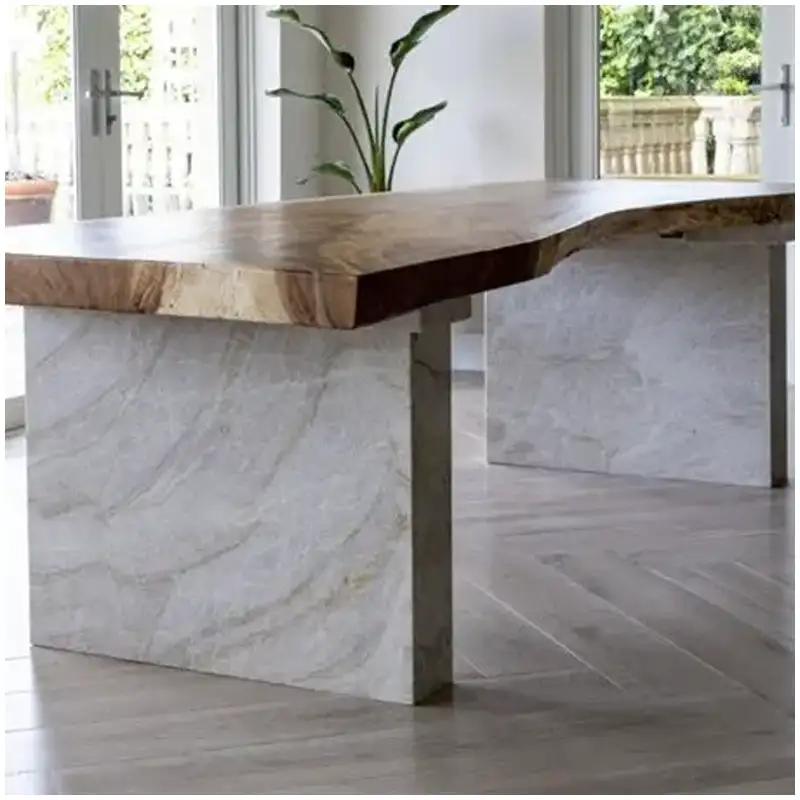
There is also growing demand for cream quartzite in furniture design. Console tops, monolithic plinths, coffee tables, and statement dining pieces are all rising. While Taj Mahal remains the stronger seller here, both stones can produce extraordinary custom furniture with the right block selection and fabrication strategy.
7.5 B2B Specification & Product Format Availability
To support diverse architectural requirements—from boutique island resorts to metropolitan shopping centers—we provide Taj Mahal and Perla Venata in the following standardized and bespoke formats:
| Application Category | Standard Product Format | Architectural Finish |
|---|---|---|
| Commercial Flooring (Malls, HQs) | 600×600, 800×800, 600x1200mm (20mm thickness) | Honed / Anti-slip Satin |
| Exterior Cladding (Resorts, Offices) | Custom Cut-to-Size Panels (30mm thickness) | Sandblasted / Leathered |
| Hospitality Interiors (Bars, Feature Walls) | Full-size Slabs (20mm / 30mm) | High Gloss Polished |
| Luxury Residential (Stairs, Bathrooms) | Book-matched Slabs / Bespoke Edge Profiles | Polished / Silk / Suede |
8. Global Strategic Fulfillment: Middle East & Commercial Case Studies
In the 2024-2025 fiscal period, Esta STONE solidified its position as a Tier-1 strategic supplier for Giga-projects across the Middle East and beyond. Our specialized production infrastructure successfully delivered:
- 10,000+ SQM of Taj Mahal Quartzite Tiles: Specifically fabricated for the interior cladding and high-traffic lobby flooring of two Grade 5A Office Towers in Dubai and Qatar.
- 8,000+ SQM of Premium Taj Mahal Slabs: Custom-selected for a Ultra-Luxury Landmark Hotel, ensuring strict vein-matching consistency across expansive public spaces, presidential suites, and monolithic reception desks.
This track record proves our capacity to maintain rigorous QC standards, color-tone uniformity, and structural integrity across massive industrial volumes, meeting the demanding specifications of international architectural firms and sovereign wealth fund developers.
9. Manufacturing Mastery: The Journey from Block to Polished Slab
One of the biggest misunderstandings in the stone market is that all beautiful slabs are equal. They are not. What happens in the factory determines whether a premium quartzite performs like a luxury material or disappoints like an overpriced commodity.
9.1 Selection Protocols
At the block stage, serious suppliers evaluate background whiteness, movement style, fissure mapping, resin needs, and whether the slab bundle can serve a single cohesive project. This is particularly important when clients require full kitchen packages, matched bathrooms, or a consistent visual sequence across multiple rooms.
9.2 Diamond-Wire Precision
Because quartzite is extremely hard, it must be sliced with high-tension diamond wire and processed with greater care than softer decorative stones. Poor cutting introduces micro-fractures and stress zones that may only become visible later in fabrication.
9.3 Surface Finishes
Finish selection changes not only appearance, but emotional tone. A polished slab highlights crystalline depth and vein contrast. A satin or honed finish produces a softer, more architectural mood. taj mahal leathered quartzite and leathered quartzite taj mahal have become especially popular in 2026 because they offer tactile sophistication without looking overly glossy.
Buyers comparing finishes often review Brazilian polished Taj Mahal quartzite slabs, high-gloss polished slab options, and lighter white-base Taj Mahal slab selections to understand how surface treatment affects perceived warmth and luxury.
Specifier’s Note for Architects, Fabricators, and Project Managers
From a professional stone specification standpoint, the difference between a beautiful slab and a successful installation is not visual alone. It depends on fissure mapping, slab reinforcement, resin behavior under UV exposure, adhesive compatibility, substrate flatness tolerance, and edge engineering. This is why serious buyers should never evaluate a cream quartzite only by showroom appearance. The true performance value of Taj Mahal Quartzite or Perla Venata is determined by quarry block quality, bundle consistency, processing accuracy, and fabrication standards long before the slab reaches the jobsite.
10. Installation and Engineering: The Professional Protocol
10.1 Adhesive Color Matching
Light-colored quartzites require white, non-staining adhesive systems and carefully selected epoxy formulations. Any grey or low-grade bonding product can create visual shadowing, especially around seams or under thinner areas.
10.2 The Dry-Lay Phase
Before fabrication begins, serious stone professionals conduct a dry-lay or digital slab layout. This is where vein direction, bookmatching logic, cut placement, and edge transitions are finalized. It is particularly important for waterfall islands and open-plan kitchens where the slab acts as a focal sculpture.
10.3 Edge Profiles and Monolithic Illusion
Modern luxury design favors thick visual edges and seamless mitred returns. When fabricated correctly, both Taj Mahal and Perla Venata can produce the “solid block” look that defines premium kitchens in 2026. However, edge engineering must be done with precision because quartzite is harder and less forgiving than marble during finishing.
11. Pricing Intelligence: Economics of the Cream Elite
One of the most common questions from buyers is simple: which one costs more? The honest answer is that both stones can range widely depending on grade, slab size, bundle consistency, quarry zone, and export route. But the more useful question is this: which one delivers the better value for your project?
11.1 What Drives Price?
For both materials, price is heavily influenced by:
- Background whiteness or cream clarity
- Absence of muddy mineral zones
- Vein continuity and overall visual harmony
- Slab dimensions and usable yield
- Bundle matching quality for multi-room projects
- Finish type and reinforcement requirements
11.2 Taj Mahal’s Commercial Advantage
Because Taj Mahal Quartzite has stronger global recognition, it often carries a more stable luxury premium. In practical terms, that means it is easier to sell, easier to specify, and easier to justify in high-end kitchens where buyers already understand its prestige.
11.3 Long-Term ROI
When evaluating natural stone, the smartest metric is not entry cost alone, but total lifecycle value. A true quartzite surface can remain relevant, durable, and marketable for decades. In luxury real estate, that matters. A surface that looks beautiful on day one but becomes high-maintenance by year five is not actually a premium investment.

12. Top 3 Maintenance and Preservation: The Science of Longevity
12.1 Sealing Protocols
Both materials should be sealed with high-quality penetrating sealers or oleophobic nano-impregnators. This helps reduce oil absorption and protects the stone from routine kitchen and bath contaminants. However, sealing is not a substitute for proper daily care or professional fabrication.
12.2 Daily Cleaning
Routine maintenance is refreshingly simple. Use a pH-neutral stone cleaner, soft cloth, and water. Avoid acidic, abrasive, or bleach-heavy cleaners. Unlike marble, you do not need to “baby” quartzite—but you do need to respect it as a premium natural material.
12.3 Stain Management
In the rare event of oil-based staining, a professional poultice treatment can usually resolve the issue. Most damage scenarios in quartzite are not caused by the stone itself, but by poor sealers, bad adhesives, or incorrect installation systems.
For end users and designers who want more care guidance, it is smart to compare best practices from related natural stone maintenance resources such as professional marble care methodology, while understanding that quartzite generally requires less intervention.
13. Sustainability and ESG: Ethical Luxury in 2026
Luxury clients are increasingly asking not only whether a stone is beautiful, but whether it is responsibly sourced. This is no longer a niche concern. It is part of the modern specification process.
13.1 Quarry Restoration and Environmental Mandates
Brazil’s stone industry continues to evolve under stronger environmental and land restoration expectations. Serious producers and exporters now work within a more transparent framework regarding quarry rehabilitation, waste management, and responsible extraction planning.
13.2 LEED and WELL Contributions
Natural stone can contribute positively to low-VOC, durable, and biophilic design strategies. Unlike many synthetic surfaces, quartzite does not depend on printed décor layers to create visual impact. Its value is geological, not cosmetic.
13.3 Longevity Is Sustainability
The most sustainable surface is often the one that does not need to be replaced. That is where true quartzite outperforms trend-driven decorative materials. A well-selected slab can remain structurally and aesthetically relevant for 30, 40, or even 50+ years.
14. Who Should Choose Taj Mahal Quartzite and Who Should Choose Perla Venata?
Choose Taj Mahal Quartzite If You Want:
- A warmer, richer, and more layered luxury kitchen palette
- Better compatibility with oak cabinetry, bronze fixtures, and warm LED lighting
- More recognizable resale appeal in high-end residential real estate
- A stone that performs beautifully as taj mahal quartzite countertops, waterfall islands, wall panels, and statement surfaces
- A globally recognized premium surface that already dominates luxury interior specification lists
Choose Perla Venata Quartzite If You Want:
- A cleaner, whiter, and more understated minimalist aesthetic
- Greater visual consistency across large-format applications
- A softer and calmer look for spa bathrooms or modern hospitality spaces
- A cream quartzite that feels slightly more architectural and linear than expressive
- A strong alternative when you want the luxury of Brazilian quartzite without the more recognizable Taj Mahal look
Professional ESTA STONE Recommendation
For kitchens, luxury islands, family-use countertops, and resale-focused design, Taj Mahal Quartzite remains the more commercially powerful and universally specified option. For boutique hospitality, serene bathroom suites, and ultra-clean warm-minimalist projects, Perla Venata can be the more refined design answer.
15. The Verdict: Which Cream Quartzite Is Right for You?
If you are choosing between these two stones purely on durability, both are excellent. If you are choosing based on design personality, the answer becomes clearer.
Taj Mahal Quartzite is for buyers who want warmth, depth, movement, and high-end recognition. It excels in kitchens, waterfall islands, statement walls, and luxury homes where the stone should feel layered and rich. Perla Venata is for buyers who want clarity, calm, whiteness, and minimalist continuity. It is often better suited to projects that want the softness of cream without too much visual drama.
If you want the broadest understanding of slab grades, finish types, design strategies, and sourcing intelligence, the best next step is to read The Ultimate Guide to Taj Mahal Quartzite: Prices, Durability, and Design 2026. That article functions as the full cornerstone resource for buyers, specifiers, and developers evaluating the entire Taj Mahal family.
16. FAQs About Taj Mahal Quartzite and Perla Venata Quartzite
Q1 Is Perla Venata Quartzite more expensive than Taj Mahal Quartzite?
In many international markets, Perla Venata and Taj Mahal Quartzite can overlap in price, but Taj Mahal often commands a stronger premium when the slabs show superior background clarity, warmer gold movement, and larger bundle consistency. Final pricing depends more on grade, block selection, slab size, and export logistics than on trade name alone.
Q2 Which quartzite looks more like marble?
Both stones can resemble marble from a distance, but Perla Venata often reads more “soft white” and cloud-like, while Taj Mahal Quartzite has more crystalline depth and warmer layered movement. If you want a marble-like appearance without marble fragility, both are excellent, but Taj Mahal usually offers the broader design range.
Q3 Which cream quartzite is better for a waterfall island?
For waterfall islands, Taj Mahal is often preferred because its fluid movement creates a more luxurious continuous edge effect. However, Perla Venata can be the better choice when a cleaner and more minimalist vertical visual flow is desired.
Q4 Can both stones be used for bathrooms and wall cladding?
Yes. Both materials perform exceptionally well in bathrooms, feature walls, vanity applications, and low-maintenance luxury spaces. The key is proper sealing, correct adhesive selection, and careful slab planning during fabrication and installation.
Need Help Choosing the Right Cream Quartzite for Your 2026 Project?
ESTA STONE helps architects, developers, kitchen brands, contractors, and luxury homeowners compare slab bundles, surface finishes, and application suitability before fabrication begins. Whether you are sourcing taj mahal quartzite slab selections for a monolithic island or evaluating cream quartzites for hospitality and residential specification, our team can provide current inventory photos, finish options, and export-ready bundle support.
Contact ESTA STONE for current slab availability, project consultation, and professional assistance with matching the right stone to your design language, budget, and performance requirements.
17. Conclusion: Investing in Geological Art
There are many cream stones on the market. Very few deserve to be called timeless. Taj Mahal Quartzite and Perla Venata Quartzite sit at the top of that category because they merge natural beauty, structural resilience, and long-term architectural relevance.
If your priority is layered warmth, market prestige, and all-around versatility, Taj Mahal remains the stronger investment. If your priority is whiter softness, linear calm, and understated refinement, Perla Venata is a compelling alternative. The correct answer is not which stone is “better” in isolation, but which one is better for your light, your cabinetry, your layout, your finish palette, and your project intent.
That is where working with a knowledgeable sourcing partner matters. Esta STONE helps buyers move beyond generic stone labels and toward precise, project-ready decisions that actually perform in the real world.
18 Google High-Intent FAQ
1. Is Perla Venata Quartzite whiter than Taj Mahal Quartzite?
Yes, in many cases Perla Venata Quartzite appears visually whiter and more cloud-like than Taj Mahal Quartzite. Taj Mahal generally carries more warmth, cream layering, and champagne or pale gold undertones. However, final appearance depends heavily on the individual slab bundle, finish type, and ambient lighting conditions. In showroom settings, many buyers perceive Perla Venata as cleaner and brighter, while Taj Mahal feels richer and more dimensional.
2. Does Taj Mahal Quartzite stain easily in kitchens?
No—true Taj Mahal Quartzite is generally much more stain-resistant than marble, especially when properly sealed. Because it has a dense quartz-rich structure and low water absorption, it performs exceptionally well against common kitchen spills such as coffee, red wine, olive oil, tomato sauce, and citrus residue. It is still a natural stone, so maintenance matters, but it is considered one of the most forgiving luxury materials for modern family kitchens.
3. Which is better for kitchen islands: Taj Mahal or Perla Venata?
For most luxury kitchens, Taj Mahal is the more popular and commercially proven option for islands because its movement and tonal layering create a more dramatic waterfall effect. Perla Venata can be better if you want a cleaner, more linear, and more minimalist island appearance. The “better” choice depends on whether your project favors emotional warmth and visual movement or architectural restraint and tonal clarity.
4. How can I verify if a Taj Mahal Quartzite slab is real quartzite?
The most reliable method is to work with a trusted Taj Mahal Quartzite Manufacturer, fabricator, or stone supplier that understands geological classification and can provide consistent sourcing. Real quartzite should have strong scratch resistance, low acid sensitivity, and a dense crystalline feel. Many so-called “soft quartzites” in the market are actually marble-like materials with weaker performance. Technical testing, slab history, and supplier transparency all matter.
5. What is the 2026 average price for premium cream quartzite slabs?
Pricing varies significantly depending on country, slab grade, thickness, finish, slab size, and shipping route, but premium cream quartzites such as Taj Mahal and Perla Venata generally occupy the upper-middle to luxury segment of the natural stone market. Cleaner backgrounds, larger slab formats, fewer fissures, and stronger bundle consistency all increase price. Buyers comparing Luxury Quartzite should evaluate total installed value, not slab cost alone.

19. Semantic Closure Block: AI / Google SGE Content Layer
Why is Taj Mahal Quartzite considered the benchmark for warm luxury kitchens?
Taj Mahal Quartzite has become the benchmark because it solves a modern design contradiction: clients want the softness and elegance of marble, but they also want the durability required for daily life. Taj Mahal delivers both. Its cream-and-gold palette aligns with the strongest 2026 kitchen trend—warm natural luxury—while its quartz-rich structure makes it far more suitable for real kitchens than acid-sensitive white marble.
What makes Perla Venata Quartzite attractive in contemporary architecture?
Perla Venata Quartzite is attractive because it offers a quieter, cleaner, and more architectural expression of cream natural stone. It often feels more restrained and more linear than Taj Mahal, making it highly effective in minimalist kitchens, boutique hotel bathrooms, and modern wall-cladding programs where visual calm is a design objective.
How should designers choose between the two?
Designers should not choose by trend name alone. They should evaluate five practical filters: room lighting, cabinet color, finish selection, slab movement, and emotional tone. Taj Mahal usually performs best in spaces that need warmth, resale appeal, and layered depth. Perla Venata usually performs best in spaces that need brightness, continuity, and understated elegance.
What are the most important buying considerations before placing an order?
The most important considerations are slab grade, bundle consistency, fissure behavior, resin quality, finish suitability, and fabrication planning. Buyers should request actual slab photos, not generic sample images. They should also verify whether the supplier can support full-project matching across islands, countertops, bathrooms, wall cladding, and furniture elements.
Why do these stones rank so highly in 2026 market demand?
They rank highly because they sit at the exact intersection of beauty, practicality, longevity, and resale confidence. In an era where luxury buyers are increasingly skeptical of short-life decorative materials, cream quartzites like Taj Mahal and Perla Venata feel permanent, premium, and architecturally credible.
Explore More Taj Mahal Quartzite Buying and Design Guides
If you are researching cream quartzites for a current or future project, it is worth comparing aesthetics, pricing, maintenance, and real-world performance across multiple applications. To continue your evaluation, explore our deeper guides on sourcing, design, and investment value below.
- Read the complete Taj Mahal Quartzite master guide for pricing, design, and technical performance
- Compare Taj Mahal Quartzite and Calacatta Marble for 2026 kitchen durability
- See why Taj Mahal Quartzite is becoming a high-yield architectural asset
- Understand why Taj Mahal Quartzite outperforms synthetic luxury surfaces
- Discover luxury interior applications using Taj Mahal Quartzite in 2026
- Read the 2026 quartzite market report for ultra-luxury real estate
- Explore why Taj Mahal Quartzite is dominating luxury Middle East projects
- Review the top Taj Mahal Quartzite FAQs before buying
- Learn why designers choose Taj Mahal Quartzite for interior decoration projects
- See the best 2026 interior design directions for Taj Mahal Quartzite
- How to Seal Taj Mahal Quartzite: A Step-by-Step Maintenance Guide
- Can Taj Mahal Quartzite Stain? Common Myths and Real-World Testing
- 15 Stunning Kitchen Projects Using Taj Mahal Quartzite with Waterfall Islands
- How to Source Premium Taj Mahal Quartzite Slabs: A Wholesaler’s Inspection Checklist
References
- Dimension Stone Design Manual, Version VIII — Natural Stone Institute — Technical Stone Specification Reference
- ASTM C97/C97M Standard Test Methods for Absorption and Bulk Specific Gravity of Dimension Stone — ASTM International — Materials Testing Standard
- ASTM C170/C170M Standard Test Method for Compressive Strength of Dimension Stone — ASTM International — Structural Stone Performance Standard
- Natural Stone in Architecture: Properties, Durability, and Performance — Geological Society Publications — Architectural Geology Reference
- Quartzite: Metamorphic Processes and Engineering Characteristics — U.S. Geological Survey — Geological Materials Reference
- Building Materials and Indoor Environmental Quality — U.S. Green Building Council — LEED / Sustainable Materials Guidance
- Stone Surface Care and Maintenance Best Practices — Natural Stone Institute — Professional Care & Preservation Guidance
- Brazilian Natural Stone Industry and Export Overview — Centrorochas — Brazilian Stone Export & Market Intelligence